
Hypophosphataemia after iron therapy – a hidden risk
Fatigue that lingers in patients after an iron infusion is not always due to anaemia. Hypophosphataemia, particularly after ferric carboxymaltose or an iron polymaltose infusions, is often missed as a diagnosis. When an iron infusion is given within three months of denosumab therapy, the risk of electrolyte derangements and skeletal complications increases. Health professionals have a key role in preventing hypophosphataemia through screening, timing of infusion, formulation choice and patient education.
Correction
There was an error in the footnote in the Figure in the original version of this article. This has been corrected in this online version and the full-text pdf of this article (see pdf link above). A correction has been published in the March issue of Medicine Today and is available here.
- Ferric carboxymaltose and iron polymaltose infusions can cause transient or prolonged hypophosphataemia, especially in patients with risk factors such as having repeated iron infusions, concurrent antiresorptive therapy (particularly denosumab), vitamin D deficiency or malabsorptive conditions.
- The risk of calcium and phosphate derangements increases when denosumab is given within three months of an iron infusion.
- Symptoms of hypophosphataemia include persistent fatigue, muscle weakness and bone pain. Complications include fractures and osteomalacia.
- Prescribers of iron infusions should screen patients at high risk of hypophosphataemia for phosphate, calcium, vitamin D and parathyroid hormone concentrations before and after intravenous iron.
- Strategies to prevent hypophosphataemia include correcting electrolyte deficiencies, using alternative iron formulations such as ferric derisomaltose and co-ordinating care with specialists.
Iron deficiency affects about 15% of the global population and is a common reason for GP consultation.1 Although oral iron is first-line therapy for iron deficiency, many patients cannot tolerate it due to gastrointestinal (GI) side effects. As a result, intravenous (IV) iron – most often ferric carboxymaltose (FCM) or iron polymaltose – is frequently used in both hospital and community settings.2
FCM treatment has been increasingly linked to hypophosphataemia, particularly in patients with underlying risk factors.3 When denosumab is administered within three months of FCM, the risk of hypophosphataemia and hypocalcaemia increases due to compounded effects on mineral metabolism.4
Hypophosphataemia is often missed because its symptoms (fatigue, myopathy and general malaise) closely mimic iron deficiency. In severe cases, hypophosphataemia can cause osteomalacia, fractures or even respiratory failure.
What is it and how does IV iron cause it?
Phosphate is an essential mineral for muscle function, bone health and energy metabolism. Hypophosphataemia is defined as a serum phosphate level below 0.75 mmol/L, with moderate cases having a level between 0.3 and 0.6 mmol/L and severe cases a level below 0.3 mmol/L.
In healthy adults, phosphate homeostasis is maintained through a dynamic interplay between intestinal absorption, renal excretion and bone turnover. FCM has emerged as a common cause of iatrogenic hypophosphataemia, due to its unique effect on phosphate metabolism. It transiently increases levels of intact fibroblast growth factor 23 (FGF23), a hormone that lowers serum phosphate.5,6 Increased levels of FGF23 result in:
- renal phosphate wasting via inhibition of reabsorption in the proximal tubule
- reduced production of active vitamin D (1,25 dihydroxyvitamin D; 1,25[OH]₂D), through suppression of 1-alpha-hydroxylase
- decreased intestinal absorption of both phosphate and calcium.7
In most healthy individuals, these effects are typically short-lived. However, in those with certain risk factors, the drop in phosphate level can be more severe or prolonged.
Who is at risk?
Although many cases of post-infusion hypophosphataemia are mild or asymptomatic, certain patient groups are at higher risk of clinically significant reductions in phosphate, especially after FCM or iron polymaltose infusions. Higher risk groups include patients who have:
- repeated IV iron infusions (FCM or iron polymaltose)
- vitamin D deficiency
- low baseline phosphate levels
- high baseline parathyroid hormone (PTH) levels
- normal renal function (less phosphate retention)
- GI malabsorptive conditions (e.g. coeliac disease, inflammatory bowel disease)
- malnutrition
- concurrent use of antiresorptive agents (denosumab or IV bisphosphonates).8
Which iron formulations pose the highest risk?
Not all intravenous iron formulations carry the same risk of hypophosphataemia. FCM is the most strongly associated, with randomised trials (notably the PHOSPHARE studies) showing hypophosphataemia in up to 45 to 70% of patients receiving FCM compared with 8% receiving ferric derisomaltose (FDI).5,6
Historically, other formulations such as iron polymaltose and iron sucrose were considered safer. However, real-world Australian data have challenged this assumption. A large retrospective cohort study of over 2300 patients found that both iron polymaltose and FCM carried a significant risk of hypophosphataemia, with iron polymaltose showing a more than twofold increased risk of moderate to severe hypophosphataemia compared with FDI.2
The underlying mechanism may relate to structural differences. Both FCM and iron polymaltose share similar carbohydrate moieties, whereas FDI is a structurally distinct iron–carbohydrate complex, with less impact on FGF23 metabolism.
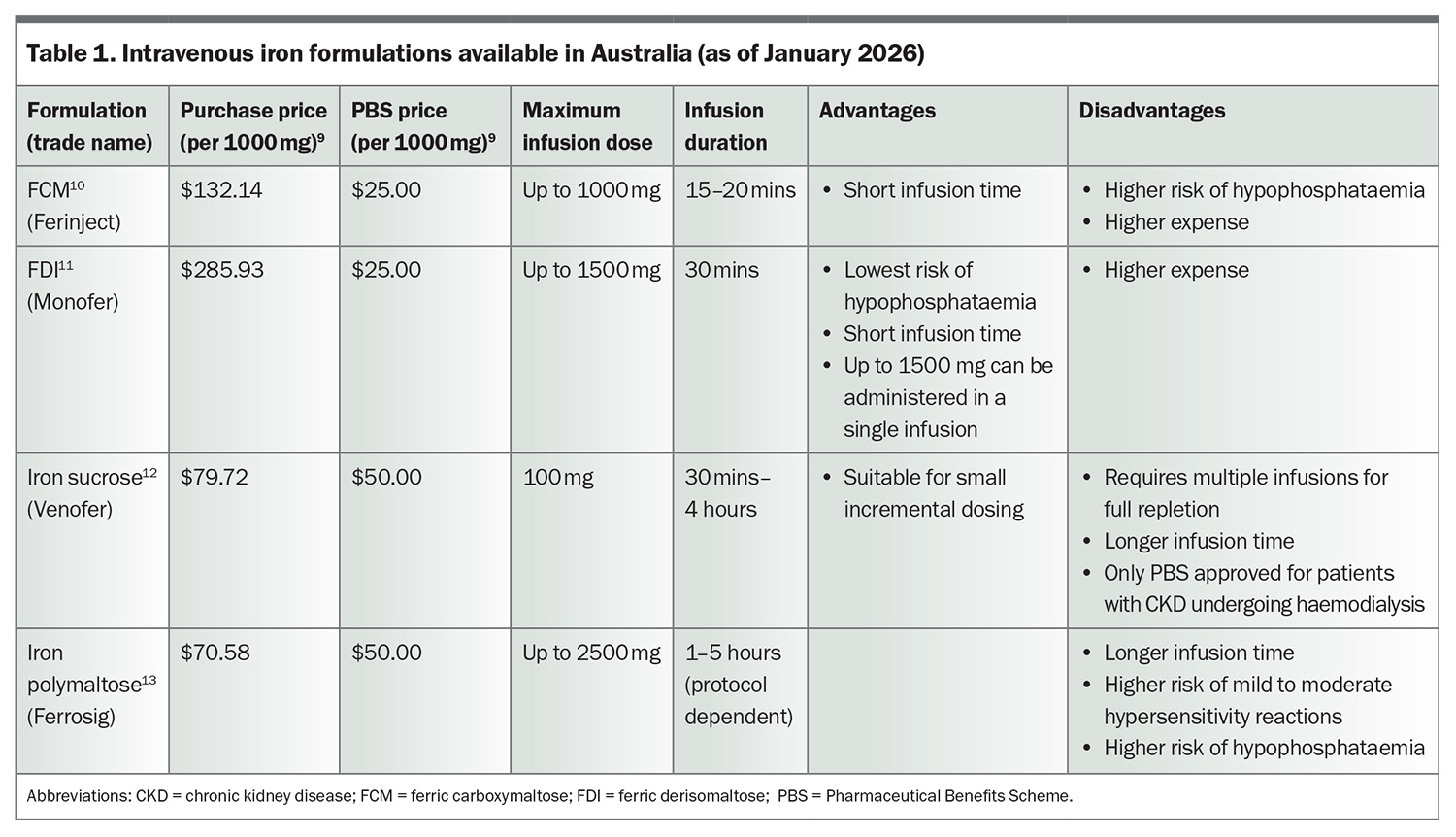
Table 1 summarises some of the features of IV iron formulations currently available in Australia.9-13
Denosumab: a key compounding factor
It is important to recognise denosumab as a contributor to phosphate and calcium disturbances, especially when used alongside IV iron. Denosumab inhibits the receptor activator of nuclear factor kappa B ligand (RANKL), blocking osteoclast activation, and bone resorption. This reduces calcium and phosphate release from bone, leading to hypocalcaemia, which then triggers secondary hyperparathyroidism and increases renal phosphate loss.14
Importantly, hypocalcaemia typically develops two to 10 weeks after denosumab administration, with peak risk occurring around weeks two to five. When denosumab is administered within three months of FCM, the risk of severe hypophosphataemia is magnified: FCM drives phosphate loss via FGF23, whereas denosumab limits phosphate release from bone, creating a potentially dangerous synergy.4
What about zoledronic acid?
Unlike denosumab, zoledronic acid does not block RANKL but directly inhibits osteoclasts to reduce bone resorption. It can cause transient hypocalcaemia, especially in patients with vitamin D deficiency or high bone turnover. Hypophosphataemia can occur because of hypocalcaemia-induced secondary hyperparathyroidism, but it is typically short-lived. However, a recent 2025 case series reported severe, prolonged hypocalcaemia and hypophosphataemia when zoledronic acid and FCM were given within two weeks of each other.15
Recommended monitoring
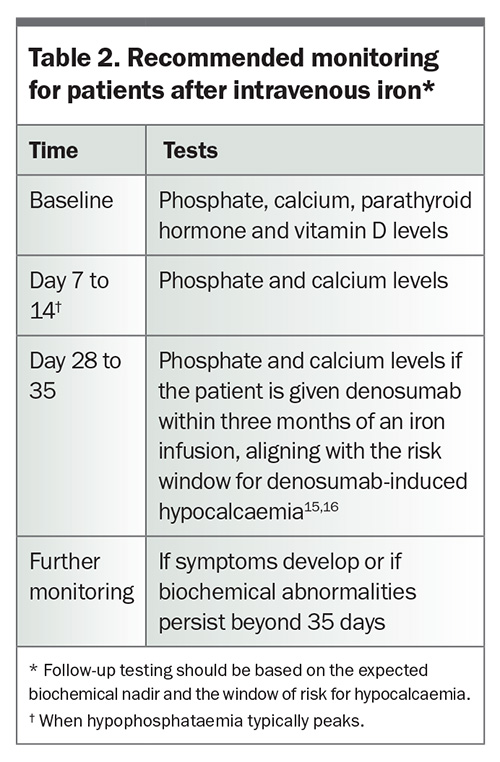
Routine phosphate testing is not necessary for all patients receiving IV iron. However, targeted monitoring is essential for those with known risk factors for hypophosphataemia. As shown in Table 2, baseline testing should include phosphate, corrected calcium, vitamin D and PTH measurements. This allows identification of pre-existing abnormalities before administering IV iron or antiresorptive therapy. Follow-up testing should be based on the expected biochemical nadir and the window of risk for hypocalcaemia.
When should we suspect it?
The symptoms of hypophosphataemia vary depending on its severity and duration. Mild cases often go unrecognised, as symptoms like fatigue, weakness and muscle pain are mistaken for iron deficiency, contributing to underdiagnosis. In more prolonged or severe cases, particularly with repeated FCM dosing, complications such as fragility fractures, osteomalacia or even respiratory compromise due to diaphragmatic weakness from adenosine triphosphate depletion can occur.17
Symptoms typically begin within one to two weeks after an infusion but may persist for several weeks or emerge months later. This delayed course can lead to diagnostic delay, especially if the link to prior iron therapy is not recognised.
Clues that may suggest postinfusion hypophosphataemia include:
- fatigue that persists or worsens despite iron repletion
- proximal muscle weakness or new mobility issues (e.g. difficulty climbing stairs, rising from a chair)
- bone pain, especially if bilateral or in weight-bearing areas
- new onset confusion, apathy or irritability in frail or older patients
- unexpected hypocalcaemia.
Initial management
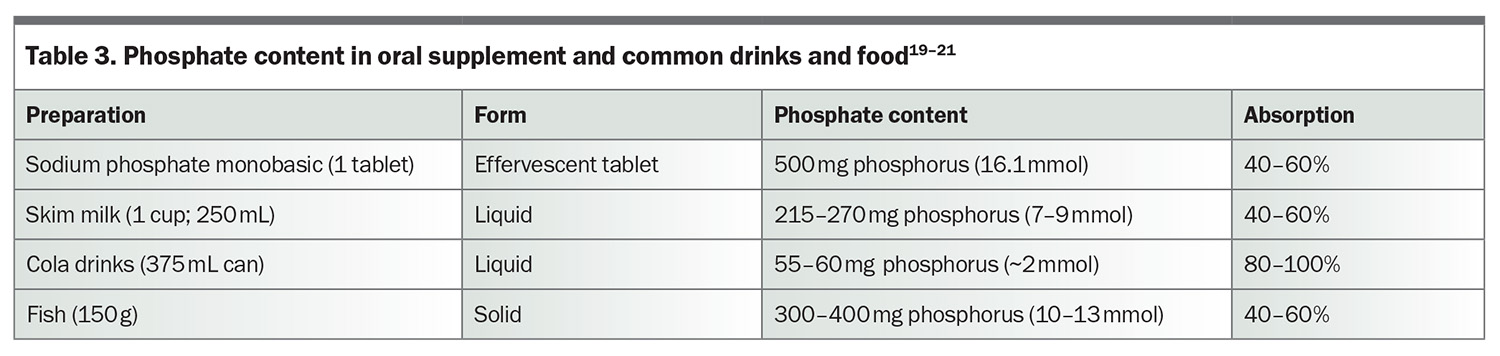
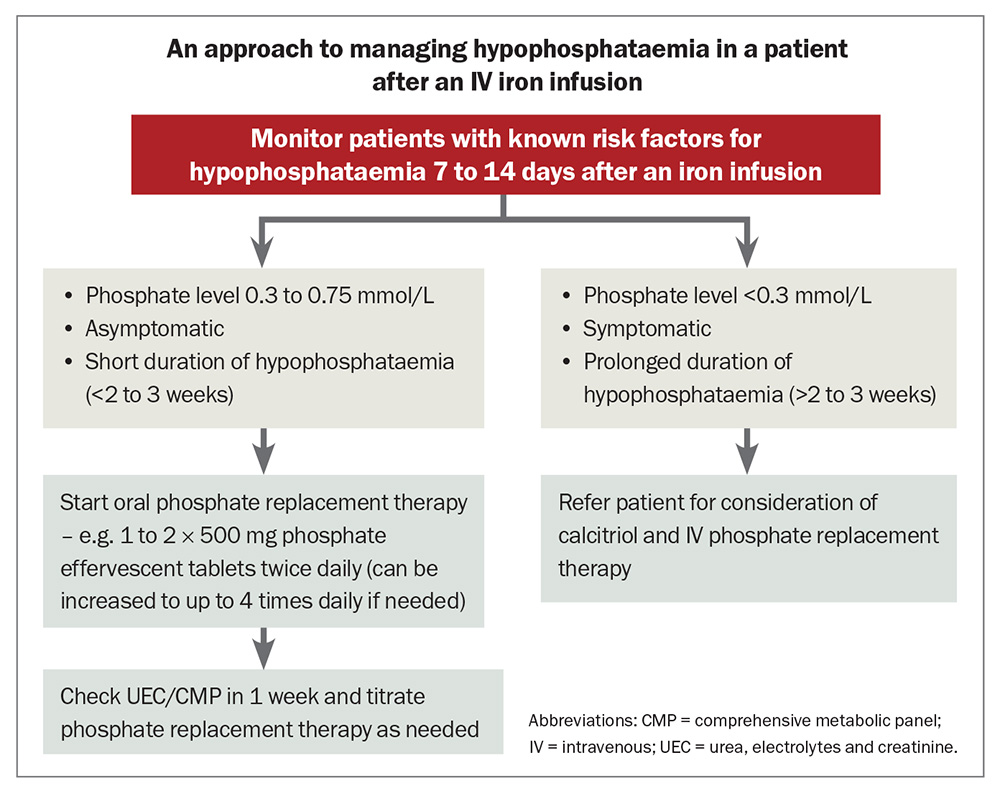
Management depends on the severity, duration and clinical manifestations of hypophosphataemia. Treatment typically involves oral phosphate supplementation and calcitriol, which help correct phosphate and calcium levels by suppressing secondary hyperparathyroidism. Patients with mild to moderate, asymptomatic hypophosphataemia (phosphate level 0.3 to 0.75 mmol/L) of short duration can usually be managed with oral phosphate supplementation alone (one to two 500 mg phosphate effervescent tablets twice daily; can be increased to up to four times daily if needed).18 It is important to advise patients to take phosphate at a different time from calcium supplements as coadministration impairs absorption. Table 3 lists the phosphate content in oral supplements and common drinks and food.19,21 Dietary phosphate may support repletion but is usually insufficient alone to treat clinically significant hypophosphataemia.
Patients with severe, prolonged or symptomatic hypophosphataemia (phosphate level <0.3 mmol/L) may require calcitriol in combination with IV phosphate, followed by transition to oral replacement. However, correcting the biochemical abnormalities is not always straightforward, as both phosphate and calcitriol can stimulate FGF23, perpetuating phosphate wasting and potentially limiting treatment efficacy, and warrants referral of patients to an endocrinologist.
An approach to managing hypophosphataemia in a patient following IV iron infusion is shown in the Flowchart.
When to refer
Referral of patients to an endocrinologist should be considered in the following situations:
- patients who have persistent hypophosphataemia lasting beyond two to three weeks, especially if symptomatic
- symptomatic patients with suspected osteomalacia, fractures or muscle weakness
- patients who have recurrent episodes, especially if occurring despite vitamin D repletion or after switching iron formulation
- patients with hypocalcaemia after receiving denosumab
- when there is uncertainty around treatment sequencing, repletion strategies or interpretation of biochemical results.
Ultimately, referral is warranted when the balance between correcting electrolyte disturbances and continuing bone-protective therapy becomes complex, particularly in patients receiving denosumab, where delays in treatment may increase the risk of rebound vertebral fractures.
Prevention strategies
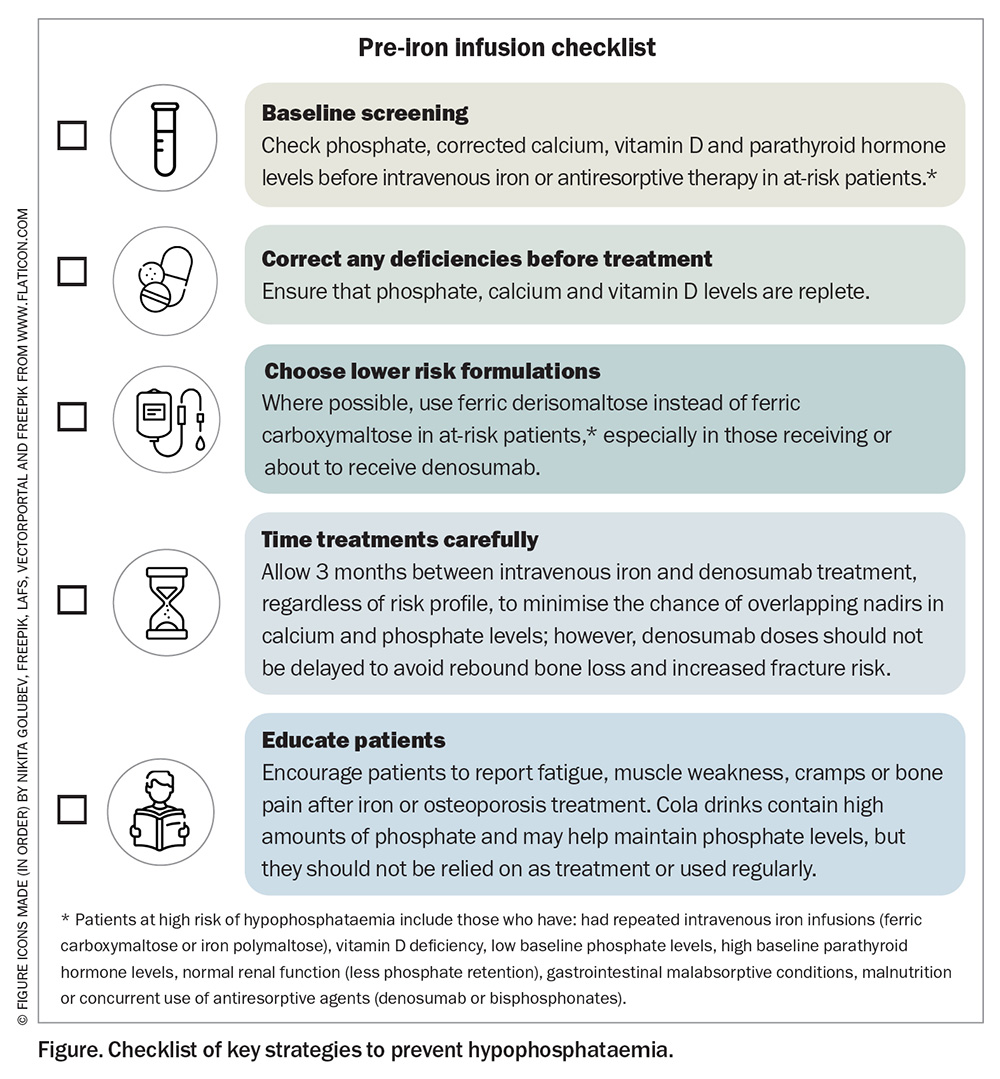
Most cases of postinfusion hypophosphataemia are mild and preventable with appropriate planning. GPs have a central role in identifying at-risk patients and co-ordinating treatment sequencing. Key prevention strategies are summarised in the Figure.
Conclusion
Hypophosphataemia is a well-established complication of IV iron, particularly FCM. When iron infusions are followed closely by antiresorptive therapy such as denosumab, the risk of clinically significant hypocalcaemia and skeletal complications increases, especially in at-risk patients.
GPs have a key role in preventing and identifying at-risk patients. Screening for vitamin D deficiency, selecting lower-risk iron formulations and appropriately spacing treatments can significantly reduce harm. With timely recognition and shared care planning, serious outcomes such as osteomalacia and fractures can be avoided ensuring patients benefit safely from both iron repletion and osteoporosis therapies. ET
COMPETING INTERESTS: Dr Apostolou and Dr Hong: None. Professor MacIsaac has received speakers’ fees from Bayer, Boehringer Ingelheim, Novo Nordisk and Eli Lilly; served on advisory boards for Astra Zeneca, Novo Nordisk, Boehringer Ingelheim, Bayer and Servier; and been recipient of St Vincent’s Hospital Research Endowment Funds.
References
1. Pasricha SR, Tye-Din J, Muckenthaler MU, Swinkels DW. Iron deficiency. Lancet 2021; 397: 233-248.
2. Dawson C, Paul E, Pak LMK, Szwarcbard N, Hackman K. Prevalence, predictors and natural history of hypophosphatemia following iron infusion. JBMR Plus 2025; 9(Suppl 5): v69-v78.
3 Schaefer B, Tobiasch M, Viveiros A, et al. Hypophosphataemia after treatment of iron deficiency with intravenous ferric carboxymaltose or iron isomaltoside - a systematic review and meta-analysis. Br J Clin Pharmacol 2021; 87: 2256-2273.
4. Pak LMK, Cox A, Bach LA. Symptomatic hypocalcaemia after administration of denosumab and iron infusion in patients with normal and impaired renal function. Intern Med J 2025; 55: 1028-1032.
5. Wolf M, Rubin J, Achebe M, et al. Effects of Iron Isomaltoside vs ferric carboxymaltose on hypophosphatemia in iron-deficiency anemia: two randomized clinical trials. JAMA 2020; 323: 432-443.
6. Zoller H, Wolf M, Blumenstein I, et al. Hypophosphataemia following ferric derisomaltose and ferric carboxymaltose in patients with iron deficiency anaemia due to inflammatory bowel disease (PHOSPHARE-IBD): a randomised clinical trial. Gut 2023; 72: 644-653.
7. Schaefer B, Tobiasch M, Wagner S, et al. Hypophosphatemia after intravenous iron therapy: comprehensive review of clinical findings and recommendations for management. Bone 2022; 154: 116202
8. Strubbe M, David K, Peene B, et al. No longer to be ignored: hypophosphatemia following intravenous iron administration. Rev Endocr Metab Disord 2025; 26: 125-135.
9. Australian Government Department of Health, Disability and Ageing. The Pharmaceutical Benefits Scheme [Internet]. Canberra: Australian Government Department of Health, Disability and Ageing; 2026. Available online at: https://www.pbs.gov.au/browse/medicine-listing (accessed January 2026).
10. NPS Medicinewise. Ferinject: ferric carboxymaltose. Sydney: NPS Medicinewise; 2024. Available online at: https://www.nps.org.au/medicine-finder/ferinject-solution-for-injection#full-pi (accessed January 2026).
11. NPS Medicinewise. Monofer: ferric derisomaltose. Sydney: NPS Medicinewise; 2025. Available online at: https://www.nps.org.au/medicine-finder/monofer#full-pi (accessed January 2026).
12. NPS Medicinewise. Venofer: iron sucrose. Sydney: NPS Medicinewise; 2024. Available online at: https://www.nps.org.au/medicine-finder/venofer-solution-for-infusion#full-pi (accessed January 2026).
13. NPS Medicinewise. Ferrosig injection: iron polymaltose. Sydney: NPS Medicinewise; 2022. Available online at: https://www.nps.org.au/medicine-finder/ferrosig-injection#full-pi (accessed January 2026).
14. Hanley DA, Adachi JD, Bell A, Brown V. Denosumab: mechanism of action and clinical outcomes. Int J Clin Pract 2012; 66: 1139–1146.
15. Stokes G, Sheu A, Girgis CM, White CP. "Double trouble": the impact of iron infusion and antiresorptive therapy on calcium-phosphate homeostasis. JBMR Plus 2025; 9(Suppl 5): v88–v93.
16. Ye S, Grill V, Luo J, Nguyen HH. Concurrent denosumab and parenteral iron therapy precipitating severe hypocalcemia and hypophosphatemia. JCEM Case Rep 2024; 2(2): luae005.
17. Vilaca T, Velmurugan N, Smith C, Abrahamsen B, Eastell R. Osteomalacia as a complication of intravenous iron infusion: a systematic review of case reports. J Bone Miner Res 2022; 37: 1188-1199.
18. Kaur J, Castro D. Hypophosphatemia. In: Treasure Island. Florida: StatPearls Publishing; 2024.
19. NPS Medicinewise. Phosphate-Sandoz Tablets (Effervescent tablets). Sydney: NPS Medicinewise; 2018. Available online at: https://www.nps.org.au/medicine-finder/phosphate-sandoz-tablets-effervescent-tablets (accessed January 2026).
20. National Institutes of Health Office of Dietary Supplements. Phosphorus: Fact sheet for health professionals. Updated 2023. Bethseda; National Institute of Health; 2023 Available online at: https://ods.od. nih.gov/factsheets/Phosphorus-HealthProfessional/ (accessed January 2026).
21. Ritz E, Hahn K, Ketteler M, Kuhlmann MK, Mann J. Phosphate additives in food – a health risk. Dtsch Arztebl Int 2012; 109: 49-55.
Single article purchases are temporarily unavailable due to site maintenance.
If you would like to purchase an article during this time, please email us at [email protected] with the article details and we'll assist you directly. We'll also let you know when online purchasing is available again.
Thank you for your patience and understanding.