
Osteoporosis: management in frail, older people

Osteoporosis management in frail, older people presents a significant clinical challenge. Frailty, encompassing physical, functional and cognitive decline, is associated with increased risk of falls, fractures, hospitalisation and mortality. Although these patients have the highest fracture risk and greatest potential to benefit from treatment, management is often complex. Recent advances in osteoanabolic therapies and updated guidelines now support earlier, more intensive treatment for those at very high risk of fracture.
- Osteoporosis is a chronic disease; long-term, sequential therapies are essential for primary and secondary fracture prevention.
- Treatment should be individualised based on shared decision making.
- Case management systems, such as fracture liaison services, improve treatment adherence and reduce fracture risk.
- Fracture risk in older people is driven by the triad of low bone strength, frailty and increased propensity to fall.
- Early identification of patients at very high risk of fracture, including those with a recent hip or vertebral fracture, is important as they are candidates for first-line osteoanabolic therapy (e.g. romosozumab, teriparatide and abaloparatide), followed by antiresorptive therapy.
- On discharge from hospital, denosumab is an ideal treatment option for patients with adherence concerns, such as those transferred to residential aged care with regular GP oversight. Intravenous zoledronic acid is a suitable alternative for these patients. However, follow-up infusions may prove challenging.
- Discontinuation of denosumab requires careful planning and transition to a bisphosphonate for at least 12 months to prevent a rebound increase in vertebral fracture risk.
- Management must be multifaceted, incorporating falls prevention, resistance exercise and optimisation of protein, calcium and vitamin D intake, as well as assessment for secondary causes where indicated.
Osteoporosis is a systemic skeletal disorder characterised by low bone mineral density (BMD) and microarchitectural deterioration, which culminates in an increased risk of fracture following minimal trauma.1 In frail, older individuals, this risk is compounded by a high incidence of falls.2 These fractures are not benign events; they precipitate a cascade of significant morbidity, functional decline, loss of independence and increased mortality.3
The imperative to treat this population is clear; however, management must be comprehensive. Care extends beyond pharmacotherapy to include universal strategies, such as falls prevention, targeted exercise and ensuring optimal protein-calorie, calcium and vitamin D intake.1 The therapeutic armamentarium has also expanded. There is now a greater understanding of treatment sequencing, particularly the role of osteoanabolic agents for patients at very high risk of imminent fracture, followed by antiresorptive therapy to consolidate skeletal gains.4-6 This article provides a pragmatic guide to modern osteoporosis management in frail, older patients, reflecting the latest evidence and changes to the PBS.
Identifying patients at very high fracture risk
A crucial first step in modern management is to stratify patients by their level of risk. The concept of very high fracture risk helps identify individuals who would likely benefit most from initial treatment with potent osteoanabolic agents.7 Although definitions vary, this term describes patients with a high likelihood of sustaining a subsequent fracture within the next 12 to 24 months.
The Royal Australian College of General Practitioners (RACGP) guidelines suggest a 10-year major osteoporotic fracture risk of 30% or more using the Fracture Risk Assessment (FRAX) tool (https://fraxplus.org/calculation-tool) as a potential indicator of very high fracture risk (Box 1).1,6,8,9 However, FRAX may underestimate risk in older people, as it does not account for falls. The Garvan Fracture Risk Calculator (https://www.garvan.org.au/promotions/bone-fracture-risk/calculator/) incorporates falls risk and is a suitable alternative for assessing fracture risk in older and frailer populations.1
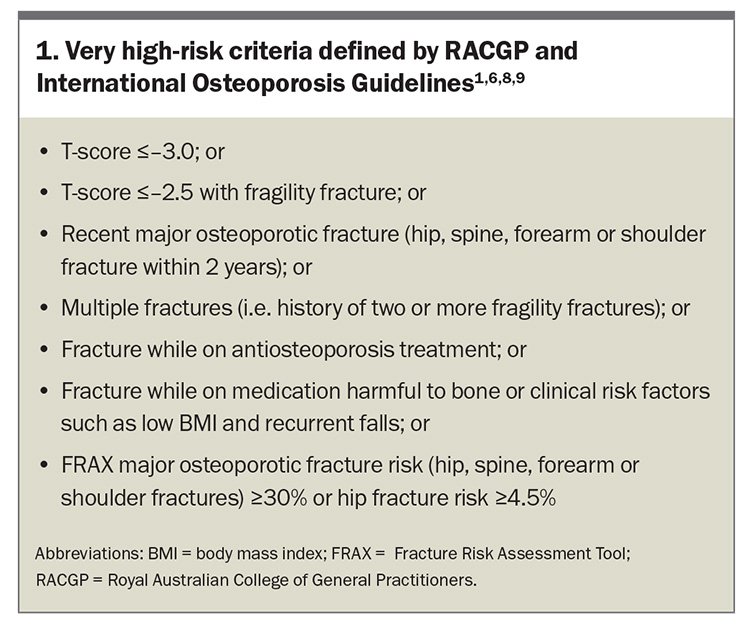
A more practical definition for Australian clinicians aligns with the updated November 2024 PBS-listed criteria for the monoclonal antibody romosozumab, which defines very high risk in patients who have:
- sustained a recent minimal trauma hip or vertebral fracture, or two or more fractures (including one symptomatic fracture) within the past 24 months and have a BMD T-score of –2.5 or less (first-line treatment); or
- experienced a recurrent symptomatic fracture after at least 12 months of continuous antiresorptive therapy and have a BMD T-score of –3.0 or less (second-line treatment).
The risk of recurrent fracture is greatest in the first 12 to 24 months following an initial fracture.10 Early identification of these patients is therefore crucial. Osteoanabolic therapies provide rapid fracture risk reduction within months, creating a key window to prevent early subsequent fractures, which commonly occur before traditional antiresorptive therapies have demonstrated benefit, a process that may take more than 12 months.11 Furthermore, the efficacy of osteoanabolic agents is attenuated by prior exposure to antiresorptives, making first-line use in this high-risk cohort a valuable, one-time opportunity.4-6
Case finding and initial investigations
According to the RACGP guidelines, any individual older than 50 years of age who sustains a minimal trauma fracture should be presumed to have osteoporosis.1 Proactive identification is best achieved through systematic hospital-based programs, such as fracture liaison services, combined with diligent GP case finding, which can effectively bridge the gap between acute fracture care and long-term GP management.12
Dual-energy x-ray absorptiometry (DXA) remains the gold standard for measuring BMD and is essential for risk stratification and monitoring treatment. Although degenerative spinal changes can limit the accuracy of lumbar spine measurements in older people, quantitative computed tomography can be a useful alternative.13 For primary prevention, all patients aged over 70 years, as well as those with significant risk factors, are eligible for a Medicare-rebated DXA scan for screening and monitoring every two years.
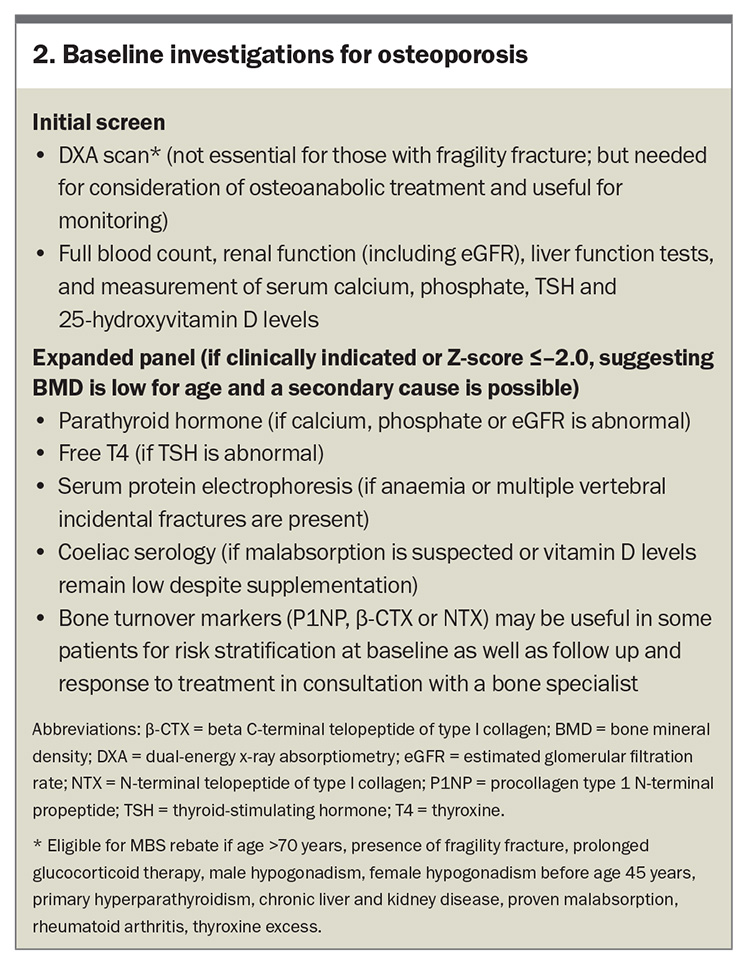
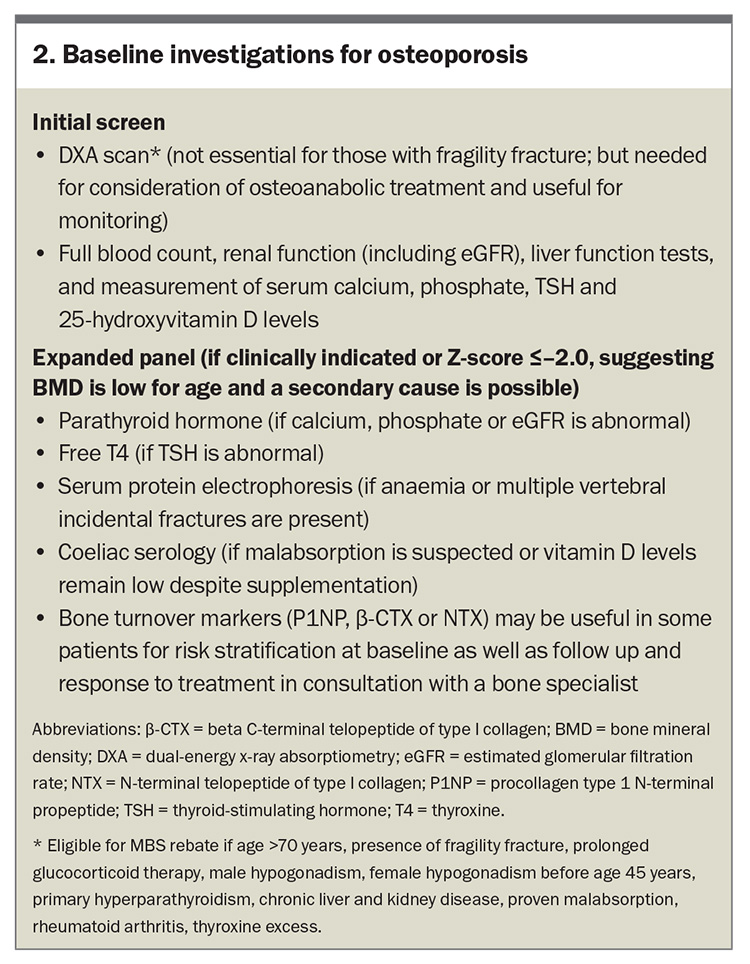
Once osteoporosis is diagnosed, a pragmatic approach to screening for secondary causes is warranted (Box 2).
Lifestyle management: the foundation of care
Pharmacotherapy alone is insufficient. All older and frailer patients require lifestyle modifications to optimise their bone health, both for primary and secondary fracture prevention.1,14 This foundational care includes:
- exercise: a combination of safe resistance, impact and balance exercises
- smoking cessation and moderation of alcohol intake
- nutrition: adequate protein-calorie, calcium and vitamin D intake, with supplementation, if necessary
- falls prevention: referral to a falls prevention specialist should be considered for any patient with two or more falls in the preceding 12 months.
The Healthy Bones Australia website provides practical resources for both clinicians and patients.
Pharmacotherapy: a guide for clinicians
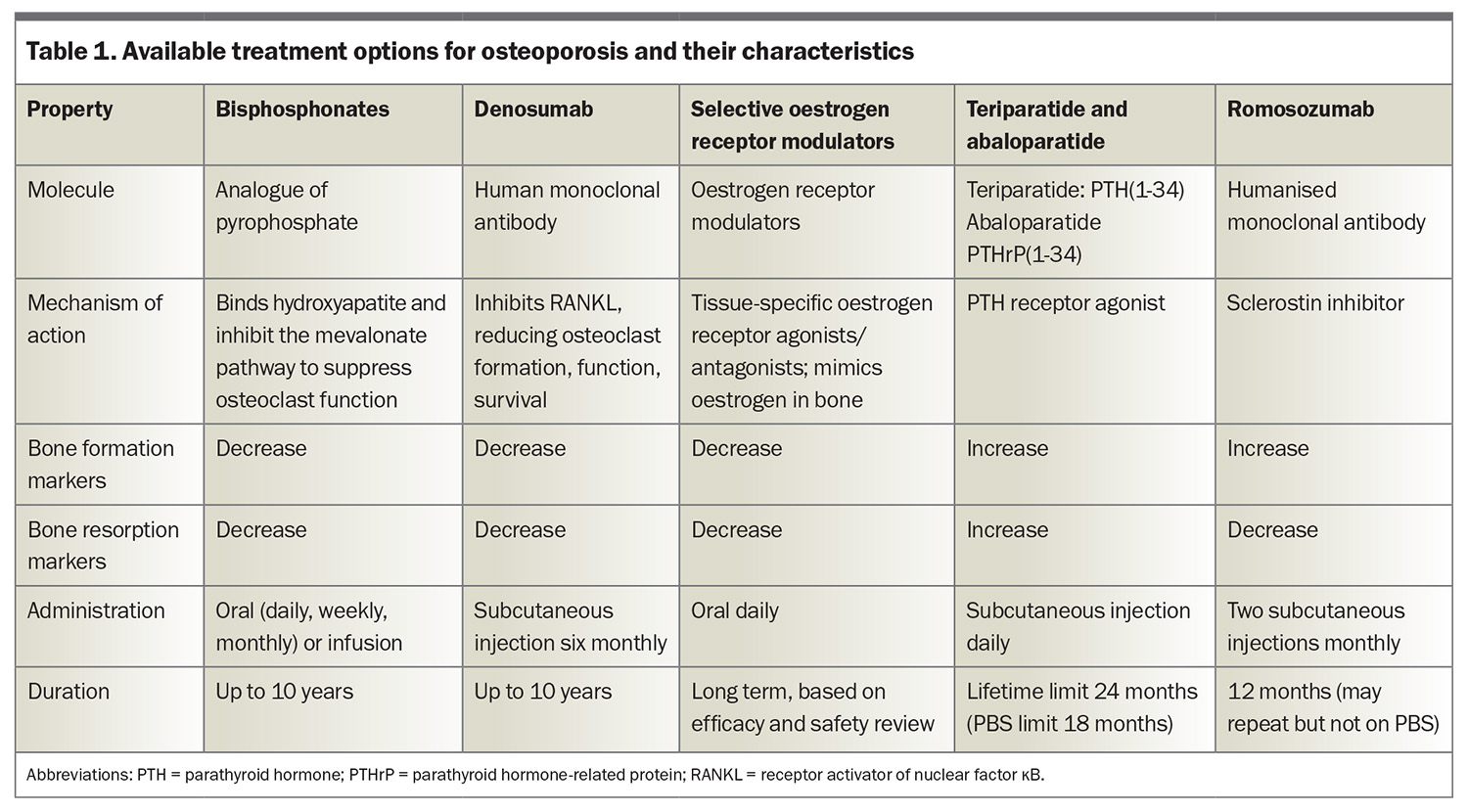
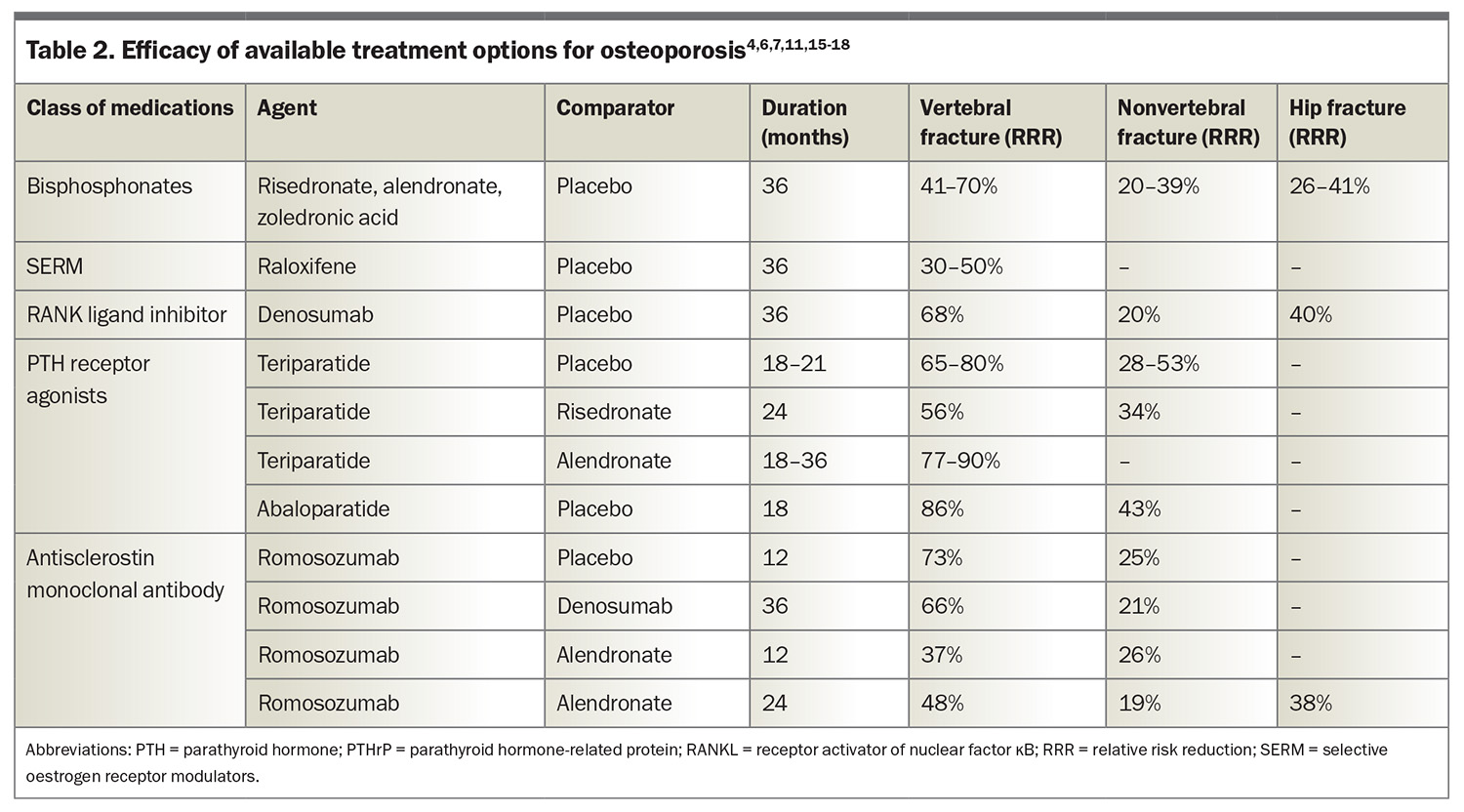
A combination of appropriately selected pharmacotherapy, chosen with consideration for risk, comorbidities and adherence, along with lifestyle optimisation, is key to reducing the significant burden of fractures. Available treatment options for people with osteoporosis, and their characteristics and efficacy are outlined in Table 1 and Table 2.4,6,7,11,15-18
Osteoanabolic agents: for very high-risk patients
Osteoanabolic agents stimulate new bone formation and, because of cost constraints, are reserved for patients at the highest risk of fracture. Treatment must be initiated by a specialist to attract PBS subsidies.
Romosozumab
Romosozumab has a unique dual action, significantly stimulating bone formation while moderately inhibiting bone resorption. It is administered as two subcutaneous injections monthly for 12 months and is PBS listed for both first-line and second-line use in very high-risk patients (see the PBS website for full details).11,15 Treatment must be followed by an antiresorptive agent to maintain skeletal gains. Due to a small signal of cardiovascular events in one trial compared with alendronate (but not compared with placebo), it has a TGA contraindication for use in patients with a history of myocardial infarction or stroke.11 This creates a treatment gap for many older, frail patients who are at greatest risk of fracture.
Teriparatide and abaloparatide
Teriparatide and abaloparatide are parathyroid hormone analogues and pure osteoanabolics. They are particularly useful in patients who have contraindications or have experienced adverse effects from antiresorptives (e.g. medication-related osteonecrosis of the jaw or atypical femoral fracture).16,17 Both are administered as daily subcutaneous injections for 18 to 24 months and must also be followed by an antiresorptive.
Currently, only teriparatide is listed on the PBS, and only as a second-line therapy for patients with a T-score of –3.0 or less who continue to fracture despite at least 12 months of antiresorptive treatment (see the PBS website for full details). Abaloparatide is currently under review by the PBS for first-line and potentially future second-line use in patients at high fracture risk.
Antiresorptive agents: fracture prevention and treatment
Antiresorptive agents inhibit bone resorption and remain the most widely used treatments for osteoporosis.
Bisphosphonates
Bisphosphonates (alendronate, risedronate, zoledronic acid) are the traditional mainstays of treatment. Oral agents (alendronate, risedronate) are typically given for five years before reassessing fracture risk, with consideration of a treatment pause if fracture risk becomes low or the risk of treatment-associated complications increases (e.g. renal impairment, osteonecrosis of the jaw or atypical femoral fracture risk).
Intravenous zoledronic acid, administered every 12 to 18 months for three to six years, is an excellent option for patients in whom adherence is a concern, such as residents of aged care facilities. It also confers a demonstrated mortality benefit following hip fracture.18 The main barrier is access to infusion centres for this frail cohort. All bisphosphonates should be considered with caution if creatinine clearance is less than 30 mL/min/1.73 m2.
Denosumab
Denosumab is currently the most commonly used agent in Australia. This potent monoclonal antibody is given as a six-monthly subcutaneous injection and is useful for patients who are less adherent or intolerant of oral therapy or have regular medical oversight (e.g. in residential facilities). Unlike bisphosphonates, its effect wears off rapidly; discontinuation leads to rapid bone loss and a rebound increase in fracture risk, sometimes above baseline.19 Adherence to timely dosing is therefore crucial. Patients should have a plan for cessation when this option is selected. If cessation is necessary, it must be carefully managed by transitioning to a bisphosphonate to minimise the risk of rebound vertebral fracture.
Denosumab may be used with caution in patients with renal impairment under specialist guidance, although the risk of complications, such as hypocalcaemia, adynamic bone disease and osteonecrosis of the jaw, is increased.
Menopausal hormone therapy and selective oestrogen receptor modulators
Menopausal hormone therapy has modest antiresorptive effects. It may be considered in younger postmenopausal women within 10 years of menopause. Menopausal hormone therapy has been shown to provide similar benefits in reducing hip fracture risk as other antiresorptive agents.20
Raloxifene, a selective oestrogen receptor modulator, reduces vertebral fracture risk and may be useful in patients who have experienced an atypical femoral fracture.21,29 It has demonstrated benefits on BMD and vertebral fracture but evidence for nonvertebral and hip fracture is lacking.
A practical treatment algorithm
Managing osteoporosis in older, frail adults requires a universal primary prevention strategy and a structured approach that prioritises early and accurate risk stratification to guide therapy. A practical pathway for clinicians, aligned with best practice and PBS criteria, as well as the available treatment options in Australia, is provided in the Flowchart.
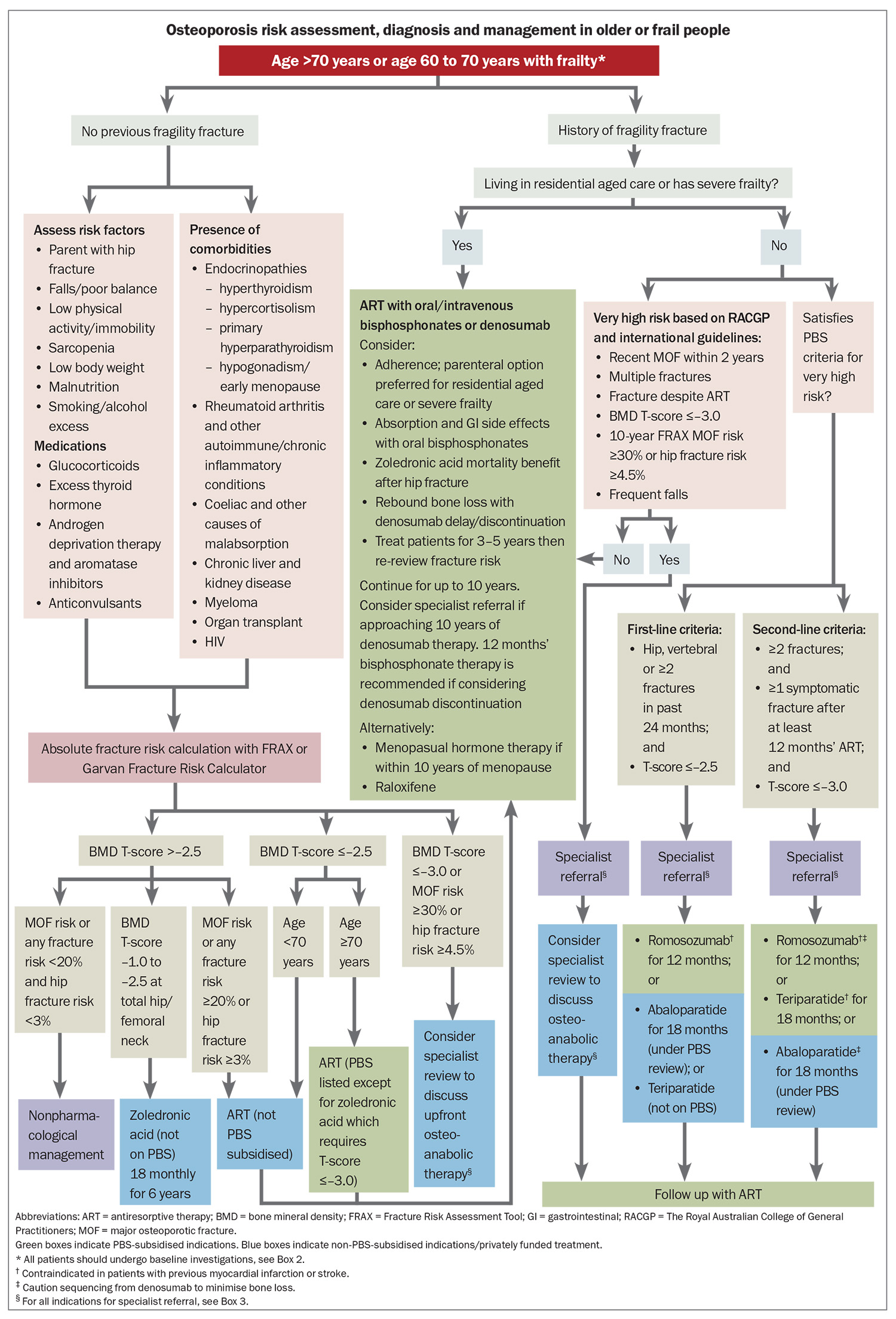
Patients with frailty, risk factors or established osteoporosis (defined by a minimal trauma fracture) should undergo comprehensive lifestyle assessment and DXA scanning to establish baseline BMD (Box 2). In hospitalised patients, it is strongly advised to consider obtaining BMD before discharge to identify the ideal treatment pathway. However, osteoporosis is diagnosed in the presence of any fragility fracture and treatment can commence without BMD if the scan is impractical.
For residents of aged care facilities or those with severe frailty, denosumab offers simplicity and efficacy, provided a long-term treatment and cessation plan are in place. For patients who cannot receive oral treatments, denosumab or zoledronic acid are suitable alternatives. Zoledronic acid should be given to patients during hospitalisation for fractures to ensure treatment is initiated. There is no adverse impact on fracture healing.9 Ideally, infusion should occur six weeks postfracture but no earlier than two weeks to optimise treatment benefit.18
For community-dwelling individuals and those in residential care with a long-life expectancy, the key decision point is identifying those at very high risk. Treatment-naïve patients who have sustained a hip, vertebral or multiple fractures within the past 24 months should be assessed for eligibility for PBS-subsidised osteoanabolic therapy. In patients with a BMD T-score of –2.5 or less, referral to a bone specialist is indicated to consider romosozumab (existing PBS indication). Parathyroid hormone receptor analogues (teriparatide privately funded for this indication; abaloparatide under PBS review) are the preferred osteoanabolic agent for those affected by previous myocardial infarction or stroke.
Patients who sustain fragility fractures despite use of antiresorptive agents are also at very high fracture risk and should be considered for anabolic treatment with romosozumab or parathyroid hormone receptor analogues (teriparatide is PBS listed for this indication and abaloparatide is currently under PBS review).
In hospitalised patients with a hip or other major fracture who may have reduced adherence to follow up due to patient factors such as frailty, intravenous zoledronic acid administered before discharge is an excellent option because of its convenience and demonstrated mortality benefit in this specific cohort.18 This represents an important opportunistic intervention, as patients are less likely to commence osteoporosis treatment after discharge. Denosumab and oral bisphosphonates remain suitable alternatives where indicated.
Some older, frailer patients at high risk of fracture may not meet PBS criteria for subsidised therapy. In these cases, treatment should be considered in consultation with a specialist.22 Older people with osteopenic hip BMD (including those without a history of fracture) may benefit from zoledronic acid for primary fracture prevention.23 Referral for specialist review should also be considered as patients approach 10 years of denosumab therapy, to plan for safe treatment transition.
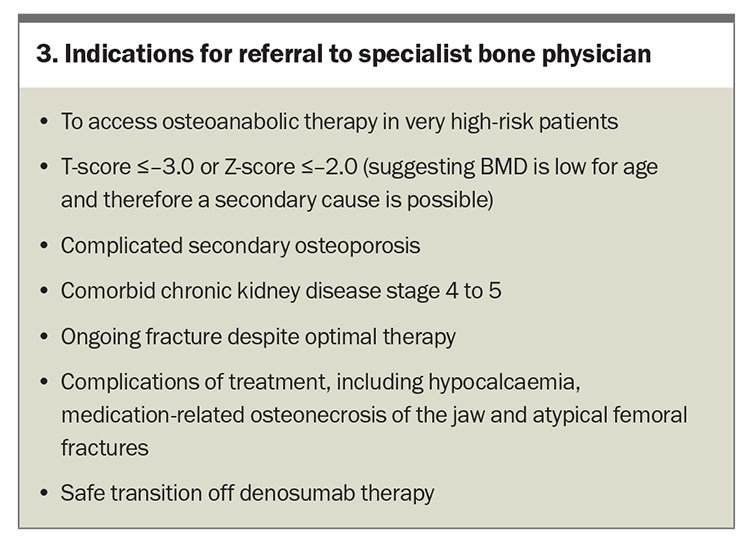
Finally, for patients with very low BMD (T-score ≤–3.0) or high fracture risk without a recent major fracture, a specialist review is recommended to consider privately funded osteoanabolic therapy before starting antiresorptive treatment (Box 3).
Conclusion
Osteoporosis in frail, older adults is a high-stakes condition that demands proactive and evidence-based management. The treatment paradigm has evolved to prioritise potent osteoanabolic agents for those at the highest risk of imminent fracture – an opportunity GPs are well placed to identify. For all patients, a combination of lifestyle optimisation and appropriately selected pharmacotherapy, chosen with consideration for risk, comorbidities and adherence, is key to reducing the significant burden of fractures. Older adults, therefore, stand to benefit the most from this newer class of medications and must be allowed to access them under an equitable health system. Close collaboration between GPs and specialists is essential to ensure our most vulnerable patients receive optimal, modern care. ET
COMPETING INTERESTS: Professor Inderjeeth has received support for attending meetings from Hong Kong College of Physicians, Healthy Bones Australia and Royal Australasian College of Physicians and is on the Advisory Committee for Arthritis and Osteoporosis WA, Healthy Bones Australia, Australian Rheumatology Association, RACP AMD Clinical Exam Committee, Australian Hip Fracture Registry and Australian Fragility Fracture Network. Dr Ting: None.
ACKNOWLEDGEMENT: The authors would like to thank Diren Che Inderjeeth, Research Officer at Sir Charles Gairdner Osborne Park Health Care Group, for help with drafting, formatting, editing and referencing of the manuscript.
References
1.The Royal Australian College of General Practitioners (RACGP), Healthy Bones Australia. Osteoporosis management and fracture prevention in postmenopausal women and men over 50 years of age, 3rd edition. RACGP; 2024.
2. Cameron ID, Dyer SM, Panagoda CE, et al. Interventions for preventing falls in older people in care facilities and hospitals. Cochrane Database Syst Rev 2018; 9(9): CD005465.
3. Ha YC, Baek JH, Ko YB, Park SM, Song SH. High mortality and poor morbidity after hip fracture in patients with previous vertebral fractures. J Bone Miner Metab 2015; 33: 547-552.
4. Leder BZ, Tsai JN, Uihlein AV, et al. Denosumab and teriparatide transitions in postmenopausal osteoporosis (the DATA-Switch study): extension of a randomised controlled trial. Lancet 2015; 386: 1147-1155.
5. Cosman F, Kendler DL, Langdahl BL, et al. Romosozumab and antiresorptive treatment: the importance of treatment sequence. Osteoporos Int 2022; 33: 1243-1256.
6. Inderjeeth CA, Inderjeeth DC. The use of anabolic agents in the treatment of osteoporosis: a clinical update. Curr Opin Endocrinol Diabetes Obes 2024; 31: 157-163.
7. Kanis JA, Harvey NC, McCloskey E, et al. Algorithm for the management of patients at low, high and very high risk of osteoporotic fractures. Osteoporos Int 2020; 31: 1-12. Erratum in: Osteoporos Int. 2020; 31: 797-798.
8. Curtis EM, Reginster JY, Al-Daghri N, et al. Management of patients at very high risk of osteoporotic fractures through sequential treatments. Aging Clin Exp Res 2022; 34: 695-714.
9. Tai TW, Chen HY, Shih CA, et al. Asia-Pacific consensus on long-term and sequential therapy for osteoporosis. Osteoporosis Sarcopenia 2024; 10: 3-10.
10. Center JR, Bliuc D, Nguyen TV, Eisman JA. Risk of subsequent fracture after low-trauma fracture in men and women. JAMA 2007; 297: 387-394.
11. Saag KG, Petersen J, Brandi ML, et al. Romosozumab or alendronate for fracture prevention in women with osteoporosis. N Engl J Med 2017; 377: 1417-1427.
12. Inderjeeth CA, Raymond WD, Geelhoed E, Briggs AM, Oldham D, Mountain D. Fracture liaison service utilising an emergency department information system to identify patients effectively reduce re-fracture rate is cost-effective and cost saving in Western Australia. Australas J Ageing 2022; 41(3): e266-e275.
13. Deshpande N, Hadi MS, Lillard JC, et al. Alternatives to DEXA for the assessment of bone density: a systematic review of the literature and future recommendations. J Neurosurg Spine 2023; 38: 436-445.
14. Inderjeeth CA, Inderjeeth KA. Osteoporosis in older people. J Pharm Pract Res 2021; 51: 265-274.
15. Cosman F, Crittenden DB, Adachi JD, et al. Romosozumab treatment in postmenopausal women with osteoporosis. N Engl J Med 2016; 375: 1532-1543.
16. Leder BZ, Mitlak B, Hu MY, Hattersley G, Bockman RS. Effect of abaloparatide vs alendronate on fracture risk reduction in postmenopausal women with osteoporosis. J Clin Endocrinol Metab 2020; 105: 938-943. Erratum in: J Clin Endocrinol Metab 2020; 105(8):dgaa301.
17. Yang C, Le G, Lu C, et al. Effects of teriparatide compared with risedronate in the treatment of osteoporosis: A meta-analysis of randomized controlled trials. Medicine (Baltimore) 2020; 99(7): e19042.
18. Lyles KW, Colón-Emeric CS, Magaziner JS, et al; HORIZON Recurrent Fracture Trial. Zoledronic acid and clinical fractures and mortality after hip fracture. N Engl J Med 2007; 357: 1799-1809.
19. Cosman F, Huang S, McDermott M, Cummings SR. Multiple vertebral fractures after denosumab discontinuation: freedom and freedom extension trials additional post hoc analyses. J Bone Miner Res 2022; 37: 2112-2120.
20. Manson JE, Chlebowski RT, Stefanick ML, et al. Menopausal hormone therapy and health outcomes during the intervention and extended poststopping phases of the Women’s Health Initiative randomized trials. JAMA 2013; 310: 1353-1368.
21. van de Laarschot DM, McKenna MJ, Abrahamsen B, et al. Medical management of patients after atypical femur fractures: a systematic review and recommendations from the european calcified tissue society. J Clin Endocrinol Metab 2020; 105: 1682-1699.
22. Reid IR, McClung MR. Osteopenia: a key target for fracture prevention. Lancet Diabetes Endocrinol 2024; 12: 856-864.
23. Reid IR, Horne AM, Mihov B, et al. Fracture prevention with zoledronate in older women with osteopenia. N Engl J Med 2018; 379: 2407-2416.
Single article purchases are temporarily unavailable due to site maintenance.
If you would like to purchase an article during this time, please email us at [email protected] with the article details and we'll assist you directly. We'll also let you know when online purchasing is available again.
Thank you for your patience and understanding.