
The assessment of obesity in adults: practical tips for GPs

One in three adults in Australia live with obesity, contributing to a growing burden of metabolic, mechanical and psychological disease. A structured, compassionate approach can help GPs identify obesity-associated complications, assess severity and support patients through behavioural, pharmacological and surgical management pathways.
- At least one in three adults in Australia attending a general practice consultation has obesity.
- The body mass index is a simple tool to help diagnose and classify obesity, but it has limitations. Assessment should also include a measure of central adiposity, such as waist circumference, as recommended in the recent diagnostic criteria for clinical obesity from the Lancet Commission.
- Weight stigma can severely hinder medical obesity management and must be actively avoided.
- It is essential that screening for diseases and complications associated with obesity is included in the assessment. The assessment should also include suitability for obesity management interventions, including pharmacotherapy and bariatric surgery.
- Although uncommon, secondary causes of obesity should be considered as part of the clinical assessment.
- Assessing the severity of obesity is important to guide future management decisions.
- GPs are best placed to manage obesity or decide when a patient should be referred to a specialist. A detailed evaluation can help this process.
Australia has one of the highest rates of obesity in the world. Currently one in three adults in Australia live with obesity, with rates expected to soar in the coming years.1,2 Obesity is the leading risk factor for ill health and death, having overtaken tobacco use, and is a growing health and economic burden, creating a major strain on our primary care services.3,4
GPs are at the forefront of obesity management, often being the first point of contact for patients struggling with weight management or being the first to identify obesity as a significant health concern. Given its high prevalence, a substantial proportion of general practice consultations now involve patients with obesity; however, these visits often focus on the presenting problem rather than obesity management. Discussions about weight can be challenging in a busy clinic, as clinicians must ensure that patients are not made to feel shame or blame, while also gaining insight into the relationship between obesity and other health issues. Furthermore, focusing on weight from the outset may risk overshadowing the patient’s primary reason for attendance. In such cases, it may be more pragmatic to address the presenting concern first and schedule a follow-up consultation dedicated to discussing weight and overall health. Effective obesity care should address health goals, obesity severity and related complications, alongside considering the patient’s suitability for behavioural interventions, pharmacotherapy or bariatric surgery.
Definition and classification of obesity
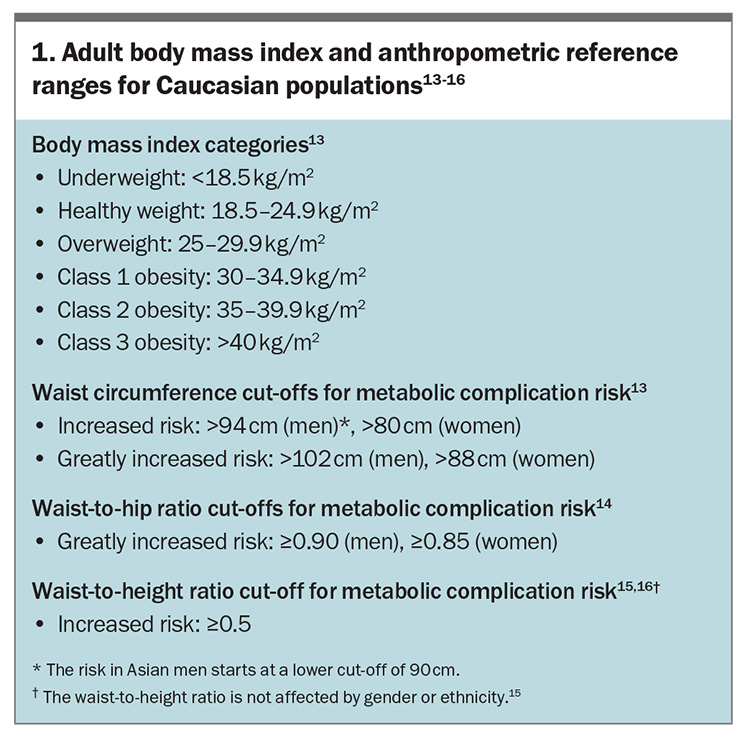
Obesity is a complex condition characterised by excess adiposity.5 The WHO body mass index (BMI) classification is often used for obesity assessment, and large prospective studies have shown a positive correlation between increasing BMI and mortality.6 However, the BMI alone is not a perfect measure of obesity because it does not assess adiposity at the individual level or provide information about body fat distribution. Although a BMI greater than 40 kg/m2 reflects increased adiposity, central adiposity should also be assessed, particularly in patients below this threshold. The assessment can include anthropometric measurements such as waist circumference, which is a strong predictor of cardiovascular disease and metabolic syndrome, or alternatives such as the waist-to-hip ratio or waist-to-height ratio.5,7,8
More recently, the Lancet Commission defined clinical obesity as a distinct entity characterised by an elevated BMI (at or above thresholds adjusted for age, gender and ethnicity) and excess adiposity (defined by anthropometric measures such as waist circumference, waist-to-hip ratio or waist-to-height ratio) with the presence of obesity-associated diseases, complications or limitations in daily activities.5 Those with excess adiposity but without complications are classified as having preclinical obesity under this new definition.
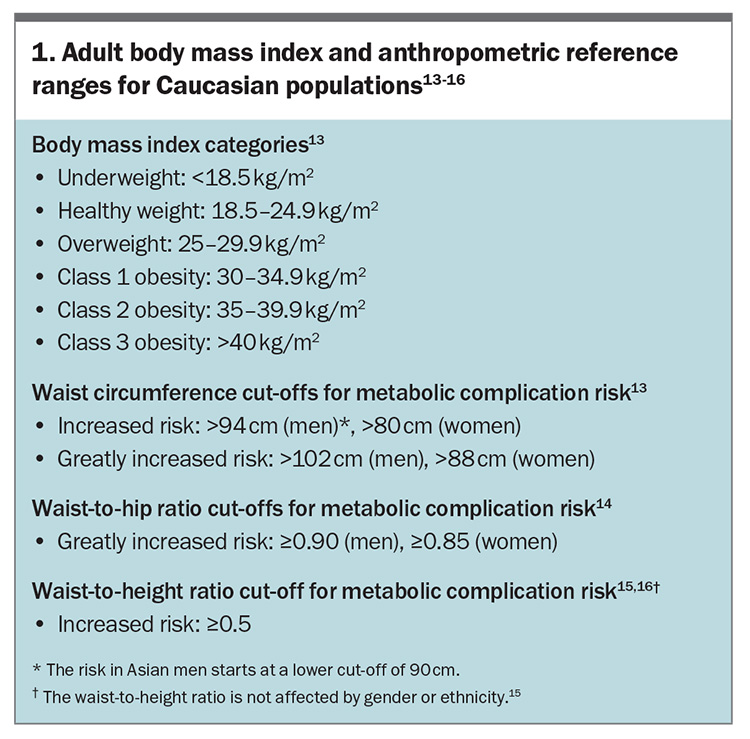
Individuals of different ethnic backgrounds, such as those of South Asian, Chinese and Japanese descent, tend to have greater body fat at lower BMIs, thereby increasing their risk of weight-related complications, compared with Caucasian populations. As a result, lower BMI thresholds are recommended for classification in these populations.9 Lower waist circumference thresholds for defining an increased metabolic complication risk also apply to individuals from these ethnic populations.10 Similarly, for Aboriginal and Torres Strait Islander people, the current WHO BMI classification underestimates adiposity, and standard waist circumference thresholds underestimate the metabolic complication risk.11,12 However, there are currently no agreed-upon alternative thresholds for these populations. The anthropometric measurement thresholds associated with increased adiposity are listed in Box 1.13-16
Impact of weight loss
Weight loss in people with overweight or obesity has proven benefits, not only in reducing obesity-associated diseases and complications but also in improving overall mortality.17 A modest weight reduction of 5 to 10% can lead to significant improvements in obesity-associated diseases, whereas significant weight loss of greater than 15% can lead to dramatic improvements in overall health including diabetes remission.18 Weight loss can also lead to improvements in quality of life and enhanced psychological wellbeing, particularly when the weight management program includes increased physical activity.19-21
Starting the obesity assessment
GPs are accustomed and skilled at managing multiple issues within the same consultation, such as smoking cessation, alcohol reduction and chronic health conditions. The weight management consultation can be managed in the same manner, but sometimes, starting the conversation about a patient’s weight can be challenging, particularly in busy primary care settings where most patients present for issues other than weight management.
The Australian cohort of the Awareness, Care & Treatment In Obesity Management – An International Observation (ACTION-IO) study found an average delay of almost nine years between a person struggling with their weight and their initial discussion with their healthcare professional.22 Importantly, the study also showed that most people with obesity wanted their healthcare providers to initiate these conversations, and very few reported feeling offended.22 Opening a discussion about weight with empathy can provide therapeutic benefits and lead to positive weight outcomes, thereby setting the groundwork for further discussions in the future.23
People with obesity often experience prolonged delays in seeking medical advice, which may result from a combination of factors, including internalised weight bias (e.g. perceiving weight as a personal failing) and clinician-related factors (e.g. assumptions that patients are not interested in obesity management). Given the delay, it is crucial for GPs to be aware of weight stigma in their interactions, which can result in patients disengaging from healthcare services. Weight stigma includes assumptions about a patient’s character based on their body size and can negatively impact the level of support, care and empathy patients with obesity receive.24 Although healthcare professionals aim to act in patients’ best interests, weight stigma remains prevalent across all healthcare settings, including general practice. Such stigma, driven by conscious or unconscious bias, can act as a barrier to healthcare access and utilisation.25,26 Recent initiatives have sought to support healthcare professionals in reducing weight stigma.27,28
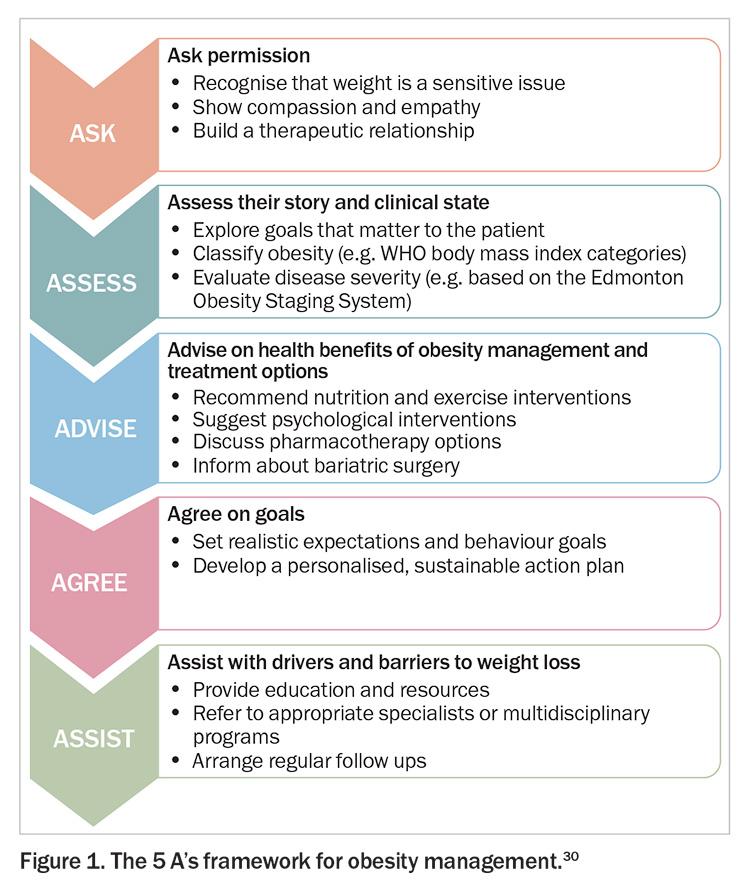
The scope of the conversation on obesity management can vary widely from acknowledging that obesity is, or may be, affecting the patient’s health and providing advice within the same consultation to arranging subsequent appointment(s) for a more comprehensive assessment. The approach may include behavioural weight management strategies, referral to allied health professionals, discussing or initiating pharmacotherapy, or referral for bariatric surgery assessment if appropriate. A good framework to use when tackling the initial conversation is the 5 A’s framework, which was initially developed for and found success in promoting smoking cessation.29 The framework has since been adapted for use in obesity counselling (Figure 1).30 Using the 5 A’s framework has been shown to better motivate patients to lose weight and increase the likelihood of starting obesity treatment.31
The obesity assessment
It is important to get the conversation about obesity management started, but a detailed initial assessment for obesity often requires time. Instead of a rushed consultation that may make the patient less likely to engage in the future, it can help to initiate a conversation at the first opportunity and then break down the assessment into multiple consultations to ensure a thorough evaluation without overwhelming the patient. The assessment of obesity should include taking a detailed history and examination, as well as conducting relevant investigations. Once the diagnosis is established and management strategies agreed, the primary goals are to identify barriers to weight loss and assess obesity-associated diseases and complications specific to the patient. Understanding these factors allows for a personalised management approach, ensuring any interventions are both effective and sustainable.
A good starting point is to understand the patient’s motivation for weight loss, followed by a detailed weight history and targeted examination. The weight history should include changes in weight throughout their life, their highest and lowest recalled weights, periods of rapid weight gain and potential triggers for these changes. It is equally important to evaluate previous weight loss efforts, including which interventions or changes resulted in greater weight loss and for how long they were maintained.
A targeted dietary assessment should identify the primary sources of energy intake. Patients commonly under-report their dietary intake, particularly discretionary foods, which can be difficult to recognise and recall. Excess energy intake often comes from large meal portions, energy-dense foods (e.g. fast foods), frequent snacks or high-energy beverages, including alcohol. The drivers of overconsumption can be broadly categorised as biological or psychological. Examples of biological drivers include a strong enjoyment of food and innate variations in hunger. Psychological drivers include the act of using food to elevate mood or sedate unwanted emotions, which can take the forms of binge eating or emotional eating, and habitual behaviours, such as routine dining out. Many patients experience a combination of these drivers.
Identifying the main driver(s) of excess energy intake is an essential component of the assessment. In patients who do not identify enjoyment of eating as a major contributor, it is important to explore any history of trauma, as strong evidence indicates that trauma increases the risk of obesity and can impede weight loss. This effect often occurs because food intake becomes a maladaptive coping mechanism.32 Although it is important for practitioners to provide trauma-informed care, trauma assessment may be distressing, and it is important to recognise and refer the patient to practitioners trained in trauma-informed care if necessary.
A targeted weight examination should include an accurate measurement of the BMI and at least one additional anthropometric measure to assess central adiposity. If using the waist circumference or waist-to-hip ratio, interpretation of these measures should be contextualised according to the patient’s gender and ethnic background. Alternatively, the waist-to-height ratio can be used, which is not influenced by gender or ethnicity and has been shown to be linked to mortality and cardiovascular disease risk.16
Screening for secondary causes of obesity
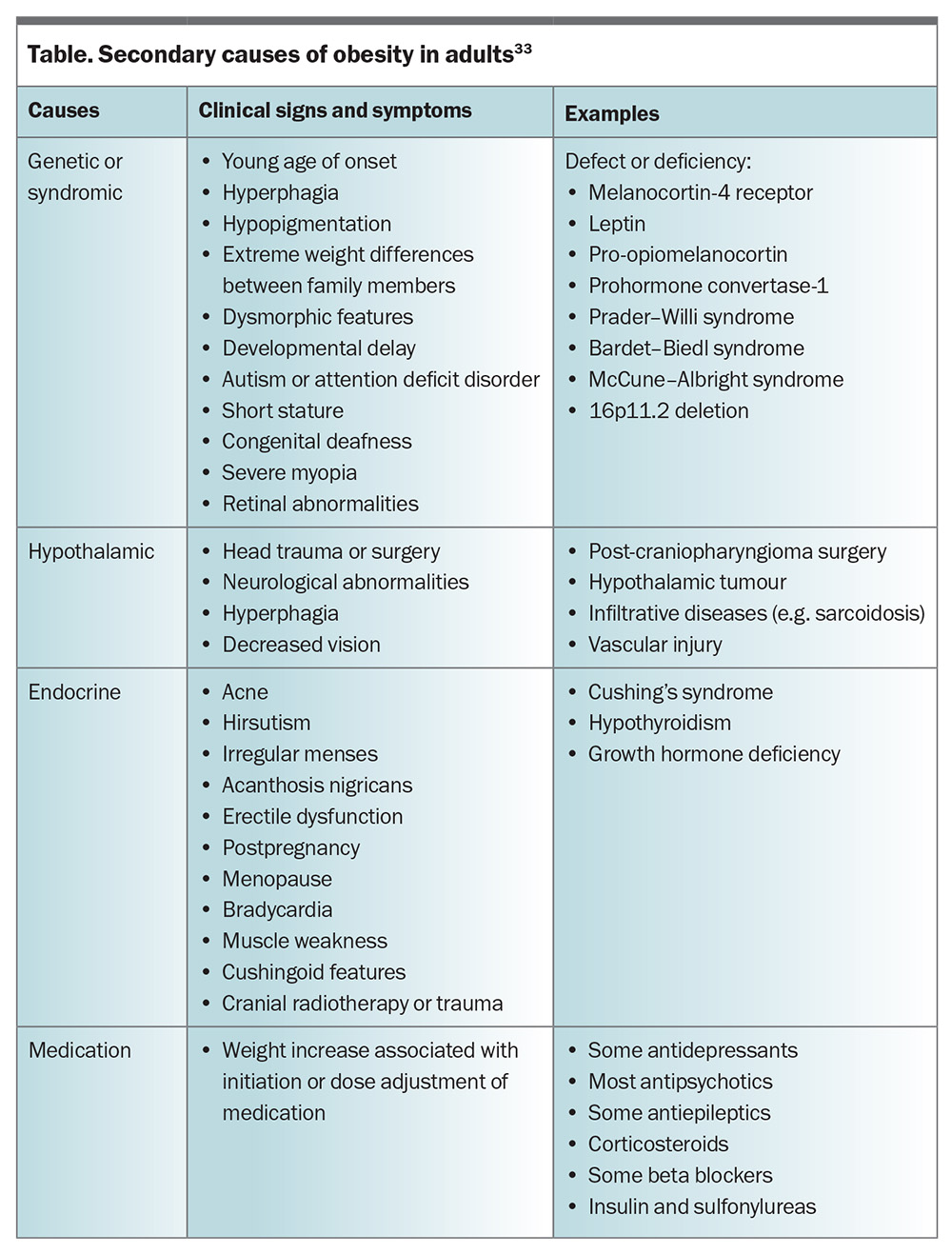
Primary obesity is by far the most prevalent form of obesity in the community, but secondary causes of obesity should be considered during clinical assessment. A thorough review of a patient’s medications is crucial to identifying potential contributors to weight gain. Various drug classes are known to be associated with weight gain (Table).33 If feasible, discontinuing unnecessary medications or switching to weight-neutral alternatives can be beneficial. Although uncommon, hormonal disorders, such as hypothyroidism and Cushing’s syndrome, and hypothalamic disorders can also contribute to weight gain. These disorders should be screened for if clinical features on history and examination are suggestive. Rare genetic causes of obesity, such as Prader–Willi syndrome, usually manifest in childhood, and severe obesity from an early age can be a clue to the diagnosis.
Screening for obesity-associated diseases
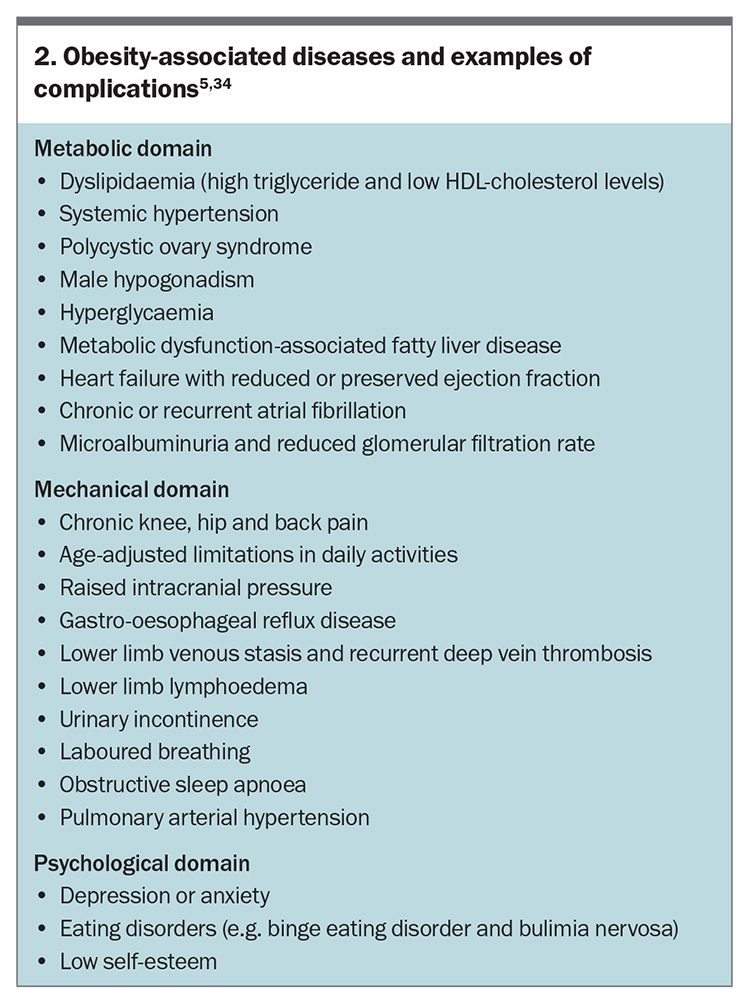
Obesity is associated with numerous diseases and complications that decrease a patient’s quality of life and social wellbeing.5 Obesity- associated diseases often co-occur with obesity because of shared causes or mechanisms, whereas obesity-associated complications involve severe end-organ damage that can be life-altering or life-threatening, such as renal failure.5
Obesity-associated diseases and complications are often separated into three domains:
- metabolic
- mechanical
- psychological (Box 2).5,34
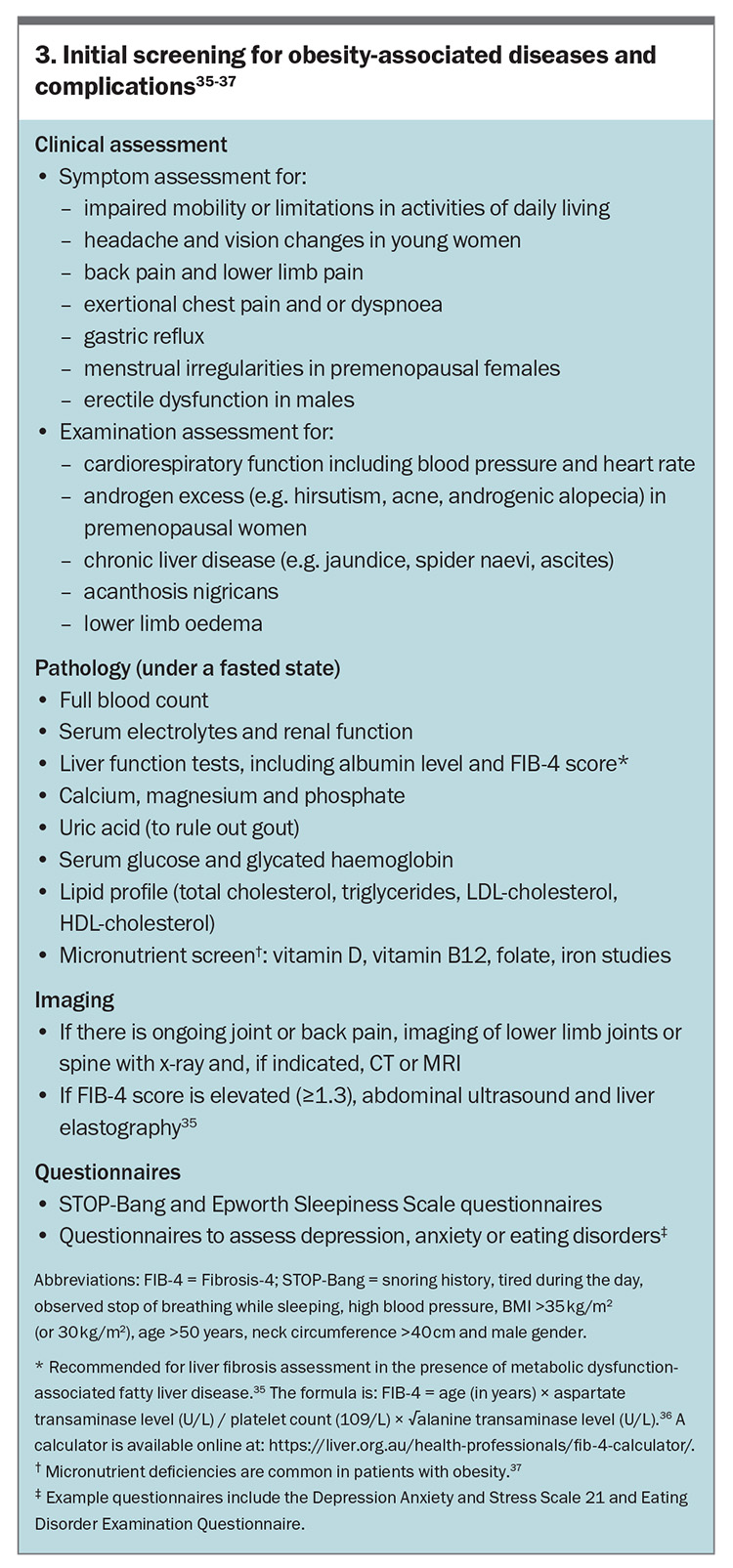
Initial screening for obesity-associated diseases and complications should follow a structured approach that targets these domains, as outlined in Box 3.35-37 Additional tests can be conducted based on the results of initial screening, such as a thyroid function test if there are concerns of an underactive thyroid; a 24-hour urinary cortisol test; a low-dose (1 mg) dexamethasone suppression test or measurement of midnight salivary cortisol levels if there are concerns of Cushing’s syndrome; or serum testosterone level and sex hormone-binding globulin level assessments if there are concerns of hypogonadism in men or polycystic ovary syndrome in premenopausal women. Other examples include imaging of lower limb joints in patients reporting joint pain to assess for osteoarthritic changes, N-terminal pro-B-type natriuretic peptide testing in the presence of clinical evidence of heart failure, and lower limb venous doppler ultrasound in the presence of unilateral oedema and suspicion of deep vein thrombosis.
Determining the severity of obesity
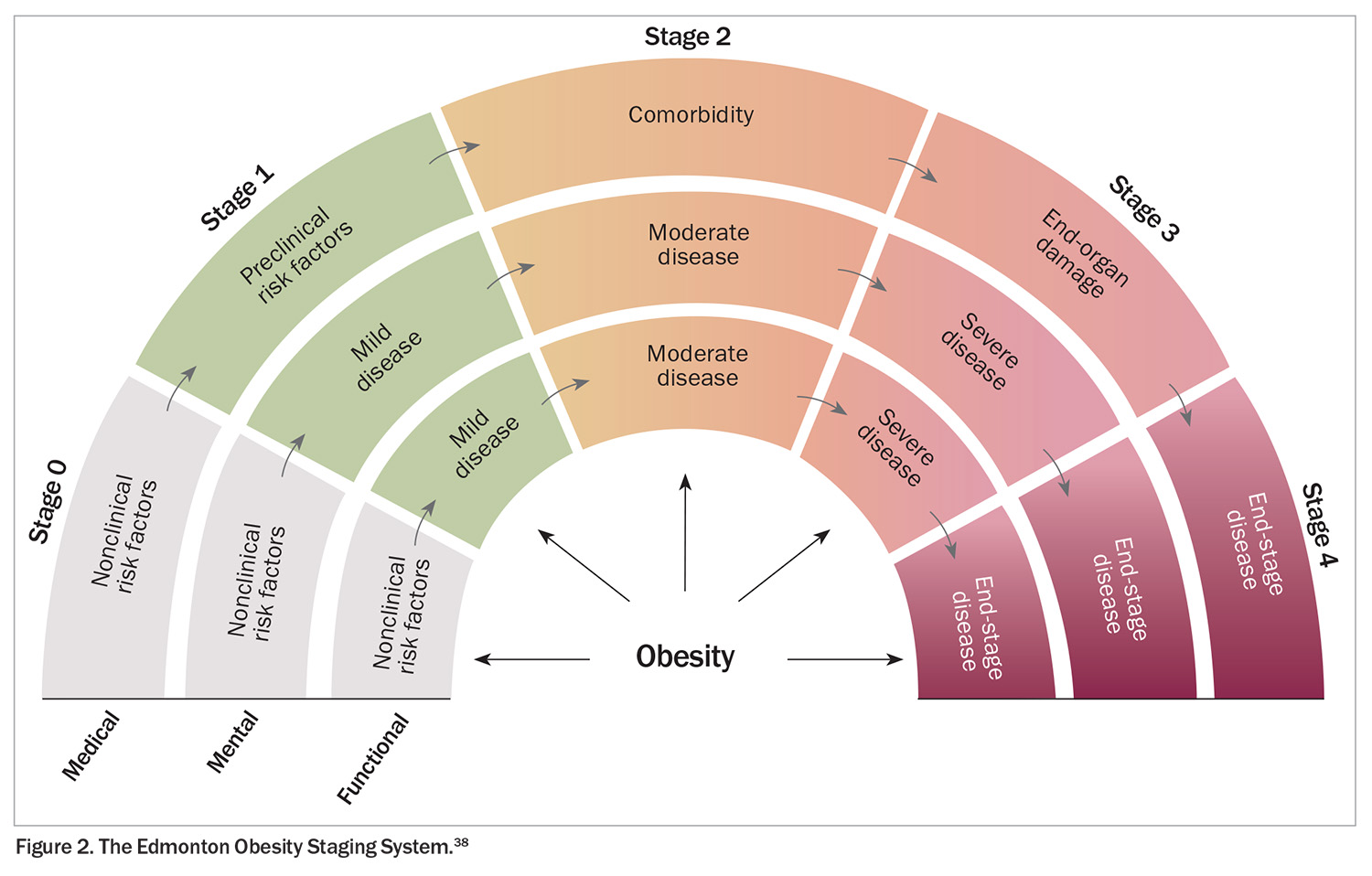
Determining the severity of obesity can be important to help guide further management and resource allocation. The WHO classifies obesity according to different BMI categories (Box 1) and the Australian Institute of Health and Welfare classifies severe obesity as a BMI of more than 35 kg/m2. However, the presence of obesity-associated diseases and complications should determine the severity and guide further management, as suggested by the Lancet Commission.5 The Edmonton Obesity Staging System (EOSS) is a different but widely recognised, validated framework for assessing obesity severity based on weight-related health impairments. Unlike BMI alone, the EOSS categorises obesity severity by evaluating the impact of obesity on medical, physical and psychological wellbeing (Figure 2).38 Higher EOSS stages have been associated with increased healthcare utilisation, polypharmacy and reduced weight loss outcomes.39,40 However, patients with severe obesity can still achieve clinically meaningful weight loss despite higher EOSS staging in an intensive weight management program.41
When to refer to specialists and services
The Australian Obesity Management Algorithm should guide the management of obesity.42 This requires a thorough assessment of complications, as well as suitability for the various interventions available. Although behavioural weight loss therapy (including nutritional and physical activity advice) should form the basis of all weight management consultations, effective pharmacotherapy and bariatric surgery are also available options that could be considered in some patients and should form part of the assessment. Weight loss achieved through lifestyle interventions targeting dietary modification and increased physical activity typically ranges from 5 to 10%.43,44 In contrast, pharmacotherapy (particularly newer incretin-based agents, such as semaglutide and tirzepatide) can result in greater weight loss, ranging from 14.9 to 20.9% at maximal doses.45,46 Bariatric surgery is associated with substantial weight loss, with data from the Australian Bariatric Surgery Registry reporting total weight reductions of 31 to 34%, depending on the type of surgery.47 Moreover, weight loss following bariatric surgery is durable, with sustained weight reductions of 22.5 to 26% maintained over five years in one study, and improved life expectancy even 20 years after surgery based on data from the Swedish Obese Subjects cohort study.48,49
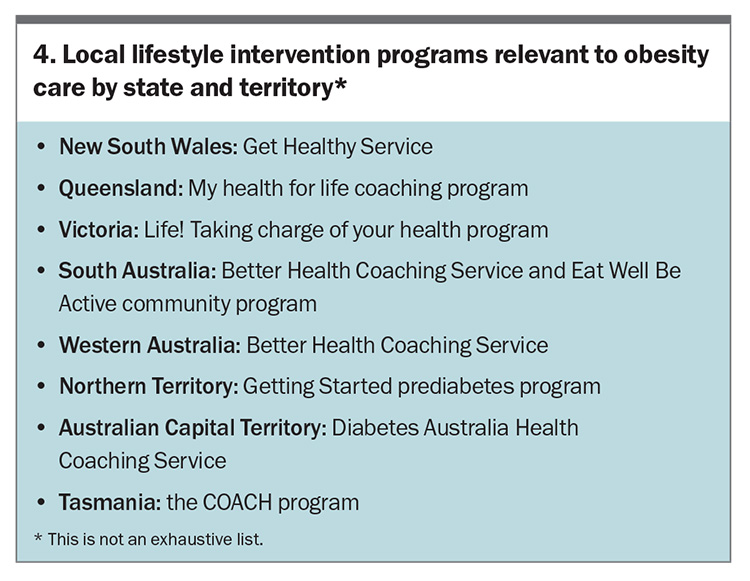
A chronic care plan for obesity should be considered with referral to a dietitian or exercise physiologist. A referral to a clinical psychologist, and the use of a mental health care plan or eating disorder care plan, may be appropriate for some patients. In the current Australian context, many of these interventions or options incur an out-of-pocket cost to the patient and may not always be an affordable option. Most states and territories fund programs targeting healthy eating, increasing physical activity or coaching that are free for the individual, which may be an option (Box 4).
Referrals to other clinical specialists should be made on an individual basis, guided by the patient’s clinical presentation. Patients with class 3 obesity and obesity-associated disease(s) or complication(s) should be referred to a specialised obesity management service where available. Patients with class 3 obesity or class 2 obesity with obesity-associated disease(s) or complication(s) may benefit from assessment for bariatric surgery. Referral to other specialists, such as endocrinologists, sleep physicians, gastroenterologists, cardiologists or psychiatrists, should be considered on a case-to-case basis according to the results of the patient’s obesity-associated disease and complication screening.
Conclusion
Obesity is a chronic and complex condition with many patients having lost and regained weight or struggled to lose weight in the past. The assessment of obesity is often difficult for busy GPs to navigate. Growing public awareness of obesity, combined with advances in treatment options, has led to an increasing number of patients seeking support for weight management. This article outlines strategies to navigate these consultations and the assessment of a person with obesity to identify health-related risks. Care must be taken to ensure weight stigma does not affect the interaction with people with obesity. Although it is important to conduct a thorough assessment for obesity and obesity-associated diseases and complications, this should not delay interventions where appropriate, including the initiation of pharmacotherapy or referral for bariatric surgery assessment. ET
COMPETING INTERESTS: Dr Yang: None. Dr Kormas has received honoraria for presentations from Johnson & Johnson; and is a Board Member of the Weight Issues Network. Associate Professor Piya has received consulting fees from Eli Lilly, Novo Nordisk and Boehringer Ingelheim; has received honoraria for presentations or meetings from Novo Nordisk, Eli Lilly and Johnson & Johnson; has received support for attending conferences from Eli Lilly and Novo Nordisk; and is a Council Member of the Australia New Zealand Obesity Society.
References
1. Australian Institute of Health and Welfare (AIHW). Overweight and obesity. Canberra: AIHW; 2024. Available online at: https://www.aihw.gov.au/reports/overweight-obesity/overweight-and-obesity/contents/summary (accessed January 2026).
2. GBD 2021 Adolescent BMI Collaborators. Global, regional, and national prevalence of child and adolescent overweight and obesity, 1990-2021, with forecasts to 2050: a forecasting study for the Global Burden of Disease Study 2021. Lancet 2025; 405: 785-812.
3. Australian Institute of Health and Welfare (AIHW). Australian Burden of Disease Study 2024. Canberra: AIHW; 2024. Available online at: https://www.aihw.gov.au/reports/burden-of-disease/australian-burden-of-disease-study-2024/contents/summary (accessed January 2026).
4. Commonwealth of Australia. The National Obesity Strategy 2022–2032. Canberra: Health Ministers Meeting; 2022. Available online at: https://www.health.gov.au/resources/publications/national-obesity-strategy-2022-2032?language=en (accessed January 2026).
5. Rubino F, Cummings DE, Eckel RH, et al. Definition and diagnostic criteria of clinical obesity. Lancet Diabetes Endocrinol 2025; 13: 221-262.
6. Global BMI Mortality Collaboration; Di Angelantonio E, Bhupathiraju Sh N, Wormser D, et al. Body-mass index and all-cause mortality: individual-participant-data meta-analysis of 239 prospective studies in four continents. Lancet 2016; 388: 776-786.
7. Peters SAE, Bots SH, Woodward M. Sex differences in the association between measures of general and central adiposity and the risk of myocardial infarction: results from the UK biobank. J Am Heart Assoc 2018; 7 (5): e008507.
8. Shen W, Punyanitya M, Chen J, et al. Waist circumference correlates with metabolic syndrome indicators better than percentage fat. Obesity (Silver Spring) 2006; 14: 727-736.
9. Jih J, Mukherjea A, Vittinghoff E, et al. Using appropriate body mass index cut points for overweight and obesity among Asian Americans. Prev Med 2014; 65: 1-6.
10. Alberti KGMM, Zimmet P, Shaw J. Metabolic syndrome - a new world-wide definition. A Consensus Statement from the International Diabetes Federation. Diabet Med 2006; 23: 469-480.
11. Ahmed KY, Mondal UK, Huda MM, et al. Normal-weight central obesity and cardiometabolic disorders among Aboriginal and Torres Strait Islander Australians. BMC Med 2025; 23: 106.
12. Li M, McDermott RA. Using anthropometric indices to predict cardio-metabolic risk factors in Australian indigenous populations. Diabetes Res Clin Pract 2010; 87: 401-406.
13. World Health Organization (WHO). Obesity: preventing and managing the global epidemic: report of a WHO consultation. Geneva: WHO; 2000. Available online at: https://iris.who.int/handle/10665/42330 (accessed January 2026).
14. World Health Organisation (WHO). Waist circumference and waist-hip ratio: report of a WHO expert consultation. Geneva: WHO; 2008. Available online at: https://www.who.int/publications/i/item/9789241501491 (accessed January 2026).
15. Ashwell M, Gunn P, Gibson S. Waist-to-height ratio is a better screening tool than waist circumference and BMI for adult cardiometabolic risk factors: systematic review and meta-analysis. Obes Rev 2012; 13: 275-286.
16. Abdi Dezfouli R, Mohammadian Khonsari N, Hosseinpour A, Asadi S, Ejtahed HS, Qorbani M. Waist to height ratio as a simple tool for predicting mortality: a systematic review and meta-analysis. Int J Obes (Lond) 2023; 47: 1286-1301.
17. Kritchevsky SB, Beavers KM, Miller ME, et al. Intentional weight loss and all-cause mortality: a meta-analysis of randomized clinical trials. PLoS One 2015; 10(3): e0121993.
18. Lean ME, Leslie WS, Barnes AC, et al. Primary care-led weight management for remission of type 2 diabetes (DiRECT): an open-label, cluster-randomised trial. Lancet 2018; 391: 541-551.
19. Fuller NR, Burns J, Sainsbury A, et al. Examining the association between depression and obesity during a weight management programme. Clin Obes 2017; 7: 354-359.
20. Höchsmann C, Dorling JL, Martin CK, Earnest CP, Church TS. Association between weight loss, change in physical activity, and change in quality of life following a corporately sponsored, online weight loss program. BMC Public Health 2022; 22: 451.
21. Villareal DT, Chode S, Parimi N, et al. Weight loss, exercise, or both and physical function in obese older adults. N Engl J Med 2011; 364: 1218-1229.
22. Caterson ID, Alfadda AA, Auerbach P, et al. Gaps to bridge: misalignment between perception, reality and actions in obesity. Diabetes Obes Metab 2019; 21: 1914-1924.
23. Post RE, Mainous AG, 3rd, Gregorie SH, Knoll ME, Diaz VA, Saxena SK. The influence of physician acknowledgment of patients’ weight status on patient perceptions of overweight and obesity in the United States. Arch Intern Med 2011; 171: 316-321.
24. Brown A, Flint SW, Batterham RL. Pervasiveness, impact and implications of weight stigma. EClinicalMedicine 2022; 47: 101408.
25. Phelan SM, Burgess DJ, Yeazel MW, Hellerstedt WL, Griffin JM, van Ryn M. Impact of weight bias and stigma on quality of care and outcomes for patients with obesity. Obes Rev 2015; 16: 319-326.
26. Alberga AS, Edache IY, Forhan M, Russell-Mayhew S. Weight bias and health care utilization: a scoping review. Prim Health Care Res Dev 2019; 20: e116.
27. Lawrence B, de la Piedad Garcia X, Kite J, et al. Weight stigma in Australia: a public health call to action. Public Health Res Pract 2022; 32 (3): e3232224.
28. Hill B, de la Piedad Garcia X, Rathbone J, et al. Supporting healthcare professionals to reduce weight stigma. Aust J Gen Pract 2024; 53: 682-685.
29. Bentz CJ, Bayley KB, Bonin KE, et al. Provider feedback to improve 5A’s tobacco cessation in primary care: a cluster randomized clinical trial. Nicotine Tob Res 2007; 9: 341-349.
30. Wharton S, Lau DCW, Vallis M, et al. Obesity in adults: a clinical practice guideline. CMAJ 2020; 192: E875-E891.
31. Schlair S MS, McMacken M, Jay M. How to deliver high-quality obesity counseling in primary care using the 5As framework. J Clin Outcomes Manag 2012; 19: 221-229.
32. Fruh SM, Nadglowski J, Hall HR, Davis SL, Crook ED, Zlomke K. Obesity stigma and bias. J Nurse Pract 2016; 12: 425-432.
33. van der Valk ES, van den Akker ELT, Savas M, et al. A comprehensive diagnostic approach to detect underlying causes of obesity in adults. Obes Rev 2019; 20: 795-804.
34. Lingvay I, Cohen RV, Roux CWL, Sumithran P. Obesity in adults. Lancet 2024; 404: 972-987.
35. Adams LA, Kemp WW, Muller KR, et al. Assessment of metabolic dysfunction-associated fatty liver disease in primary care: a consensus statement summary. Med J Aust 2025; 223: 268-276.
36. Sterling RK, Lissen E, Clumeck N, et al. Development of a simple noninvasive index to predict significant fibrosis in patients with HIV/HCV coinfection. Hepatology 2006; 43: 1317-1325.
37. Via M. The malnutrition of obesity: micronutrient deficiencies that promote diabetes. ISRN Endocrinol 2012; 2012: 103472.
38. Sharma AM, Kushner RF. A proposed clinical staging system for obesity. Int J Obes (Lond) 2009; 33: 289-295.
39. Atlantis E, Fahey P, Williams K, et al. Comparing the predictive ability of the Edmonton Obesity Staging System with the body mass index for use of health services and pharmacotherapies in Australian adults: a nationally representative cross-sectional study. Clin Obes 2020; 10(4): e12368.
40. Atlantis E, Sahebolamri M, Cheema BS, Williams K. Usefulness of the Edmonton Obesity Staging System for stratifying the presence and severity of weight-related health problems in clinical and community settings: a rapid review of observational studies. Obes Rev 2020; 21(11): e13120.
41. Kodsi R, Chimoriya R, Medveczky D, et al. Clinical use of the Edmonton Obesity Staging System for the assessment of weight management outcomes in people with class 3 obesity. Nutrients 2022; 14: 967.
42. Markovic TP, Proietto J, Dixon JB, et al. The Australian Obesity Management Algorithm: a simple tool to guide the management of obesity in primary care. Obes Res Clin Pract 2022; 16: 353-363.
43. Chen Y, Xu X, Zhou P, et al. Evaluation of the effectiveness of a restricted diet therapy package combining standardised caloric intake with exercise in obese patients: a 12-month randomised controlled trial. Clin Nutr 2025; 55: 152-161.
44. Olateju IV, Opaleye-Enakhimion T, Udeogu JE, et al. A systematic review on the effectiveness of diet and exercise in the management of obesity. Diabetes Metab Syndr 2023; 17: 102759.
45. Wilding JPH, Batterham RL, Calanna S, et al. Once-weekly semaglutide in adults with overweight or obesity. N Engl J Med 2021; 384: 989-1002.
46. Jastreboff AM, Aronne LJ, Ahmad NN, et al. Tirzepatide once weekly for the treatment of obesity. N Engl J Med 2022; 387: 205-216.
47. The Bariatric Surgery Registry Annual Report 2024. School of Translational Medicine, Monash University, July 2025, Report No. 12. Version 1.0. Available online at: https://www.monash.edu/medicine/translational/research/registries/bariatric (accessed January 2026).
48. Biter LU, t’ Hart JW, Noordman BJ, et al. Long-term effect of sleeve gastrectomy vs Roux-en-Y gastric bypass in people living with severe obesity: a phase III multicentre randomised controlled trial (SleeveBypass). Lancet Reg Health Eur 2024; 38: 100836.
49. Carlsson LMS, Sjoholm K, Jacobson P, et al. Life expectancy after bariatric surgery in the Swedish Obese Subjects study. New Engl J Med 2020; 383: 1535-1543.
Single article purchases are temporarily unavailable due to site maintenance.
If you would like to purchase an article during this time, please email us at [email protected] with the article details and we'll assist you directly. We'll also let you know when online purchasing is available again.
Thank you for your patience and understanding.