
Managing CVD risk in type 1 diabetes: optimising outcomes

Cardiovascular disease (CVD) risk is increased in people with type 1 diabetes compared with those without diabetes. CVD risk recognition, regular patient education and multiple risk factor care together reduces CVD risk. GPs are well placed to provide CVD risk factor management for people with T1D and to co-ordinate their ongoing care.
- Cardiovascular disease (CVD) is increased several-fold in people with type 1 diabetes (T1D) relative to their peers without diabetes, and this risk is particularly high in those with microvascular complications or with early-onset (under 10 years of age) T1D.
- Managing multiple traditional risk factors is key for both CVD prevention and risk reduction of other chronic complications of diabetes.
- Achieving glycated haemoglobin (HbA1c) targets alone is not sufficient to prevent CVD. Optimising other aspects of glycaemia, insulin delivery modality and other risk factors for CVD is also desirable.
- Early and ongoing education and dialogue for people with T1D are key to CVD risk reduction.
- A team-based approach involving GP care and shared care with other physicians (e.g. endocrinologist, cardiologist) and allied healthcare professionals as needed is ideal.
An estimated 135,000 Australians have type 1 diabetes (T1D), two-thirds of whom are aged 40 years or above and one-third 60 years or above, hence most are at an age when cardiovascular disease (CVD) may become clinically manifest.1 Postmortem studies show that in Western societies atherosclerosis starts in youth, even in those without diabetes.2 Other studies have shown that carotid intima-media thickness, a surrogate marker of atherosclerosis, is increased in youth with, versus those without, T1D, even after just one year of having diabetes.3 CVD is a leading cause of morbidity and mortality in T1D.4 Based on the T1D Index, in Australia relative to the general population, an estimated 22 years of healthy life years are lost by people with T1D, and an estimated 18,000 people would otherwise be alive today had they not died prematurely due to T1D and its complications.5
Although recent trends show improved long-term survival for people with T1D, they still have substantial risk of cardiovascular morbidity and mortality.4,6 Recent population-based studies show a four- to 10-fold higher CVD risk in people with T1D compared with matched counterparts without diabetes.7 Therefore, early recognition and intervention to comprehensively address risk factors and subclinical and clinical CVD are of vital importance.
There is substantial overlap in CVD risk factor care in those living with T1D, those living with type 2 diabetes (T2D) and the general population. The GP is well placed to provide CVD risk factor management for people with T1D and to co-ordinate their care. Here, we review the drivers of and mitigation of CVD in people with T1D, with a focus on primary prevention. Secondary prevention of CVD also includes aggressive risk factor management.
Characteristics and drivers of atherosclerosis in type 1 diabetes
Atherosclerosis in people with diabetes, including T1D, differs from that in people without diabetes, although the responses to medical treatments are similar. In people with T1D, atherosclerosis starts earlier, progresses faster and extends more distally in arteries, often reducing the potential for interventions such as bypass surgery and stenting and, therefore, placing great emphasis on medical therapies. There is more inflammation and more unstable (lipid-rich, inflamed, thin fibrous cap) plaques in people with diabetes compared with those without.8 People with T1D are also more likely to have a procoagulant and antifibrinolytic state, which promotes blood clotting and often triggers an acute CVD event.8
Accelerated atherosclerosis in people with diabetes is multifactorial. Traditional risk factors remain important – i.e. age, diabetes per se (including diabetes duration and various aspects of glycaemia, discussed later), adiposity, smoking, dyslipidaemia, hypertension, family history and genetics. Novel risk factors include renal dysfunction, sedentary lifestyle, insulin resistance, peripheral hyperinsulinaemia (due to subcutaneous insulin delivery), qualitative changes in lipoproteins (e.g. glycation and oxidation), inflammation, oxidative stress and endothelial dysfunction.
In those affected, CVD starts in youth and progresses silently for many years until an acute event occurs. The 2025 American Diabetes Association (ADA) guidelines do not recommend screening (e.g. by coronary artery calcium [CAC] scoring or angiography) for silent or subclinical disease, as it does not improve clinical outcomes provided the multiple traditional risk factors are treated aggressively.9 However, in the general and CVD population, showing clinicians and patients image-based evidence of vascular damage has been associated with greater likelihood of starting or continuing risk factor care, such as lipid-lowering drugs.10 In Australia, screening for retinal and renal diabetes complications is recommended and subsidised but screening for subclinical CVD is not. However, as clinicians, we should have a low threshold for suspicion, particularly as CVD in people with diabetes may manifest atypically.
Once CVD is clinically evident it should be treated aggressively, but we must be mindful that the first clinical evidence of CVD may be sudden cardiac death.11 CVD in people with T1D may also be silent or present with atypical symptoms.11 For people without clinically evident CVD (primary prevention), the use of CVD risk calculators, ideally ones developed for people with T1D, should be used to guide clinician and patient dialogue and treatment decisions. Using calculators that have not been developed from, or validated in, people with T1D usually underestimate risk.
CVD risk factor assessment and management
Much evidence in the general and T2D populations supports that managing multiple risk factors reduces CVD.12 However, there are few T1D-specific trials, and they are unlikely to be conducted given the high CVD risk of adults with T1D and the compelling indirect evidence base supporting recommendations for multiple risk factor management. Furthermore, if hard rather than surrogate clinical events are used, trials would take many years to conduct. Pleasingly, subgroup analyses of trials show similar benefits of some treatments, such as lipid-lowering therapy for people with T1D or T2D and in the general population. For example, for every 1 mmol/L reduction in LDL-cholesterol (LDL-C) there is a 21% risk reduction of a CVD event and 9% lower risk of five-year cardiac death.13 Large real-world T1D observational studies are of interest.
CVD risk calculators for type 1 diabetes
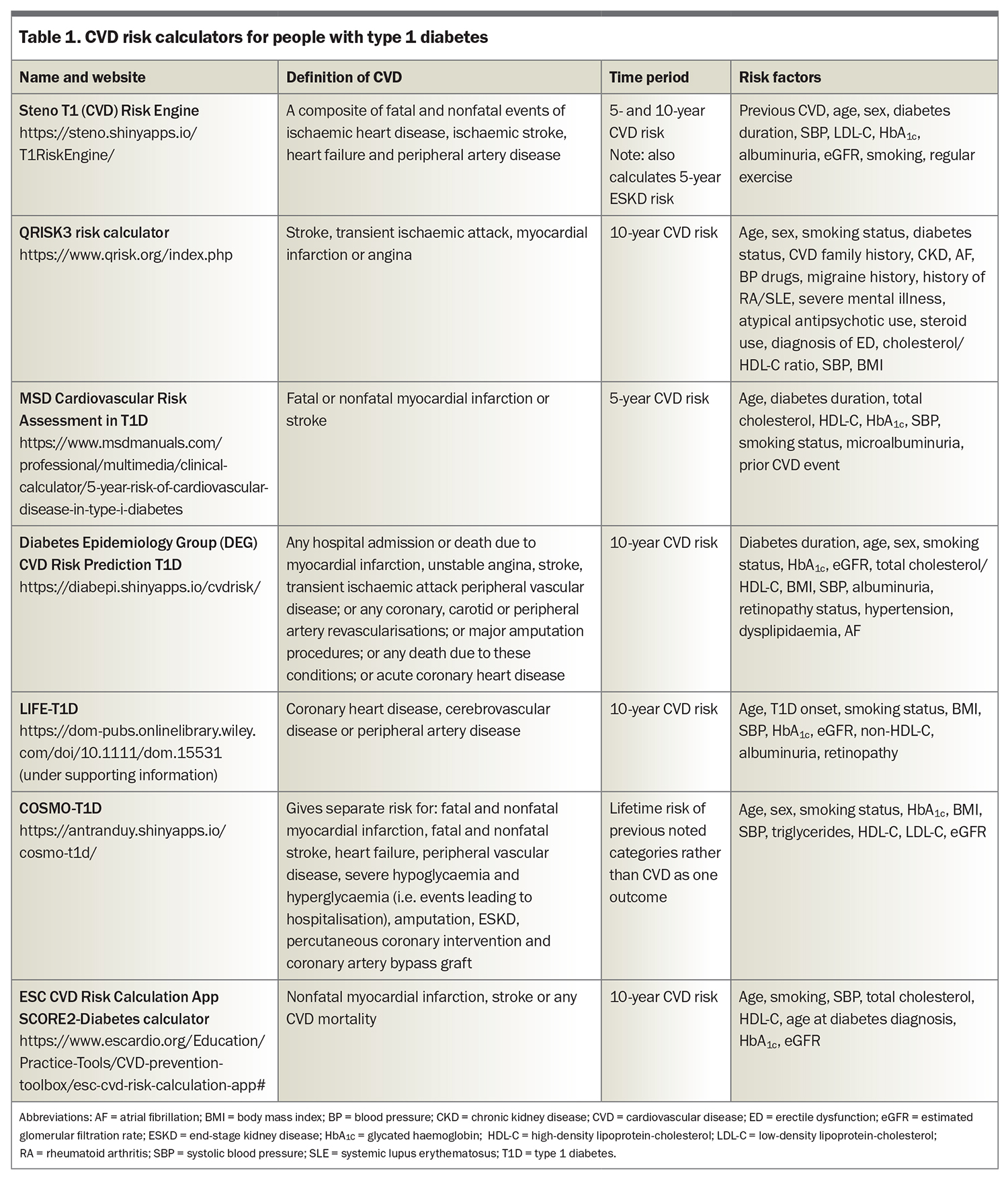
Six CVD risk calculators for people with T1D are summarised in Table 1. Included are the definition of CVD, risk period and included risk factors. Importantly, the comprehensive COSMO App (https://antranduy.shinyapps.io/cosmo-t1d/) assumes some background risk factor levels.
Risk factor targets and suggested levels
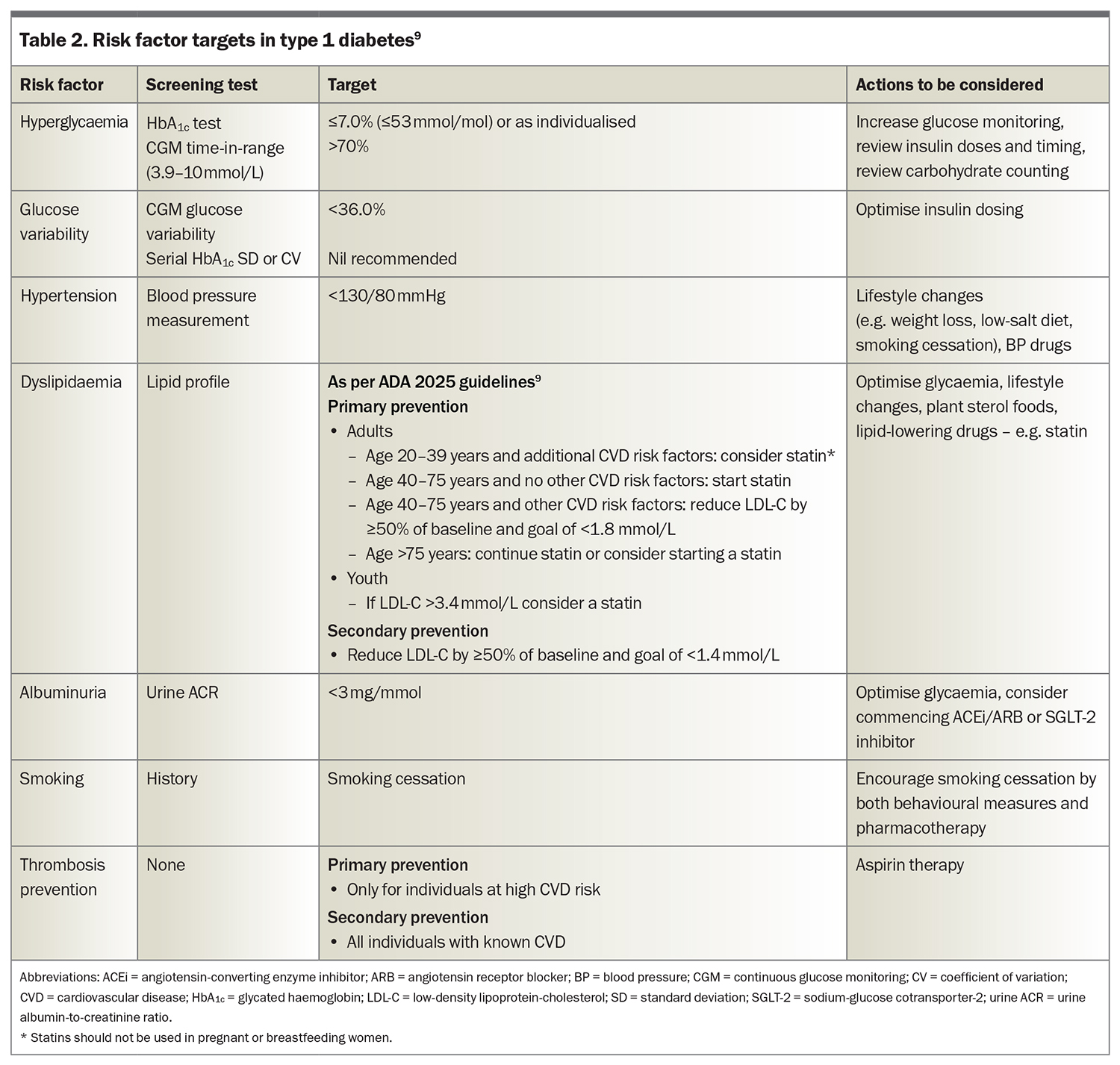
Recommended risk factor targets are summarised in Table 2, and further details on some of these are discussed below.
Glucose management
The T1D Diabetes Complications and Control Trial (DCCT; n = 1 441), with over 30 years’ and ongoing follow up, showed a 31% increased CVD risk for every 1% increase in HbA1c levels and that lowering HbA1c was associated with reduced risk of CVD and microvascular complications and with long-term metabolic memory.14 Intensive diabetes therapy (basal bolus or insulin pump) is now routine for T1D care, and for adults with T1D a general target of less than 7.0% (53 mmol/mol) is recommended.15 For children and adolescents with T1D, the recommended target HbA1c is at least 6.5% (48mmol/mol) for those with access to diabetes technology such as insulin pumps, and at least 7.0% (53 mmol/mol) for those without.16
Other glucose-related metrics associated with increased CVD risk in people with diabetes include hypoglycaemia and greater glucose and HbA1c variability.15 Even mild hypoglycaemia in people with T1D is associated with increased inflammation, oxidative stress and vasoconstriction, which can last a week.17 Severe hypoglycaemia (blood glucose <2.0 mmol/L) in T2D trials has been associated with increased cardiovascular mortality.18 Hypoglycaemia prolongs the QT-interval and is proarrhythmogenic, and a likely cause of the ‘dead-in-bed’ syndrome (sudden unexpected overnight death) in people with T1D.19 Hence, avoiding hypoglycaemia is a key consideration in T1D care.
Glucose variability is also an independent CVD risk factor in diabetes.20 Although no study has directly investigated glucose variability and CVD events in T1D, glycaemic variability has been associated with increased CAC scores in men with T1D.21 In people with T2D HbA1c variability has also been associated with higher CVD risk.22,23 With continuous glucose monitoring (CGM), we have better means to assess glucose variability as reflected by the coefficient of variation, with a treatment goal of less than 36.0%. The CGM-related treatment goal for time-in-range (3.9 to 10.0 mmol/L) is greater than 70% and for time in hypoglycaemia (<3.9 mmol/L) is less than 4.0%.24 CGMs are now subsidised for all people in Australia with T1D, and multiple T1D studies show improved HbA1c and CGM metrics.25 CGM uptake by people in Australia with T1D is estimated to be about 80%.
Insulin pump use, either alone or linked with CGM (using an automated insulin delivery system), is also associated with better HbA1c and glucose metrics, and, as shown by the Swedish Diabetes Registry data, associated with major reductions in CVD death (hazard ratio, 0.58), even for the same mean HbA1c levels.26 Putative mechanisms include reduced exposure to elevated glucose levels, less hypoglycaemia, lower glucose and HbA1c variability, the (roughly 20-30%) lower total daily insulin dose, and lower inflammation and oxidative stress. Although CGM systems are subsidised, insulin pumps are not, with only about 20% of people in Australia with T1D using pumps, which are usually funded via private health insurance.27 Advocacy for government funding of pumps for all with T1D who desire them is ongoing.27
Dyslipidaemia
Dyslipidaemia is a major and very treatable risk factor, and in T1D is associated with CVD, independent of hyperglycaemia.28,29 Unlike in people with T2D, hypertriglyceridaemia and low HDL-cholesterol (HDL-C) levels are not common, partly due to the hyperinsulinaemia of treated T1D promoting (triglyceride-rich) very-low-density lipoprotein catabolism. The major lipid involved is usually LDL-C, which, even if levels are normal, has diabetes-related qualitative changes that greatly enhance its atherogenicity.30 Despite this, dyslipidaemia remains often undertreated in people with T1D, likely due to clinician and patient factors.31
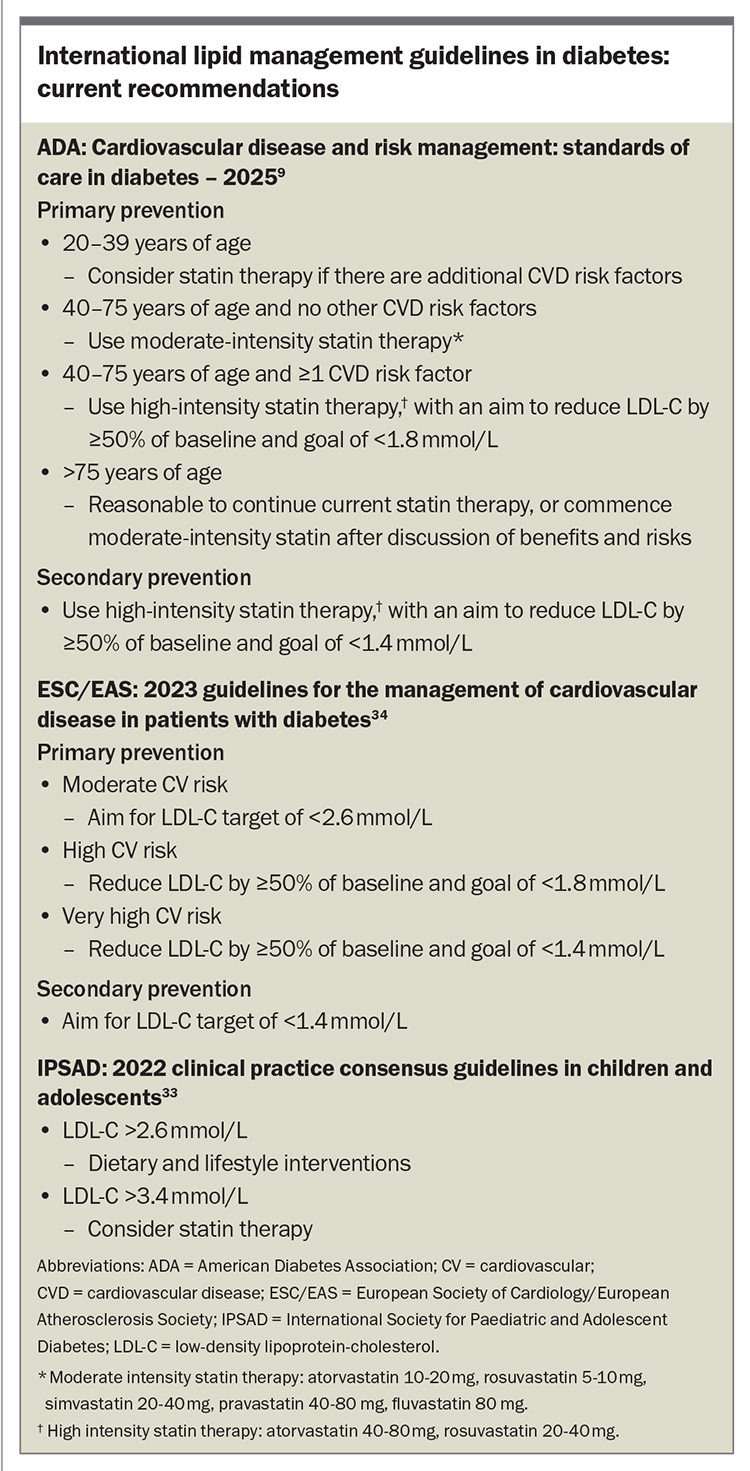
LDL-C targets for people with diabetes predominantly come from evidence in trials involving people with T2D or meta-analyses of trials including people with T1D.13,32 Because age and T1D are major CVD risk factors, most guidelines suggest the use of lipid-lowering drugs, irrespective of lipid levels for adults with T1D aged 40 years or above.9 Even in children and adolescents, recent International Society for Paediatric and Adolescent Diabetes (IPSAD) guidelines recommend considering lipid-lowering therapy for youth with T1D with an LDL-C level greater than 3.4 mmol/L.33 Generally for CVD prevention, ‘lower LDL-C is better’ and best is even lower LDL-C and for longer. The Box summarises recent guidelines favouring more aggressive LDL-C targets in T1D.9,33,34
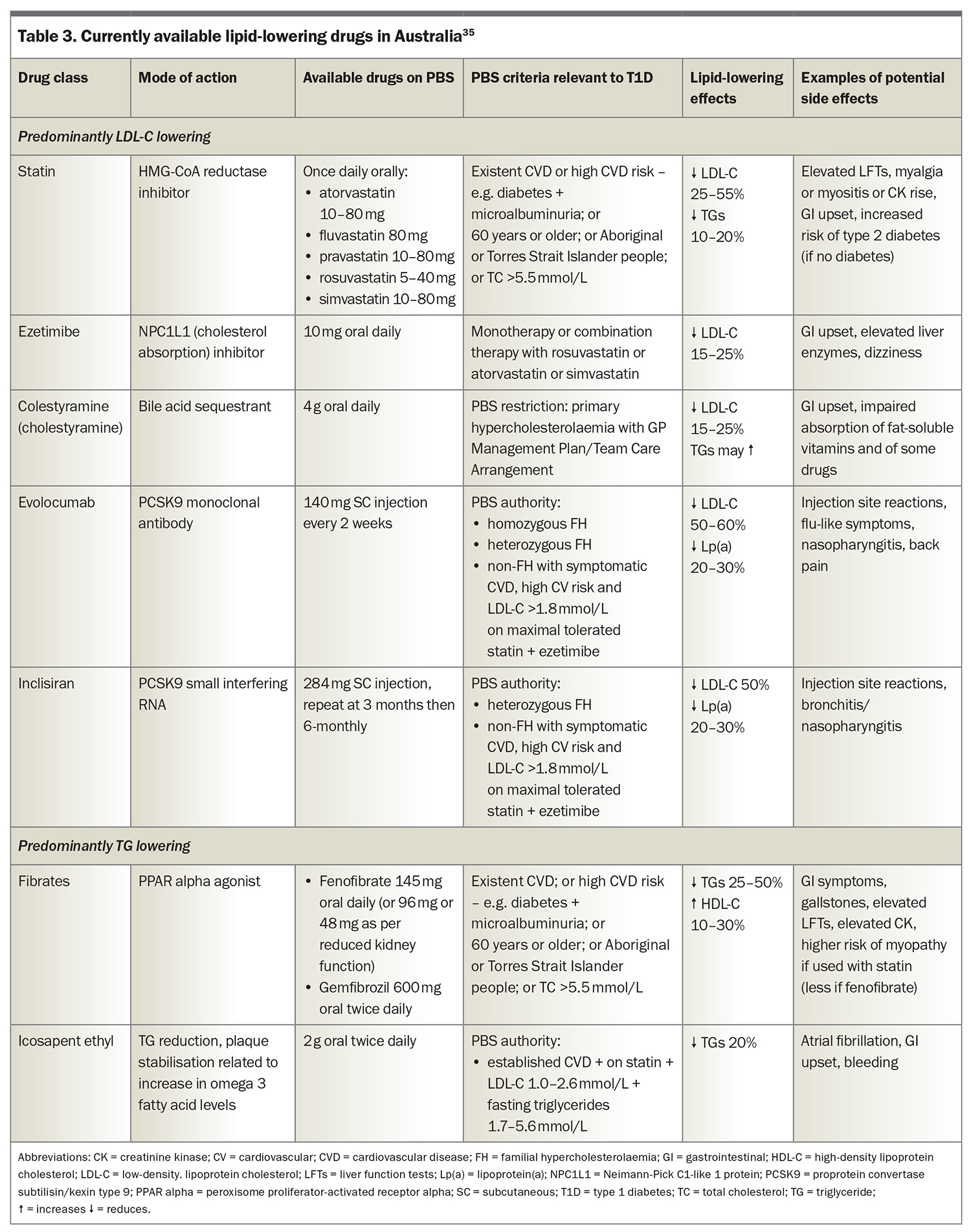
Along with lifestyle measures, lipid-lowering medications are often needed to meet recommended targets and can be added in a stepwise manner. Table 3 summarises currently available lipid-lowering drugs in Australia.35 The most commonly used LDL-C-lowering medications for CVD prevention or treatment in adults with T1D are a statin and ezetimibe, which can be used in combination, and a proprotein convertase subtilisin/kexin type 9 (PCSK9) inhibitor can be used if needed.
Hypertension
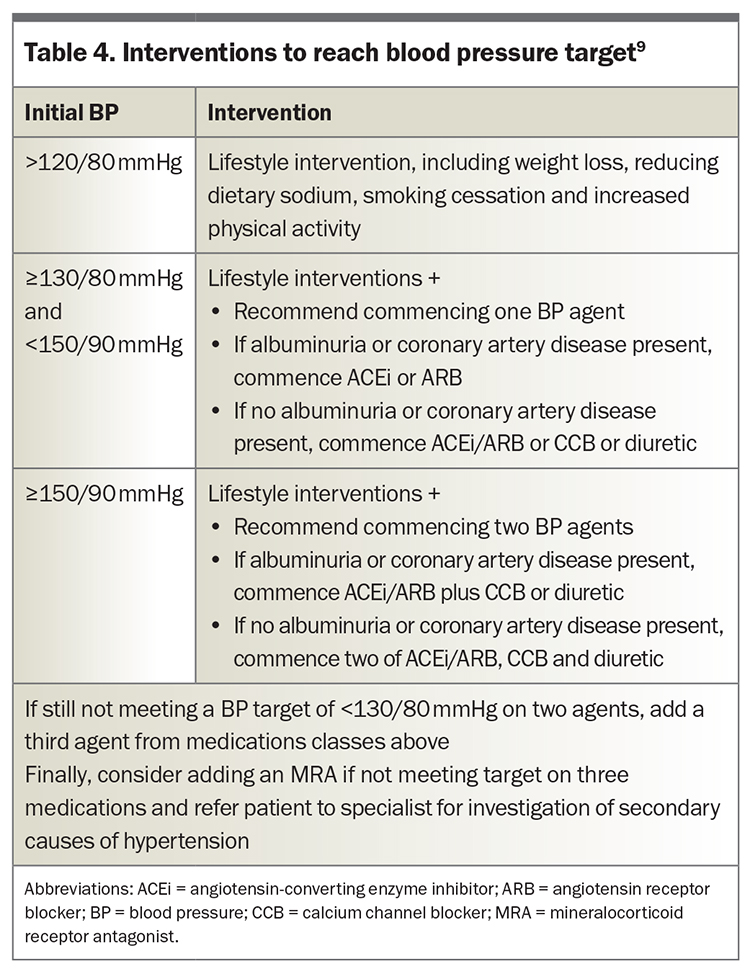
Hypertension is more common in people with T1D than in those without.15 Screening should be routine, including blood pressure (BP) measurement at each clinic visit, at the pharmacy, at home or with 24-hour BP monitoring. An elevated BP without a previous diagnosis of hypertension should be confirmed on multiple readings on separate days.9 Again, there is an absence of high-quality data on BP targets in T1D, and so current targets mirror that of people with T2DM.9 Although BP targets should be individualised to take into account potential adverse effects of medications, general BP targets are less than 130/80mmHg. Table 4 summarises ADA-recommended BP targets and medications.
Thrombosis prevention
Aspirin use is strongly recommended for secondary prevention in people with diabetes and CVD.9 The evidence for aspirin use in primary prevention for people with diabetes is less clear. Aspirin appears to have a modest effect on CVD events, increasing with underlying CVD risk.9 Its use does, however, come with increased risk of bleeding, often gastrointestinal bleeding. Therefore, current ADA guidelines only recommend the use of aspirin as primary prevention for CVD in people with diabetes at high CVD risk and only after shared decision making with patients regarding the benefits and risk of aspirin use. It has been suggested that people with diabetes have a relative ‘aspirin resistance’ due to platelet dysfunction, and higher doses may be necessary.36 More research is needed before higher than usual doses of antiplatelet drugs are recommended for people with T1D.
Adjunct treatments for risk factor management
T2D drugs may also be cardioprotective in people with T1D. There has been a rise in the use of glucagon-like peptide-1 (GLP-1) receptor agonists and sodium-glucose cotransporter-2 (SGLT-2) inhibitors in people with T2D given their glucose lowering (in diabetes) and weight-loss effects and significant cardiorenal benefits. Neither has regulatory approval currently for use in people with T1D, mainly due to the risk of diabetic ketoacidosis (DKA).
Some GLP-1 receptor agonist T1D trials have shown moderate benefit in HbA1c levels and weight without increased incidence of severe hypoglycaemia or DKA.37 Further efficacy and safety studies are needed. SGLT-2 inhibitors have been linked with increased risk of genitourinary infections and DKA in people with T1D.38,39 Continuous ketone monitoring may have a role in early ketosis detection; however, such monitors are not yet clinically available. Given their potential benefits, there may be a role for these medications in T1D, but currently we do not recommend their use in all people with T1D. Although recognising the existence of off-label use, we advise considerable caution and prescription of these agents should only be implemented in conjunction with a diabetes specialist after a detailed discussion with the patient and provision of appropriate education to minimise the DKA risk.
Conclusion
A multimodal approach needs to be taken to reduce CVD risk in people with T1D. Using T1D-validated CVD risk calculators can help quantify risk, discussions with patients and treatment decisions. Glucose management to reduce hyperglycaemia, glucose variability and hypoglycaemia is important. Likewise, management of lipid levels, blood pressure and weight and supporting nonsmoking are also key. ET
COMPETING INTERESTS: Dr Apostolopoulos and Professor O’Neal: None. Professor Jenkins has received lecture and advisory board fees from CSL Seqirus, Abbott Diabetes (Australia) and GSK, and serves honorary roles on Insulin For Life Global, Insulin For Life Australia Board and the International Diabetes Federation (IDF) as IDF WPR Chair, IDF Disaster Committee Chair, IDF Board Member and IDF Youth Leader Committee Member.
ACKNOWLEDGEMENTS: The authors thank Drs Nick Lan, Gerry Fegan and Michael Huang and Ms Madeleine Hemphill for helpful discussions.
References
1. AHA (Australian Healthcare Associates). NDSS Registrant Details Audit Final Report for Diabetes Australia. Melbourne: AHA; 2015.
2. McNamara JJ, Molot MA, Stremple JF, Cutting RT. Coronary artery disease in combat casualties in Vietnam. JAMA 1971; 216: 1185-1187.
3. Yamasaki Y, Kawamori R, Matsushima H, et al. Atherosclerosis in carotid artery of young IDDM patients monitored by ultrasound high-resolution B-mode imaging. Diabetes 1994; 43: 634-639.
4. Bebu I, Schade D, Braffett B, et al. Risk factors for first and subsequent CVD events in type 1 diabetes: the DCCT/EDIC study. Diabetes Care 2020; 43: 867-874.
5. Ogle GD, Gregory GA, Wang F, et al. The T1D Index: implications of initial results, data limitations, and future development. Curr Diab Rep 2023; 23: 277-291. [Published correction in Curr Diab Rep 2023; 23: 305.]
6. Secrest AM, Becker DJ, Kelsey SF, LaPorte RE, Orchard TJ. All-cause mortality trends in a large population-based cohort with long-standing childhood-onset type 1 diabetes: the Allegheny County type 1 diabetes registry. Diabetes Care 2010; 33: 2573-2579.
7. Livingstone SJ, Looker HC, Hothersall EJ, et al. Risk of cardiovascular disease and total mortality in adults with type 1 diabetes: Scottish registry linkage study. PLoS Med 2012; 9: e1001321.
8. Jenkins A, Januszewski A, O’Neal D. The early detection of atherosclerosis in type 1 diabetes: why, how and what to do about it. Cardiovasc Endocrinol Metab 2019; 8: 14-27.
9. American Diabetes Association Professional Practice Committee. 10. Cardiovascular disease and risk management: standards of care in diabetes-2025. Diabetes Care 2025; 48(1 Suppl 1): S207-S238.
10. Kalia NK, Miller LG, Nasir K, Blumenthal RS, Agrawal N, Budoff MJ. Visualizing coronary calcium is associated with improvements in adherence to statin therapy. Atherosclerosis 2006; 185: 394-399.
11. Lynge TH, Svane J, Pedersen-Bjergaard U, et al. Sudden cardiac death among persons with diabetes aged 1-49 years: a 10-year nationwide study of 14 294 deaths in Denmark. Eur Heart J 2020; 41: 2699-2706.
12. Gaede P, Lund-Andersen H, Parving HH, Pedersen O. Effect of a multifactorial intervention on mortality in type 2 diabetes. N Engl J Med 2008; 358: 580-591.
13. Baigent C, Keech A, Kearney PM, et al. Efficacy and safety of cholesterol-lowering treatment: prospective meta-analysis of data from 90,056 participants in 14 randomised trials of statins. Lancet 2005; 366: 1267-1278. [Published corrections in Lancet 2005; 366: 1358 and 2008; 371: 2084.]
14. Nathan DM; DCCT/EDIC Research Group. The diabetes control and complications trial/epidemiology of diabetes interventions and complications study at 30 years: overview. Diabetes Care 2014; 37: 9-16.
15. de Ferranti SD, de Boer IH, Fonseca V, et al. Type 1 diabetes mellitus and cardiovascular disease: a scientific statement from the American Heart Association and American Diabetes Association. Diabetes Care 2014; 37: 2843-2863.
16. de Bock M, Agwu JC, Deabreu M, et al. International Society for Pediatric and Adolescent Diabetes clinical practice consensus guidelines 2024: glycemic targets. Horm Res Paediatr 2024; 97: 546-554.
17. Joy NG, Hedrington MS, Briscoe VJ, Tate DB, Ertl AC, Davis SN. Effects of acute hypoglycemia on inflammatory and pro-atherothrombotic biomarkers in individuals with type 1 diabetes and healthy individuals. Diabetes Care 2010; 33: 1529-1535.
18. ORIGIN Trial Investigators, Mellbin LG, Rydén L, et al. Does hypoglycaemia increase the risk of cardiovascular events? A report from the ORIGIN trial. Eur Heart J 2013; 34: 3137-3144.
19. Heller SR. Abnormalities of the electrocardiogram during hypoglycaemia: the cause of the dead in bed syndrome? Int J Clin Pract Suppl 2002; 129: 27-32.
20. Benalia M, Zeller M, Mouhat B, et al. Glycaemic variability is associated with severity of coronary artery disease in patients with poorly controlled type 2 diabetes and acute myocardial infarction. Diabetes Metab 2019; 45: 446-452.
21. Snell-Bergeon JK, Roman R, Rodbard D, et al. Glycaemic variability is associated with coronary artery calcium in men with type 1 diabetes: the Coronary Artery Calcification in Type 1 Diabetes study. Diabet Med 2010; 27: 1436-1442.
22. Pei J, Wang X, Pei Z, Hu X. Glycemic control, HbA1c variability, and major cardiovascular adverse outcomes in type 2 diabetes patients with elevated cardiovascular risk: insights from the ACCORD study. Cardiovasc Diabetol 2023; 22: 287.
23. Ceriello A, Lucisano G, Prattichizzo F, et al. HbA1c variability predicts cardiovascular complications in type 2 diabetes regardless of being at glycemic target. Cardiovasc Diabetol 2022; 21: 13.
24. Monnier L, Colette C, Wojtusciszyn A, et al. Toward defining the threshold between low and high glucose variability in diabetes. Diabetes Care 2017; 40: 832-838.
25. Friedman JG, Cardona Matos Z, Szmuilowicz ED, Aleppo G. Use of continuous glucose monitors to manage type 1 diabetes mellitus: progress, challenges, and recommendations. Pharmgenomics Pers Med 2023; 16: 263-276.
26. Steineck I, Cederholm J, Eliasson B, et al. Insulin pump therapy, multiple daily injections, and cardiovascular mortality in 18,168 people with type 1 diabetes: observational study. BMJ 2015; 350: h3234.
27. Jenkins AJ, Januszewski AS, Kirby A, et al. Results of an Australian trial of an automated insulin delivery (AID) system and other studies support likely benefit of AID use for many Australian adults with type 1 diabetes. Intern Med J 2025; 55: 148-153.
28. Tolonen N, Forsblom C, Mäkinen VP, et al. Different lipid variables predict incident coronary artery disease in patients with type 1 diabetes with or without diabetic nephropathy: the FinnDiane study. Diabetes Care 2014; 37: 2374-2382.
29. Karmali R, Sipko J, Majid M, Bruemmer D. Hyperlipidemia and cardiovascular disease in people with type 1 diabetes: review of current guidelines and evidence. Curr Cardiol Rep 2023; 25: 435-442.
30. Jenkins AJ, Best JD, Klein RL, Lyons TJ. Lipoproteins, glycoxidation and diabetic angiopathy’. Diabetes Metab Res Rev 2004; 20: 349-368.
31. Lan NSR, Hong RSY, Ryan C, Jenkins AJ, Fegan PG. Patient perceptions of cardiovascular risk, lipid management and statins in type 1 diabetes. Prim Care Diabetes 2023; 17: 526-528.
32. Lan NSR, Bell DA, Watts GF, Fegan PG. Lipid-lowering therapies and cardiovascular risk-stratification strategies in adults with type 1 diabetes. Curr Opin Endocrinol Diabetes Obes 2023; 30: 103-112.
33. Bjornstad P, Dart A, Donaghue KC, et al. ISPAD clinical practice consensus guidelines 2022: microvascular and macrovascular complications in children and adolescents with diabetes. Pediatr Diabetes 2022; 23: 1432‐1450.
34. Marx N, Federici M, Schütt K, et al; ESC Scientific Document Group. 2023 ESC guidelines for the management of cardiovascular disease in patients with diabetes: developed by the task force on the management of cardiovascular disease in patients with diabetes of the European Society of Cardiology (ESC). Eur Heart J 2023; 44: 4043-4140.
35. Chetty R, Lan NSR, Watts G. Advances in lipid management: current challenges and new horizons. Medicine Today 2025; 26(5): 37-41.
36. Larsen SB, Grove EL, Neergaard-Petersen S, Würtz M, Hvas AM, Kristensen SD. Determinants of reduced antiplatelet effect of aspirin in patients with stable coronary artery disease. PLoS One 2015; 10: e0126767.
37. Tan X, Pan X, Wu X, et al. Glucagon-like peptide-1 receptor agonists as add-on therapy to insulin for type 1 diabetes mellitus. Front Pharmacol 2023; 14: 975880.
38. Mathieu C, Dandona P, Gillard P, et al. Efficacy and safety of dapagliflozin in patients with inadequately controlled type 1 diabetes (the DEPICT-2 Study): 24-week results from a randomized controlled trial. Diabetes Care 2018; 41: 1938-1946.
39. Rosenstock J, Marquard J, Laffel LM, et al. Empagliflozin as adjunctive to insulin therapy in type 1 diabetes: the EASE trials. Diabetes Care 2018; 41: 2560-2569.
Single article purchases are temporarily unavailable due to site maintenance.
If you would like to purchase an article during this time, please email us at [email protected] with the article details and we'll assist you directly. We'll also let you know when online purchasing is available again.
Thank you for your patience and understanding.