
Diagnosing gestational diabetes: time for change!

The Australasian Diabetes in Pregnancy Society’s recent update of its screening and diagnosis recommendations for gestational diabetes promote the earlier detection of the condition and a life course approach. GPs have a crucial role in early testing and ongoing risk management, to ensure the best outcome for women with gestational diabetes and their offspring.
- New Australasian Diabetes in Pregnancy Society recommendations for diagnosing gestational diabetes reflect rising rates of obesity and diabetes in women of reproductive age, as well as other contributing factors.
- Gestational diabetes is now seen as a lifelong, modifiable risk factor for future cardiometabolic disease.
- Diagnostic thresholds for the 75 g two-hour pregnancy oral glucose tolerance test (POGTT) have been raised.
- Early POGTT before 20 weeks’ gestation (preferably between 10 and 14 weeks’ gestation) is now recommended for women with risk factors for hyperglycaemia to reduce pregnancy complications.
- All women should still be screened for gestational diabetes with a POGTT at 24 to 28 weeks’ gestation.
- GPs play a crucial role in implementing a life course approach to gestational diabetes by screening women with risk factors pre- and early pregnancy to identify overt or gestational diabetes, assessing glucose status postpartum and implementing interventions to reduce future risk of type 2 diabetes, cardiovascular disease and obesity.
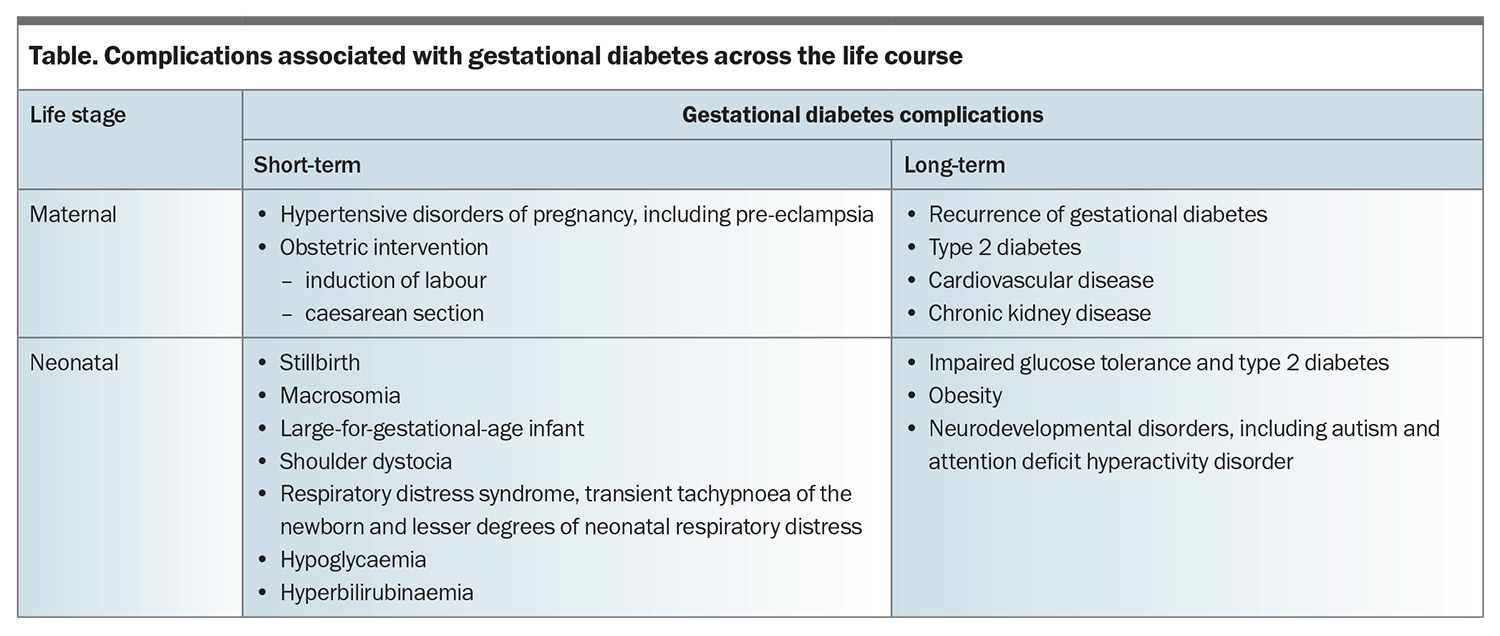
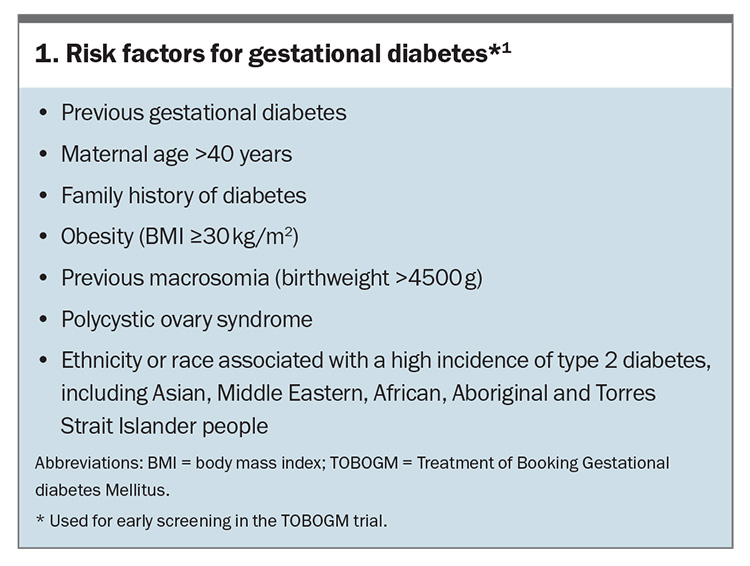
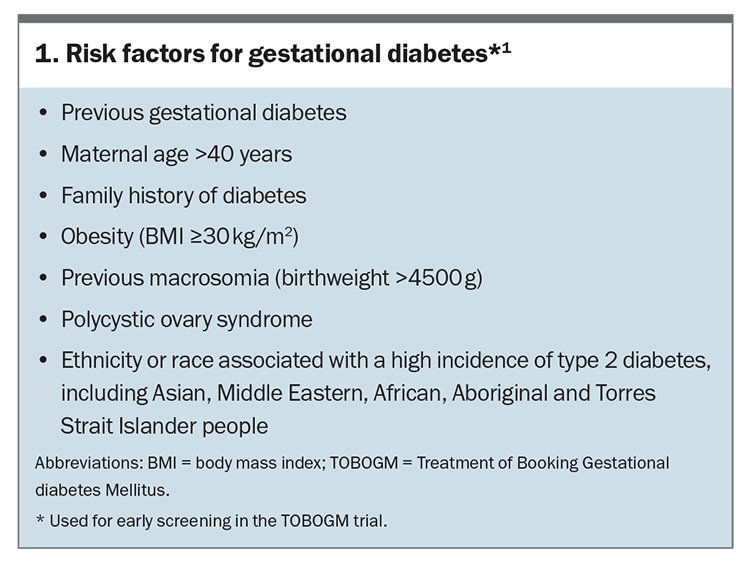
Gestational diabetes mellitus is the most common medical complication of pregnancy and refers to hyperglycaemia in pregnancy that does not meet the criteria for overt diabetes. Although it is usually asymptomatic, if undiagnosed it can present with glycosuria, polyhydramnios, a large-for-gestational-age infant, hypertensive disease in pregnancy and, rarely, stillbirth. Complications associated with gestational diabetes across the life course are listed in the Table, and include long-term cardiometabolic disease for women and their offspring. The causes of gestational diabetes include a combination of genetic, epigenetic and environmental factors, reflected by the risk factors shown in Box 1.1
The prevalence of gestational diabetes in Australia continues to increase, corresponding to background rates of obesity, prediabetes and diabetes in women of reproductive age. The Australasian Diabetes in Pregnancy Society (ADIPS) has recently updated its Consensus Recommendations for the Screening, Diagnosis and Classification of Hyperglycaemia in Pregnancy, endorsed by several national professional bodies, including the Royal Australasian College of Obstetrics and Gynaecology and the Royal Australasian College of General Practitioners.2
The new approach to screening and diagnosis of gestational diabetes
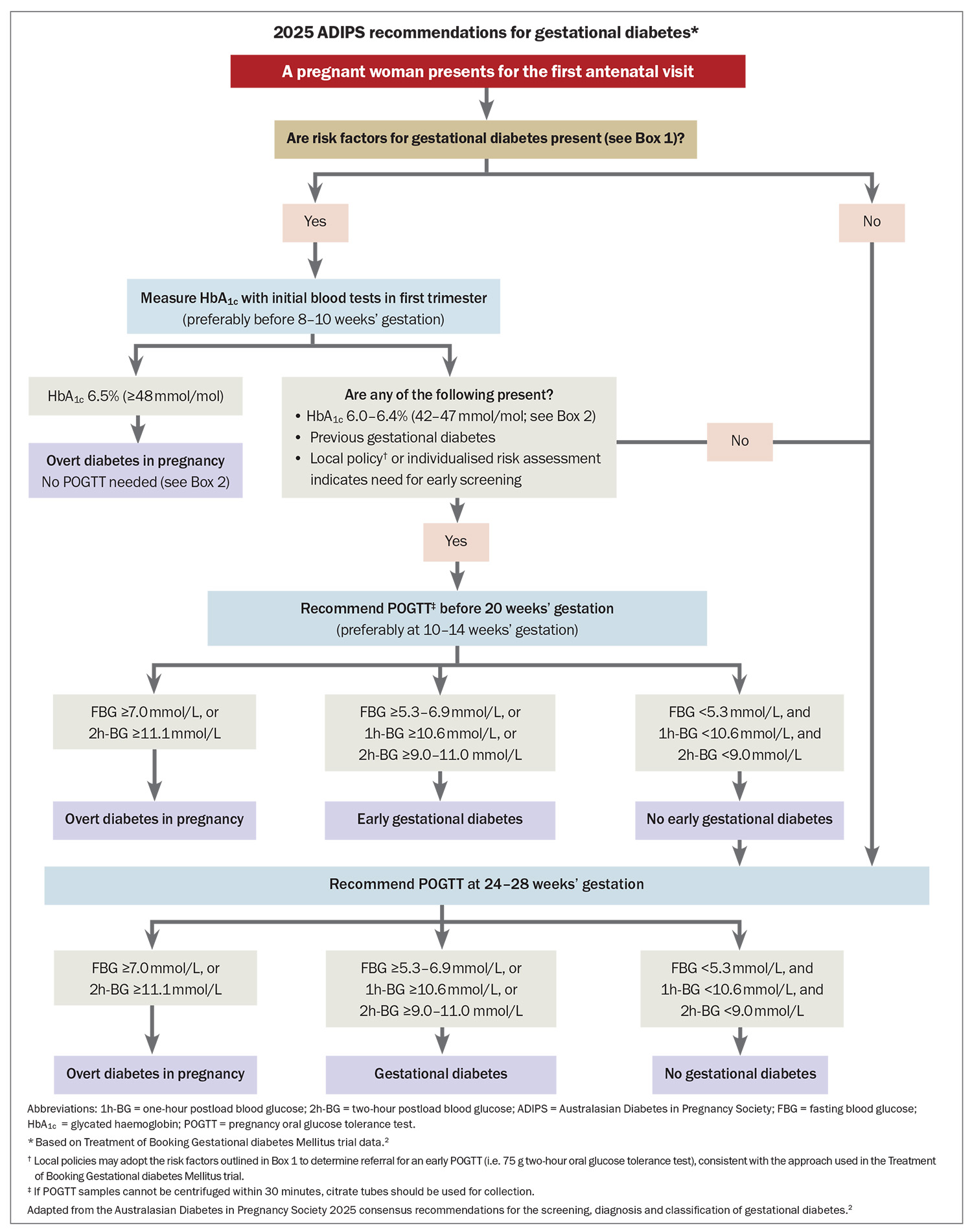
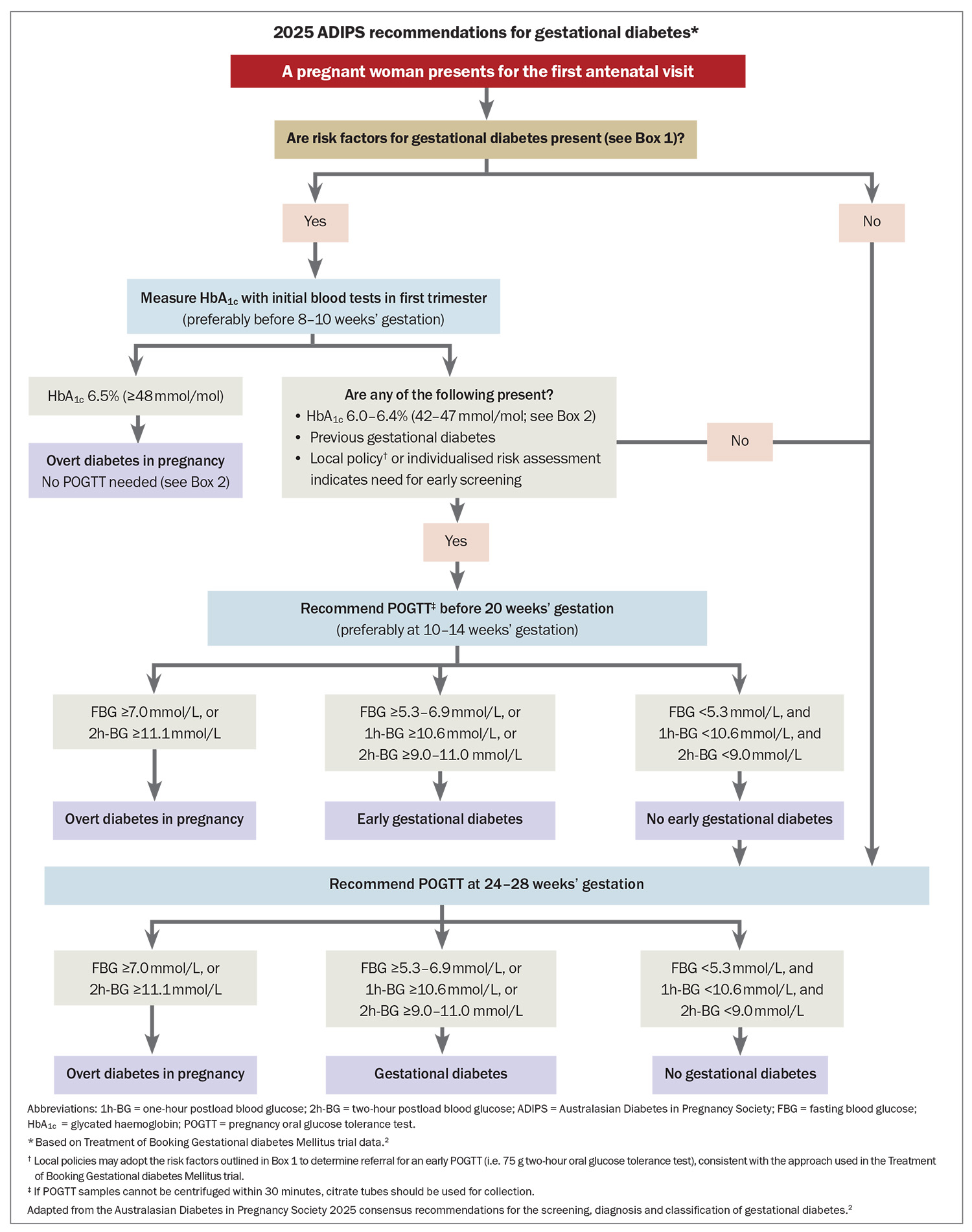
Between 2022 and 2024, the ADIPS undertook extensive consultation to update their 2014 national guidelines for the screening and diagnosis of gestational diabetes, following the release of findings from the Treatment of Booking Gestational diabetes Mellitus (TOBOGM) randomised controlled trial (RCT).2-4 This trial demonstrated clear benefit in the detection and treatment of early gestational diabetes, defined as hyperglycaemia less than overt diabetes detected before 20 weeks’ gestation. The Flowchart summarises the 2025 ADIPS recommendations.2
Detecting overt diabetes in pregnancy
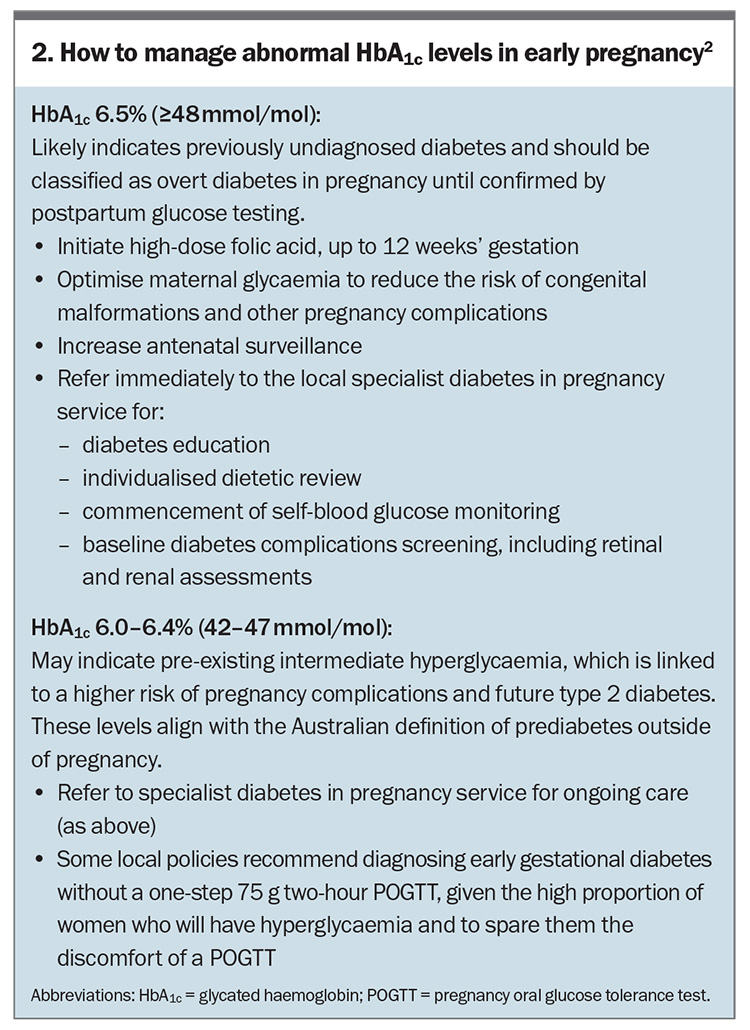
Glycated haemoglobin (HbA1c) levels are often used to diagnose diabetes in nonpregnant adults but may be affected by altered red cell turnover, such as that caused by iron deficiency or haemoglobinopathies, as well as by pregnancy.1 An HbA1c threshold of 6.5% (≥48 mmol/mol) and above can be used to diagnose overt diabetes in pregnancy, with these women managed as having previously undiagnosed type 2 diabetes until it can be confirmed by postpartum testing.3 Although HbA1c lacks sensitivity for detecting gestational diabetes, it correlates with adverse pregnancy outcomes.5 For this reason, it is now recommended to measure HbA1c with initial blood tests in the first trimester, in women with risk factors for gestational diabetes, as listed in Box 1.1
Identifying overt diabetes early in pregnancy enables timely initiation of high-dose folic acid, optimisation of maternal glycaemia to reduce the risk of congenital malformations and increased antenatal surveillance. Management should also include prompt referral to a local specialist diabetes in pregnancy service for diabetes education, initiation of self-blood glucose monitoring, baseline retinal screening and assessment of albuminuria. Although some women with overt diabetes in pregnancy may not have confirmed pre-existing diabetes on postpartum glucose testing, they still benefit from early intensive management.
Most women with an HbA1c level in the prediabetes range (6.0 to 6.4% [42 to 47 mmol/mol]) will also return an abnormal one-step 75 g two-hour pregnancy oral glucose tolerance test (POGTT), and many antenatal services treat them as having early gestational diabetes in accordance with local policy. This approach avoids the need for a second confirmatory early POGTT and allows timely initiation of management, including referral to a specialist service for counselling, lifestyle education and self-monitoring of blood glucose.
The treatment of abnormal HbA1c levels in early pregnancy is summarised in Box 2, and further management is detailed in the Flowchart.2
The evolution of gestational diabetes screening and diagnosis
The diagnosis of gestational diabetes has undergone several revisions over time. The previous change in Australia occurred in 2014, when ADIPS endorsed the WHO-recommended one-step 75 g two-hour POGTT, performed at 24 to 28 weeks’ gestation, with diagnostic thresholds of: 6,7
- fasting blood glucose of 5.1 mmol/L or higher
- one-hour postload blood glucose of 10.0 mmol/L or higher
- two-hour postload blood glucose of 8.5 mmol/L or higher.
These criteria were based on the Hyperglycaemia And Pregnancy Outcomes (HAPO) Study, a prospective observational cohort study involving 23,000 women worldwide, including two Australian sites.8 HAPO Study demonstrated a linear relationship between maternal fasting, one-hour and two-hour postload blood glucose levels and the risk of adverse pregnancy outcomes.
Informed by the HAPO Study, the International Association for the Diabetes in Pregnancy Study Groups established consensus- based POGTT diagnostic thresholds for gestational diabetes in later pregnancy, which were subsequently endorsed by the WHO.9 However, this approach relied on two assumptions that have since been disproven: firstly, that maternal hyperglycaemia only affects the fetus from 24 to 28 weeks’ gestation, and secondly, that treating hyperglycaemia before this point (if not overt diabetes) is of limited clinical benefit.
The new paradigm of gestational diabetes management
Just as there is a linear relationship between blood glucose levels at 24 to 28 weeks’ gestation and pregnancy complications, emerging evidence confirms this relationship exists in early pregnancy as well.10,11 Furthermore, serious pregnancy complications (e.g. perinatal mortality) and more severe gestational diabetes (e.g. greater need for insulin therapy) are more common among women diagnosed earlier in pregnancy.12
Ultrasound studies have demonstrated signs of fetal overgrowth, specifically increased abdominal circumference, as early as 20 weeks’ gestation, before the traditional diagnostic window for gestational diabetes from 24 weeks’ gestation.13 More recently, continuous glucose monitoring has shown that women who are later diagnosed with gestational diabetes already exhibit elevated blood glucose levels (below the threshold for overt diabetes) from early pregnancy.14
It is now increasingly recognised that a significant proportion (estimated at 30 to 70%) of women with gestational diabetes have early hyperglycaemia present before conception and continuing into early pregnancy. This form of hyperglycaemia, below the diagnostic threshold for overt diabetes, includes impaired fasting glucose, impaired glucose tolerance and prediabetes, and is associated with increased risk of pregnancy complications.1
In the HAPO Study, even a fasting glucose level of 5.1 mmol/L (below the impaired fasting glucose threshold) was associated with a 75% increased risk of adverse pregnancy outcomes, independent of other factors such as obesity.8 According to The Diabetes Atlas, published in 2025 by the International Diabetes Federation, the prevalence of impaired fasting glucose among women of reproductive age is 4.8 to 10.2%, and the prevalence of impaired glucose tolerance is 6.3 to 13.4%, depending on the specific age group.15 The global prevalence of gestational diabetes of 15.6% likely reflects this burden of preconception, mild but fetotoxic, hyperglycaemia.
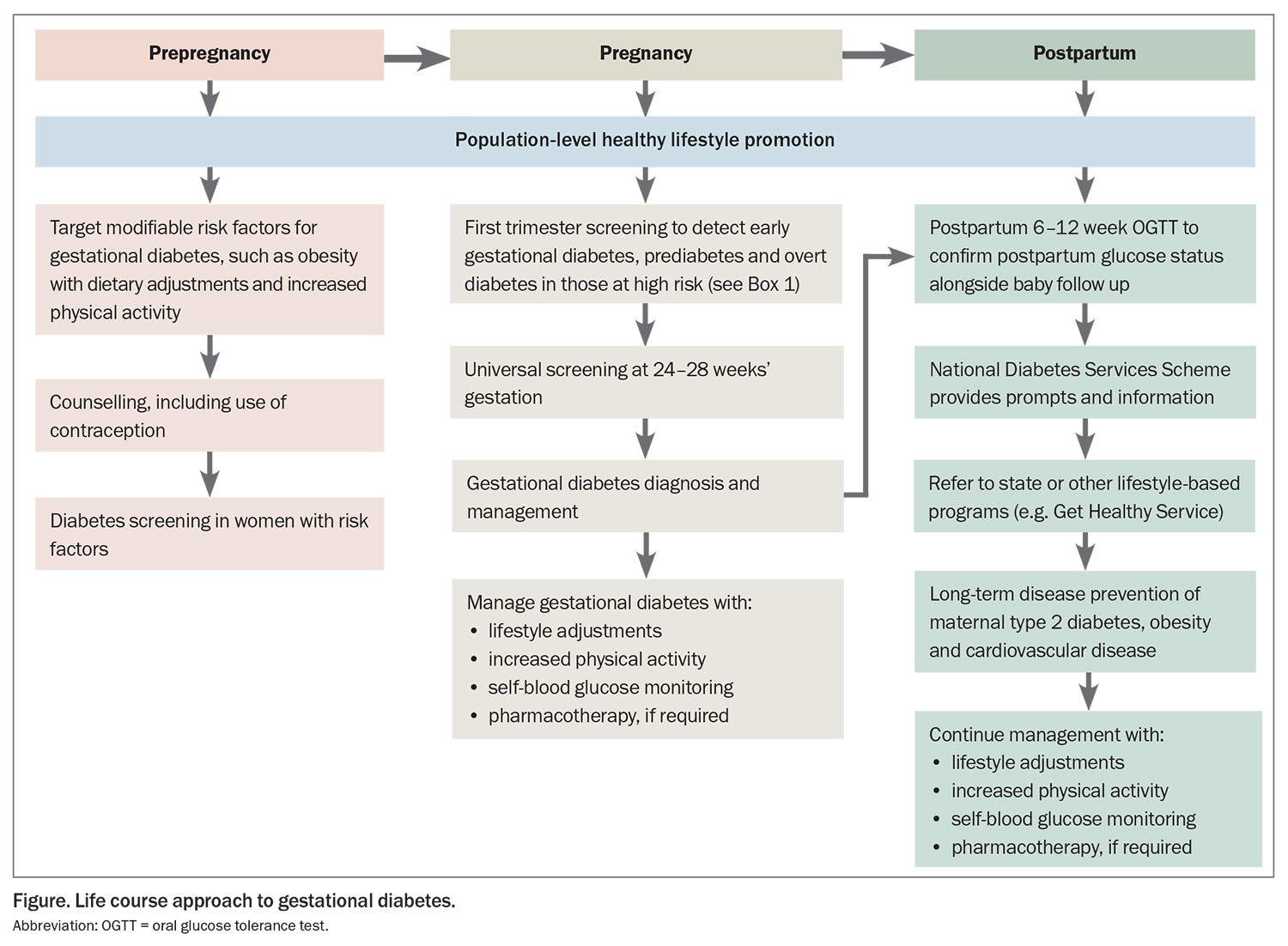
It is important to recognise that women diagnosed with early gestational diabetes often enter and leave pregnancy with an underlying predisposition to metabolic disease. This includes a tenfold increased risk of type 2 diabetes and a twofold increased risk of cardiovascular disease.16,17 However, this long-term risk may be mitigated through the education, lifestyle changes and health service engagement that typically follow a diagnosis of gestational diabetes, particularly when integrated into ongoing screening and support programs.18 This paradigm shift from viewing gestational diabetes as a transient pregnancy complication to understanding it as part of a broader, lifelong cardiometabolic condition that begins before conception and continues well beyond delivery is illustrated in the Figure.
Evidence for screening for and diagnosing early gestational diabetes
Recognising that early gestational diabetes exists and is associated with significant pregnancy risks may be clinically useful from a monitoring and obstetric perspective. However, until 2023, it was unclear whether treatment of early gestational diabetes conferred measurable benefits.
A large population-based intervention (n = 40,206) that shifted from no systematic early screening and treatment to first-trimester screening and treatment for women with obesity demonstrated improved outcomes. This change was associated with a reduction in large-for-gestational infants (adjusted odds ratio [aOR] 0.89; 95% confidence interval [CI], 0.82–0.96) and caesarean delivery (aOR 0.89; 95% CI, 0.85–0.93) across the entire population.19 Among those women diagnosed with gestational diabetes, large-for-gestational births were nearly halved (aOR 0.52; 95% CI, 0.39–0.70) and caesarean delivery was reduced by more than 20% (aOR 0.78; 95% CI, 0.65–0.94). Importantly, 80% of women diagnosed with early gestational diabetes did not meet diagnostic criteria for diabetes after pregnancy.
The TOBOGM trial was the first – and remains the only – large scale trial to investigate the screening and treatment of early gestational diabetes (n = 802).4 TOBOGM demonstrated a significant reduction in multiple pregnancy complications by diagnosing and treating gestational diabetes before 20 weeks’ gestation in women with risk factors, using the aforementioned WHO criteria.7
Optimal timing for treating early gestational diabetes
The TOBOGM trial also explored the optimal timing for screening and treatment of early gestational diabetes before 20 weeks’ gestation. Treatment initiated before 14 weeks’ gestation (mostly from 10 weeks) was associated with the greatest absolute reduction in a composite of adverse pregnancy outcomes of −8.9% (95% CI, −15.1% to −2.6%), corresponding to a relative reduction of 25%. This early intervention was also associated with a cost saving of $5548 (95% CI, −$16,740 to $1547).4,20
Diagnostic criteria for early gestational diabetes
The TOBOGM trial also compared two sets of diagnostic thresholds for gestational diabetes in early pregnancy: the current WHO diagnostic POGTT criteria (as detailed above) and the higher Canadian Diabetes Association (CDA) diagnostic criteria, which are: 4,7
- fasting glucose level of 5.3 to 6.9 mmol/L
- one-hour postload blood glucose level of 10.6 mmol/L or higher
- two-hour postload blood glucose level of 9.0 to 11.0 mmol/L.
Both sets of criteria were derived from HAPO Study data for adverse pregnancy outcomes at 24 to 28 weeks’ gestation, with WHO thresholds reflecting a 75% excess risk and CDA thresholds reflecting a doubling of risk.8
In the TOBOGM trial, use of the higher CDA thresholds was associated with a significant reduction in severe perinatal outcomes (aOR −7.8; 95% CI, −14.6% to −0.9%) with an insignificant cost saving.4,20 In contrast, the WHO criteria resulted in only a small and nonsignificant reduction in severe perinatal outcomes and were not significantly more costly.7 Notably, using WHO criteria for early gestational diabetes was associated with a significant 77% increased risk of small-for-gestational-age infants, suggesting possible harm from overtreatment at these lower glucose thresholds.
What to do at 24 to 28 weeks’ gestation
The traditional approach of screening for and diagnosing gestational diabetes at 24 to 28 weeks’ gestation has historically grouped together two distinct populations: those with undiagnosed early gestational diabetes (who are at higher risk of pregnancy complications) and those who develop gestational diabetes later due to the rising insulin resistance seen in later pregnancy.
Although early landmark RCTs demonstrated the benefit of treating gestational diabetes from 24 to 28 weeks’ gestation, these benefits may now be reduced if higher-risk women are identified and treated earlier in pregnancy.21,22 Since those initial trials, additional large population-based RCTs have examined diagnosis later in pregnancy. The New Zealand Gestational Diabetes Mellitus Trial of Diagnostic Detection Thresholds compared the New Zealand criteria (fasting/two-hour postload blood glucose level: 5.5/9.0 mmol/L) with the current WHO diagnostic thresholds using the two-hour 75 g POGTT.7,23 Although no overall benefit was found from using the lower WHO thresholds across the general obstetric population, subgroup analysis showed that women with otherwise untreated gestational diabetes did benefit from diagnosis using the WHO criteria.
Despite these findings, the revised ADIPS recommendations use the same, higher POGTT criteria for both early and later gestation.2 This decision was based on stakeholder feedback supporting a consistent diagnostic approach, and it results in about 40% fewer women being diagnosed with gestational diabetes. However, this change means that a small number of women who might have benefited from diagnosis using the lower WHO criteria will now be missed. Depending on local policy, women meeting the WHO criteria at 24 to 28 weeks’ gestation could be considered for specific management strategies (e.g. commencement of self-monitoring of blood glucose, fetal ultrasound at 36 weeks). However, the balance of harm (potential overtreatment) and benefit (avoidance of undertreatment) remains uncertain.
Precision and accuracy of glucose measurement
All glucose measurements, including those from the POGTT, are subject to significant variability. This is further exacerbated by suboptimal preanalytical handling, such as failure to centrifuge the blood glucose sample within 30 minutes or the use of fluoride rather than citrate as a preservative. Inadequate handling can result in a glucose decline of about 0.1 to 0.2 mmol/L per hour.24 For example, one hospital observed a 77% increase in gestational diabetes diagnosis after switching from hospital orderly pickup and delivery of blood samples to a vacuum tube system.25
Models of care
Several models of care for gestational diabetes management operate across Australia. All models include: diabetes counselling and education; dietitian review; self-monitoring of blood glucose; escalation to metformin, insulin therapy or both, if glucose targets are not achieved with lifestyle intervention alone; and more intensive obstetric and ultrasound monitoring. Referral to specialist care is a local decision, provided that healthcare professionals involved have the appropriate skills and competencies, and that urgent clinical pathways are in place and are operational.
All women diagnosed with gestational diabetes should be registered with the National Diabetes Services Scheme, which reduces the cost of self-monitoring of blood glucose levels and provides access to high-quality educational materials.
Continuous glucose monitoring
Continuous glucose monitoring is a fundamental part of modern type 1 diabetes care and is increasingly being used in type 2 diabetes. The role of continuous glucose monitoring in gestational diabetes, for both diagnosis and management, remains unclear. Targeting lower mean glucose levels and a higher percentage of time within the pregnancy blood glucose level range may offer some benefit, although this was not demonstrated in the first large trial of continuous glucose monitoring in gestational diabetes.26,27
Postpartum and long-term follow up
All women with a history of gestational diabetes should undergo a postpartum oral glucose tolerance test (OGTT) at six to 12 weeks, followed by annual OGTT to identify undiagnosed diabetes before a subsequent pregnancy and to reduce the risk of long-term complications. Once the reproductive years are complete (including through the use of effective long-acting reversible contraception), screening frequency may be reduced to every three years. If women are unable to attend for an OGTT, both fasting glucose and HbA1c tests can be used, although they are less sensitive than the OGTT. Annual cardiovascular assessment (including blood pressure and lipid profile monitoring) is also recommended. Offspring should be monitored closely for overweight, obesity or other cardiometabolic complications.
Conclusion
The recent ADIPS consensus recommendations raise the diagnostic thresholds for the POGTT at any stage of pregnancy and advise an early POGTT between 10 and 14 weeks’ gestation for women with risk factors to identify early gestational diabetes. These updates reflect a paradigm shift: gestational diabetes is now viewed as a life course condition and a modifiable risk factor for future diabetes and cardiovascular disease, against the backdrop of rising rates of obesity, prediabetes and diabetes in women of reproductive age. GPs play a central role in this evolving model by facilitating prepregnancy risk factor modification, enabling early screening for gestational diabetes and overt diabetes and ensuring timely postpartum glucose assessment. Long-term follow up with lifestyle intervention and regular cardiometabolic screening is essential – not only to reduce maternal risk, but also mitigate the future risk of obesity and abnormal glucose tolerance in the offspring. ET
COMPETING INTERESTS: Dr Sweeting: None. Professor Simmons has received education grants to his institution from Abbott, Ascensia and Boehringer Ingelheim; devices for research and clinical service development from AMSL and Abbott; and research support from Hitachi. He has also received speaker fees from Novo-Nordisk and Sanofi.
References
1. Sweeting A, Hannah W, Backman H, et al. Epidemiology and management of gestational diabetes. Lancet 2024; 404: 175-192.
2. Sweeting A, Hare M, de Jersey S, et al. Australasian Diabetes in Pregnancy Society (ADIPS) 2025 consensus recommendations for the screening, diagnosis and classification of gestational diabetes. Med J Aust 2025; 223: 161-167.
3. Sweeting A, MacMillan F, Simmons D; TOBOGM Summit attendees. The first International Association of Diabetes and Pregnancy Study Groups summit on the diagnosis of gestational diabetes in early pregnancy: TOBOGM Summit Report. Aust N Z J Obstet Gynaecol 2024; 64: 519-523.
4. Simmons D, Immanuel J, Hague WM, et al. Treatment of gestational diabetes mellitus diagnosed early in pregnancy. N Engl J Med 2023; 388: 2132-2144.
5. Hughes RCE, Moore PM, Gullam JE, et al. An early pregnancy HbA1c ≥5.9% (41 mmol/mol) is optimal for detecting diabetes and identifies women at increased risk of adverse pregnancy outcomes. Diabetes Care 2014; 37: 2953-2959.
6. Nankervis A, McIntyre HD, Moses R, et al. ADIPS Consensus Guidelines for the Testing and Diagnosis of Gestational Diabetes Mellitus in Australia. Sydney: Australasian Diabetes in Pregnancy Society; 2014. Available online at: https://www.adips.org/downloads/2014adipsgdmguidelinesvjune2014finalforweb.pdf (accessed August 2025).
7. World Health Organization. Diagnostic criteria and classification of hyperglycaemia first detected in pregnancy: a World Health Organization guideline. Diabetes Res Clin Pract 2014; 103: 341-363.
8. Metzger BE, Lowe LP, Dyer AR, et al. Hyperglycemia and adverse pregnancy outcomes. N Engl J Med 2008; 358: 1991-2002.
9. Metzger BE, Gabbe SG, Persson B, et al. International Association of Diabetes and Pregnancy Study Groups recommendations on the diagnosis and classification of hyperglycemia in pregnancy. Diabetes Care 2010; 33: 676-682.
10. Sweeting A, Enticott J, Immanuel J, et al. Relationship between early-pregnancy glycemia and adverse outcomes: findings from the TOBOGM study. Diabetes Care 2024; 47: 2085–2092.
11. Riskin-Mashiah S, Younes G, Damti A, Auslender R. First-trimester fasting hyperglycemia and adverse pregnancy outcomes. Diabetes Care 2009; 32: 1639-1643.
12. Immanuel J, Simmons D. Screening and treatment for early-onset gestational diabetes mellitus: a systematic review and meta-analysis. Curr Diab Rep 2017; 17: 115.
13. Sovio U, Murphy HR, Smith GC. Accelerated fetal growth prior to diagnosis of gestational diabetes mellitus: a prospective cohort study of nulliparous women. Diabetes Care 2016; 39: 982-987.
14. Durnwald C, Beck RW, Li Z, et al. Continuous glucose monitoring profiles in pregnancies with and without gestational diabetes mellitus. Diabetes Care 2024; 47: 1333-1341.
15. International Diabetes Federation (IDF). IDF Diabetes Atlas. 11th ed. Brussels: IDF; 2025. Available online at: https://diabetesatlas.org/resources/idf-diabetes-atlas-2025/ (accessed August 2025).
16. Vounzoulaki E, Khunti K, Abner SC, Tan BK, Davies MJ, Gillies CL. Progression to type 2 diabetes in women with a known history of gestational diabetes: systematic review and meta-analysis. BMJ 2020; 369: m1361.
17. Kramer CK, Campbell S, Retnakaran R. Gestational diabetes and the risk of cardiovascular disease in women: a systematic review and meta-analysis. Diabetologia 2019; 62: 905-914.
18. Simmons D, Gupta Y, Hernandez TL, Levitt N, van Poppel M, Yang X. Call to action for a life course approach. Lancet 2024; 404: 193-214.
19. Hillier TA, Pedula KL, Ogasawara KK, Vesco KK, Oshiro C, Van Marter JL. Impact of earlier gestational diabetes screening for pregnant people with obesity on maternal and perinatal outcomes. J Perinat Med 2022; 50: 1036-1044.
20. Haque MM, Tannous WK, Herman WH, et al. Cost-effectiveness of diagnosis and treatment of early gestational diabetes mellitus: economic evaluation of the TOBOGM study, an international multicenter randomized controlled trial. EClinicalMedicine 2024; 71: 102610.
21. Crowther CA, Hiller JE, Moss JR, McPhee A, Jeffries WS, Robinson JS. Effect of treatment of gestational diabetes mellitus on pregnancy outcomes. N Engl J Med 2005; 352: 2477-2486.
22. Landon MB, Spong CY, Thom E, et al. A multicenter, randomized trial of treatment for mild gestational diabetes. N Engl J Med 2009; 361: 1339-1348.
23. Crowther CA, Samuel D, McCowan LME, et al. Lower versus higher glycemic criteria for diagnosis of gestational diabetes. N Engl J Med 2022; 387: 587-598.
24. Jamieson EL, Dimeski G, Flatman R, et al. Oral glucose tolerance test to diagnose gestational diabetes mellitus: impact of variations in specimen handling. Clin Biochem 2023; 115: 33-48.
25. Potter JM, Hickman PE, Oakman C, Woods C, Nolan CJ. Strict preanalytical oral glucose tolerance test blood sample handling is essential for diagnosing gestational diabetes mellitus. Diabetes Care 2020; 43: 1438-1441.
26. Burk J, Ross GP, Hernandez TL, Colagiuri S, Sweeting A. Evidence for improved glucose metrics and perinatal outcomes with continuous glucose monitoring compared to self-monitoring in diabetes during pregnancy. Am J Obstet Gynecol 2025; S0002-9378(25)00217-0. doi: 10.1016/j.ajog.2025.04.010. Epub ahead of print.
27. Amylidi-Mohr S, Zennaro G, Schneider S, Raio L, Mosimann B, Surbek D. Continuous glucose monitoring in the management of gestational diabetes in Switzerland (DipGluMo): an open-label, single-centre, randomised, controlled trial. Lancet Diabetes Endocrinol 2025; 13: 591-599.
Single article purchases are temporarily unavailable due to site maintenance.
If you would like to purchase an article during this time, please email us at [email protected] with the article details and we'll assist you directly. We'll also let you know when online purchasing is available again.
Thank you for your patience and understanding.