
Hypoparathyroidism: disease burden and emerging treatments
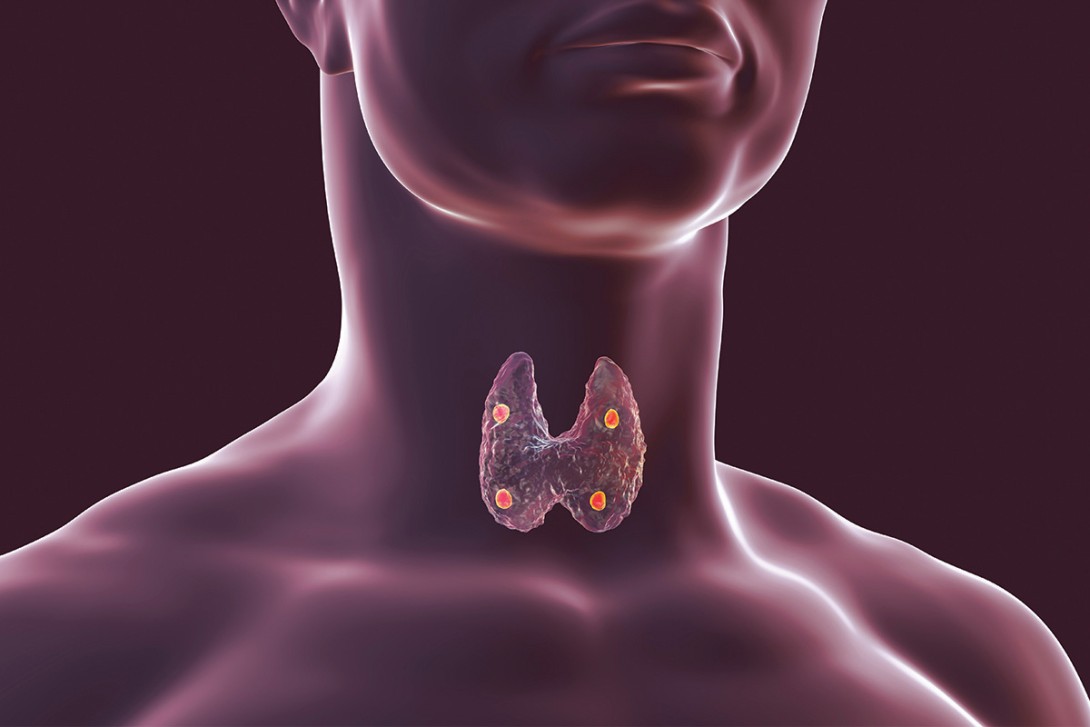
Hypoparathyroidism is characterised by low or inappropriately normal parathyroid hormone (PTH) levels despite hypocalcaemia. Standard-of-care calcium and calcitriol supplementation normalises serum calcium but has several limitations. Palopegteriparatide, a novel PTH replacement therapy, improves quality of life and reduces reliance on conventional therapy but is not yet PBS subsidised in Australia.
- Hypoparathyroidism is characterised by low or inappropriately normal levels of parathyroid hormone in the presence of hypocalcaemia.
- Post-surgical causes (e.g. thyroidectomy, cervical lymph node dissection, head and neck surgery) account for most cases, followed by nonsurgical causes (e.g. idiopathic, autoimmune, infiltrative, mineral deposition, hereditary).
- Hypoparathyroidism is a multisystem disorder associated with both disease- and treatment-related complications affecting the renal, cardiovascular, skeletal and neuropsychiatric systems.
- Conventional therapy with calcium and calcitriol is the standard of care; however, it carries significant pill burden, may exacerbate complications and has not been shown to improve quality of life.
- Parathyroid hormone replacement therapy with once-daily palopegteriparatide has demonstrated benefits in maintaining normocalcaemia, reducing reliance on conventional therapy and improving quality of life. It is TGA approved and currently under consideration for subsidised access via the PBS.
Parathyroid hormone (PTH) is the key regulator of serum calcium homeostasis. Hypoparathyroidism, most commonly arising following anterior neck surgery, is characterised by low or inappropriately normal levels of PTH despite the presence of hypocalcaemia. It is increasingly recognised as a complex multisystem disease associated with significant morbidity and impaired quality of life.1
The current standard of care is conventional treatment involving calcium and active vitamin D (calcitriol) supplementation. Although this approach can help normalise calcium levels, it is associated with a high pill burden, has not been consistently shown to improve quality of life and may exacerbate complications such as hypercalciuria.1 Palopegteriparatide, a long-acting PTH analogue, was approved by the TGA in early 2025 based on its efficacy and safety in a randomised, placebo-controlled trial. This article reviews current approaches to the diagnosis and management of hypoparathyroidism, with an emphasis on disease burden and emerging PTH-based therapies.
Calcium homeostasis
Calcium is an intracellular secondary messenger that is critical in many physiological processes including muscle contraction, neurotransmitter release, and endocrine and exocrine secretion. Serum calcium levels are tightly regulated within a narrow physiological range through co-ordinated actions of PTH and vitamin D.1,2
PTH is the body’s primary defence against low circulating calcium levels and acts to raise serum calcium concentrations through various mechanisms. Parathyroid chief cells sense circulating calcium concentrations via the calcium-sensing receptor (CaSR). High circulating ionised calcium levels increase stimulation of CaSRs and result in downregulation of PTH release. Low circulating ionised calcium levels reduce CaSR signalling, triggering release of preformed PTH. In the bone, PTH stimulates bone resorption and turnover to mobilise skeletal calcium into the circulation. In the kidneys, PTH increases tubular calcium reabsorption and stimulates activation of 25-hydroxyvitamin D to 1,25-dihydroxyvitamin D (calcitriol). This in turn promotes intestinal calcium and phosphate absorption.1
PTH also plays a role in regulating phosphate and magnesium homeostasis.1 Together with fibroblast growth factor 23 (FGF23), PTH inhibits renal phosphate reabsorption to decrease serum phosphate levels. PTH also enhances magnesium reabsorption in the distal convoluted tubule of the kidney. However, both hypermagnesaemia and hypomagnesaemia can result in hypocalcaemia. Hypermagnesaemia can inhibit PTH release, whereas severe, prolonged hypomagnesaemia can cause functional PTH resistance.1
In summary, hypoparathyroidism leads to low bone turnover, increased fractional urinary excretion of calcium, reduced levels of calcitriol (and hence intestinal calcium absorption) and, ultimately, hypocalcaemia.1 Hypoparathyroidism is also associated with hyperphosphataemia and hypomagnesaemia.
Epidemiology
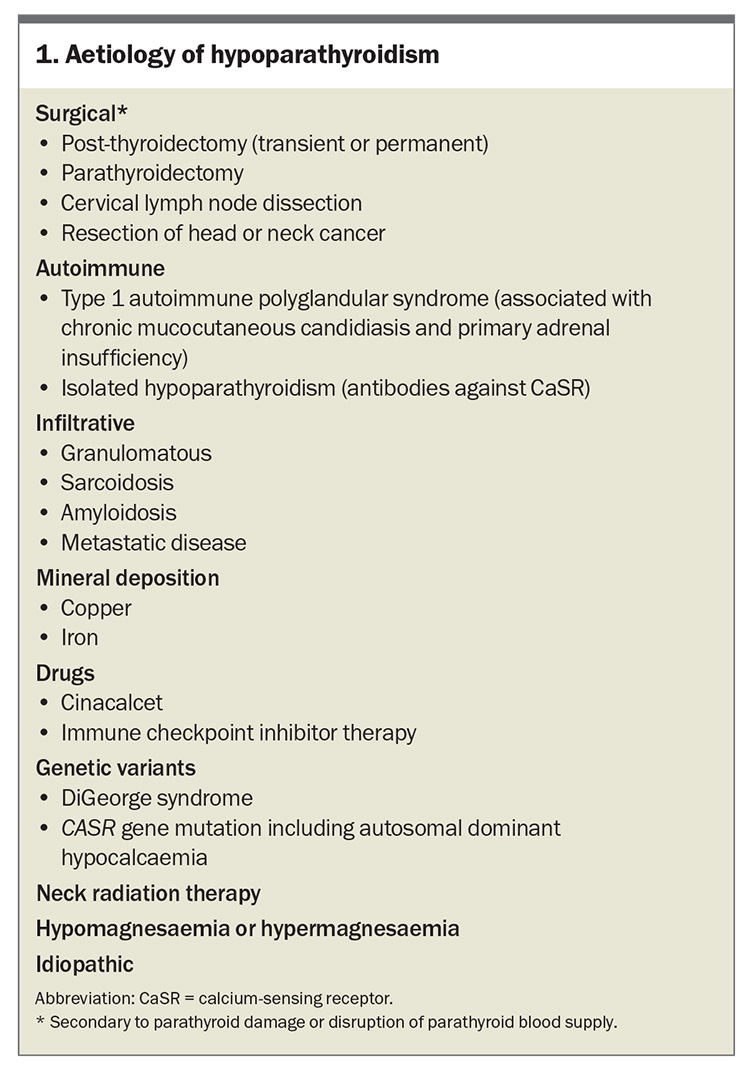
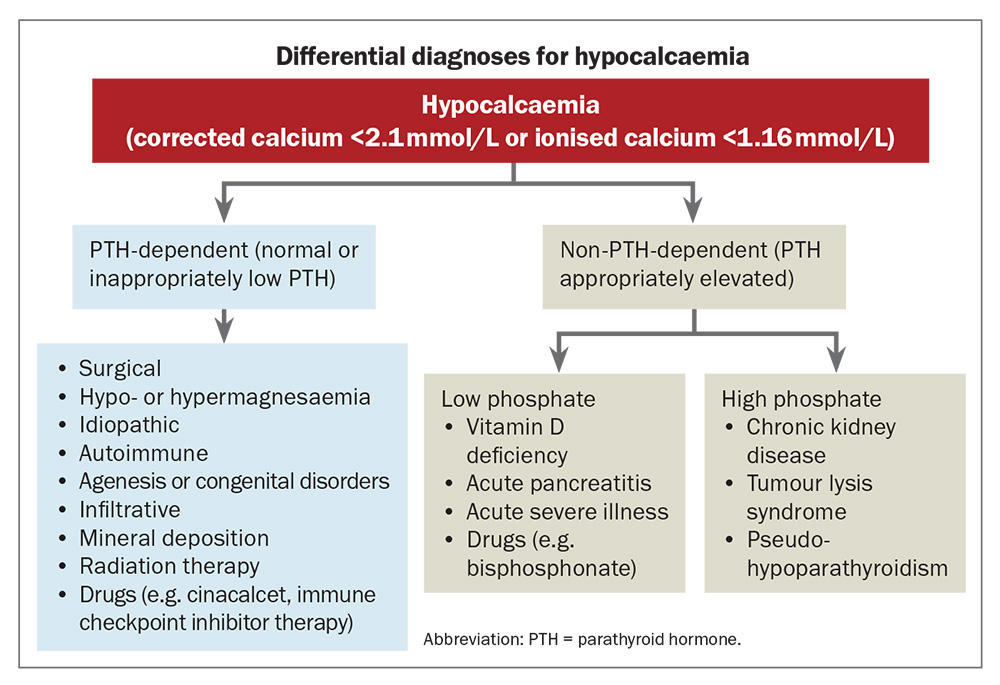
Hypoparathyroidism is a rare condition. Registry data from the USA and Denmark estimate a prevalence of about 20 to 40 cases per 100,000 person-years.3 At least three-quarters of cases occur after anterior neck surgery, such as thyroidectomy, parathyroidectomy, cervical lymph node dissection or head and neck tumour resections. The remainder of nonsurgical cases may be idiopathic or due to other causes, including autoimmune, infiltrative or mineral deposition disease, as well as hereditary, congenital or drug-induced disorders (Box 1).4 In contrast, pseudohypoparathyroidism is characterised by hypocalcaemia with elevated PTH levels due to target tissue resistance to PTH signalling. A detailed discussion of pseudohypoparathyroidism is beyond the scope of this article. Differential diagnoses for hypocalcaemia are presented in the Flowchart.
Post-surgical hypoparathyroidism
Although transient hypoparathyroidism is common after anterior neck surgery and occurs in about 25% of patients, most patients experience PTH recovery within one month. Permanent hypoparathyroidism occurs in less than 5% of patients, defined as hypocalcaemia persisting beyond 12 months post-surgery.5,6
Risk factors for permanent hypoparathyroidism include a postoperative day one PTH level of less than 0.5 pmol/L (sensitivity 100%, specificity 85%), as well as surgical factors such as greater extent of surgery (e.g. extensive neck dissection), inadvertent parathyroid removal and lower surgeon case volume.6,7 In the absence of national or international guidelines, institutions should employ their own specific protocol for the screening, management and follow up of hypoparathyroidism post-neck surgery, which may incorporate pre-emptive calcium with or without calcitriol supplementation.
Clinical manifestations of hypoparathyroidism
Chronic hypoparathyroidism is a multisystem disease associated with significant morbidity and impaired quality of life.6 Complications can be disease-related but are also exacerbated by use of conventional treatment (calcium with or without calcitriol supplementation). Careful monitoring is therefore essential.
Renal complications
Hypoparathyroidism results in reduced renal calcium reabsorption and thus increased fractional urinary excretion of calcium. Conventional therapy can further exacerbate this by increasing the filtered calcium load. Hence, patients with hypoparathyroidism have about a twofold higher risk of developing renal impairment (estimated glomerular filtration rate <30 mL/min/1.73 m²) and nearly a fivefold higher risk of renal stones.1,6,8,9 Risk factors for renal complications include longer disease duration (>12 years), more prevalent episodes of hypercalcaemia (≥4) and higher serum calcium–phosphate product (>2.8 mmol/L).10
Cardiovascular complications
Chronic hypocalcaemia is associated with electrocardiographic abnormalities and a twofold higher risk of cardiovascular disease, cardiac arrhythmias and stroke, particularly in patients with nonsurgical hypoparathyroidism.10,11 Similar to renal complications, risk increases with longer disease duration and increased number of hypercalcaemic episodes.10
Skeletal manifestations
Hypoparathyroidism is associated with reduced bone turnover, leading to a positive bone balance and increased bone mineral density across all sites, as seen on dual energy x-ray absorptiometry and more specialised bone compartmental imaging.1,4,6,10 However, the clinical significance of such skeletal manifestations remains uncertain due to limited and often conflicting data. It is unclear whether high bone mass confers resistance to fractures, or low bone turnover leads to compromised structural integrity. One study reported a twofold increase in upper limb fractures in patients with nonsurgical hypoparathyroidism compared with controls.11 Individuals with hypoparathyroidism may also have an increased risk of vertebral fractures, particularly postmenopausal women or individuals receiving anticonvulsant therapy.12,13
Nonetheless, larger registry studies have not consistently confirmed an excess fracture risk in those with hypoparathyroidism.14,15 A recent large Swedish outpatient registry study (n = 1915 patients with chronic hypoparathyroidism) did not show an increased risk of major osteoporotic fracture.16 Vertebral fracture risk was higher (hazard ratio, 1.5), while hip fracture risk was lower (hazard ratio, 0.7) compared with controls, although analyses may have been limited by ascertainment and detection bias. Hence, the fracture risk associated with hypoparathyroidism remains controversial.
Neuropsychiatric complications and impaired quality of life
Neuropsychiatric and cognitive symptoms are common with hypoparathyroidism and include depression, fatigue, impaired memory and concentration, sleep disturbances and muscle weakness. Additionally, according to disease-specific quality of life assessments, patients report a high burden of paraesthesia, pain and cramps, and loss of vitality.17,18 These symptoms often persist despite normalisation of calcium levels with conventional treatment and contribute substantially to reduced quality of life.4,14,18
High disease burden can also affect an individual’s ability to work, with a Norwegian study reporting that up to 40% of patients with hypoparathyroidism receive permanent or temporary social security benefits, compared with 10% of the general population.19 Patients often feel that their disease and the associated complications are poorly understood, leading to greater psychological distress.20 Additionally, hospital admissions due to hypocalcaemia or hypercalcaemia are frequent and contribute to the overall disease burden on patients and the healthcare system.21
Other manifestations
Intracranial calcifications are observed in over 50% of patients with hypoparathyroidism.1,22,23 The clinical significance of these findings and the association with parkinsonism is uncertain, so cerebral imaging is not routinely recommended.1 Patients with nonsurgical hypoparathyroidism may also be at a two- to fourfold increased risk of cataracts.10
Management
The primary goals of management include maintaining serum calcium concentration in the low-normal range, preventing symptomatic or life-threatening hypocalcaemia, avoiding hypercalcaemia, hypercalciuria and hyperphosphataemia, and minimising the risk of disease- and treatment-related complications.6
Conventional treatment
The current standard of care for hypoparathyroidism is conventional treatment through supplementation with calcium (1 to 3 g/day in divided doses) with or without calcitriol (0.25 to 2.0 mcg/day, usually twice daily if total daily dose >0.5 mcg/day). The goal is to maintain serum calcium levels in the low-normal range using the lowest effective doses. In the absence of robust data to determine specific regimens, dosing is largely guided by clinician judgement, informed by serial serum and urinary calcium measurements, treatment tolerability and individual patient requirements.
Calcium carbonate is the most common and cost-effective over-the-counter formulation of elemental calcium, although it requires gastric acid for absorption and should be taken with food.1 For patients taking proton pump inhibitors, calcium citrate may be more readily absorbed.6 Calcitriol, due to its short half-life of three to six hours, is typically administered twice daily. Thiazide diuretics increase renal calcium reabsorption and can be used as an adjunct to reduce hypercalciuria.6
Dietary measures include a liberal intake of calcium, with restriction of phosphate and sodium to minimise hyperphosphataemia and hypercalciuria, respectively. Magnesium supplementation to maintain normomagnesaemia may also be used as tolerated.6
Although conventional therapy helps maintain calcium levels, it does not address the underlying pathogenesis of PTH deficiency.1 Calcium and calcitriol supplementation may also exacerbate the disease and its complications by further suppressing PTH secretion, increasing urinary calcium excretion and increasing renal phosphate reabsorption. Thus, conventional treatment may be limited by these adverse effects and a high pill burden, and has not been shown to improve quality of life.24
Monitoring
The required monitoring frequency for hypoparathyroidism depends on disease stability and clinician discretion. In stable patients, electrolytes and renal function may be monitored every six to 12 months.6 However, unstable patients or those with recent dosage adjustments may need much closer monitoring until calcium levels stabilise. A 24-hour urinary calcium collection may be performed annually.6 Renal tract imaging should be considered every five years or earlier in symptomatic patients or those with hypercalciuria to detect development of nephrocalcinosis and urinary calculi.6
PTH analogues
PTH replacement therapy is the optimal physiological treatment for hypoparathyroidism; however, consistent patient access has been limited by the short half-life of earlier formulations, the modest impact on clinically relevant outcomes and the prohibitive costs.
Teriparatide and recombinant PTH
Teriparatide (PTH 1-34), a once daily subcutaneous injection, is approved as an osteoanabolic agent for osteoporosis. Although, due to its short half-life of about one hour, it is poorly suited for hormone replacement and is therefore not indicated for chronic hypoparathyroidism.25 Recombinant PTH (PTH 1-84) has a longer half-life of three hours, enabling once daily dosing. In a randomised controlled trial, PTH 1-84 was demonstrated to normalise calcium levels while achieving a 50% reduction in reliance on conventional treatment. Notably, it did not reduce urinary calcium excretion or show any significant improvement in quality of life parameters compared with placebo.25,26 PTH 1-84 was approved by the FDA in 2015 as an adjunct to conventional therapy in hypoparathyroidism but was recalled in 2019 due to device-related safety concerns and is no longer available.19,20
Palopegteriparatide
Palopegteriparatide is a longer lasting form of PTH 1-34 with a half-life of 60 hours. The active PTH peptide is linked to a polyethylene glycol moiety that protects PTH from enzymatic degradation, reception activation and drug clearance and allows for sustained circulating PTH over 24 hours with daily subcutaneous dosing.27 Palopegteriparatide is administered as an adjustable daily subcutaneous dose (prefilled pen) at the minimum dose required to maintain normocalcaemia. It is a specialised treatment for hypoparathyroidism, so commencement and monitoring should be supervised by a physician experienced in the management of patients with hypoparathyroidism.
The efficacy and safety of palopegteriparatide was demonstrated in the PaTHway Trial, a 26-week international double-blind, randomised, placebo-controlled trial comparing palopegteriparatide with placebo in adults with stable chronic hypoparathyroidism on conventional therapy.28 The study included 82 participants (85% post-surgical) who were randomised 3:1 to palopegteriparatide versus placebo. At the end of the 26-week placebo-controlled phase, 79% of patients receiving palopegteriparatide, compared with 5% in the placebo group, achieved the primary composite endpoint of normalisation of serum calcium and independence from conventional therapy.28 Furthermore, participants receiving palopegteriparatide reported clinically meaningful improvements in quality of life, as well as physical and cognitive function.22 Additional secondary safety endpoints included a reduction in urinary calcium excretion (by about 50%) and a 10 mL/min improvement in renal function.29
Palopegteriparatide was well tolerated; however, certain adverse events occurred more frequently than with placebo, including injection site reactions (26%), transient hypercalcaemia (14%, all in the first three months), nausea (9%) and headache (8%). No new safety signals have arisen in preliminary longer-term safety data with up to two to three years of use.30,31
Thus, once daily palopegteriparatide has been shown to maintain normal calcium concentrations without requiring conventional therapy. Unlike conventional treatment, it has demonstrated improvements in quality of life and reduction in urinary calcium excretion. Longer-term safety data are awaited. Given cost constraints, the role of palopegteriparatide in the management of chronic hypoparathyroidism in Australia remains uncertain, including whether it will receive approval for PBS subsidised access.
Special considerations
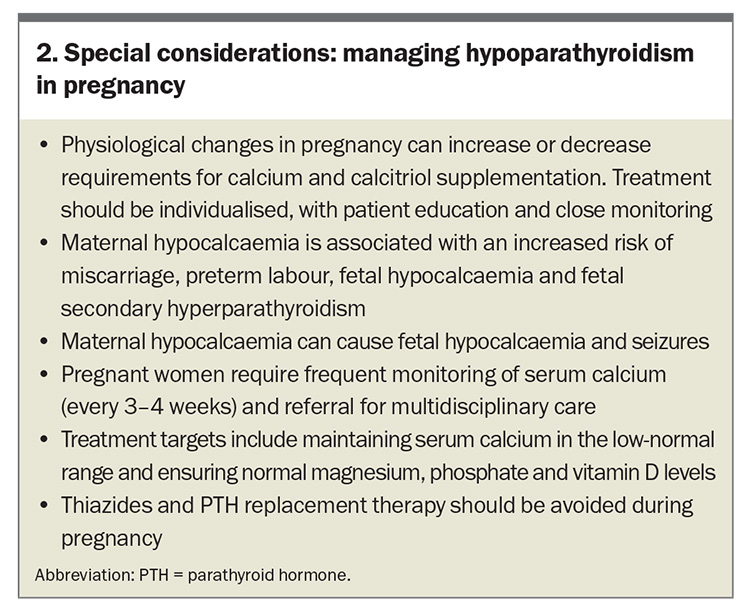
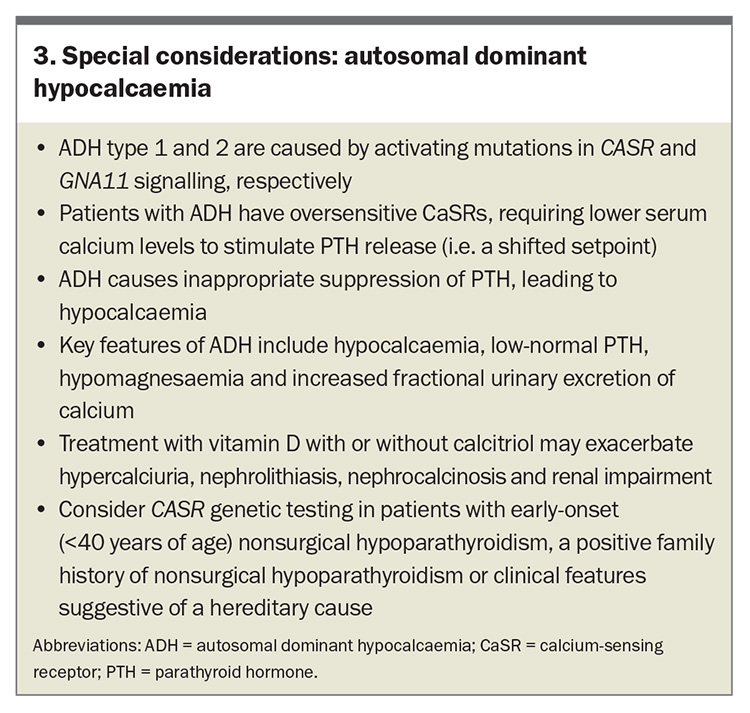
Box 2 outlines special considerations for managing hypoparathyroidism during pregnancy and Box 3 outlines considerations for autosomal dominant hypocalcaemia.
Conclusion
Hypoparathyroidism is characterised by insufficient circulating PTH to maintain normal serum calcium. Transient hypoparathyroidism is relatively common following anterior neck surgery; however, permanent hypoparathyroidism (>12 months) is rare. Chronic hypoparathyroidism is associated with multiple complications, including renal, cardiovascular, skeletal and neuropsychiatric effects, leading to considerable disease burden and impaired quality of life.
Although calcium and calcitriol supplementation is the standard of care for hypoparathyroidism and maintains serum calcium, it carries a high pill burden, can aggravate disease-related complications and does not target the underlying disease pathogenesis. Palopegteriparatide, a long-acting PTH analogue, represents a new PTH replacement therapy that is well tolerated, normalises serum calcium, reduces the need for conventional therapy and enhances quality of life. Palopegteriparatide is now TGA approved for chronic hypoparathyroidism, with PBS subsidisation currently under review to support patient access. ET
COMPETING INTERESTS: Dr Ta: None. Dr Kumar has received grants from Healthy Bones Australia and the Australia and New Zealand Bone and Mineral Society, Avant Mutual, NORTH Foundation, Ramsay Research Fund and Western Sydney Local Health District Research and Education Network; payment or honoraria from Kyowa Kirin and Sandoz; and has participated on Advisory Boards for Kyowa Kirin and Sandoz.
References
1. Mannstadt M, Bilezikian JP, Thakker RV, et al. Hypoparathyroidism. Nat Rev Dis Primer 2017; 3: 17055.
2. Jha S, Simonds WF. Molecular and clinical spectrum of primary hyperparathyroidism. Endocr Rev 2023; 44: 779-818.
3. Clarke BL, Brown EM, Collins MT, et al. Epidemiology and diagnosis of hypoparathyroidism. J Clin Endocrinol Metab 2016; 101: 2284-2299.
4. Brandi ML, Bilezikian JP, Shoback D, et al. Management of hypoparathyroidism: summary statement and guidelines. J Clin Endocrinol Metab 2016; 101: 2273-2283.
5. Powers J, Joy K, Ruscio A, Lagast H. Prevalence and incidence of hypoparathyroidism in the United States using a large claims database. J Bone Miner Res 2013; 28: 2570-2576.
6. Khan AA, Bilezikian JP, Brandi ML, et al. Evaluation and management of hypoparathyroidism summary statement and guidelines from the Second International Workshop. J Bone Miner Res 2022; 37: 2568-2585.
7. Zheng J, Cai S, Song H, et al. Measurement of serum intact parathyroid hormone concentration 1 day after total thyroidectomy to assess risk of permanent hypoparathyroidism. J Int Med Res 2020; 48: 0300060520927199.
8. Underbjerg L, Sikjaer T, Mosekilde L, Rejnmark L. Cardiovascular and renal complications to postsurgical hypoparathyroidism: a Danish nationwide controlled historic follow-up study. J Bone Miner Res 2013; 28: 2277-2285.
9. Gosmanova EO, Chen K, Rejnmark L, et al. Risk of chronic kidney disease and estimated glomerular filtration rate decline in patients with chronic hypoparathyroidism: a retrospective cohort study. Adv Ther 2021; 38: 1876-1888.
10. Bjornsdottir S, Ing S, Mitchell DM, et al. Epidemiology and financial burden of adult chronic hypoparathyroidism. J Bone Miner Res 2022; 37: 2602-2614.
11. Underbjerg L, Sikjaer T, Mosekilde L, Rejnmark L. The epidemiology of nonsurgical hypoparathyroidism in Denmark: a nationwide case finding study. J Bone Miner Res 2015; 30: 1738-1744.
12. Chawla H, Saha S, Kandasamy D, Sharma R, Sreenivas V, Goswami R. Vertebral fractures and bone mineral density in patients with idiopathic hypoparathyroidism on long-term follow-up. J Clin Endocrinol Metab 2017; 102: 251-258.
13. Mendonça ML, Pereira FA, Nogueira-Barbosa MH, et al. Increased vertebral morphometric fracture in patients with postsurgical hypoparathyroidism despite normal bone mineral density. BMC Endocr Disord 2013; 13: 1.
14. Underbjerg L, Sikjaer T, Mosekilde L, Rejnmark L. Postsurgical hypoparathyroidism-risk of fractures, psychiatric diseases, cancer, cataract, and infections. J Bone Miner Res 2014; 29: 2504-2510.
15. Vadiveloo T, Donnan PT, Leese CJ, Abraham KJ, Leese GP. Increased mortality and morbidity in patients with chronic hypoparathyroidism: a population-based study. Clin Endocrinol (Oxf) 2019; 90: 285-292.
16. Björnsdottir S, Kamal W, Mannstadt M, et al. Increased risk of vertebral fractures and reduced risk of femur fractures in patients with chronic hypoparathyroidism: a nationwide cohort study in Sweden. J Bone Miner Res 2025; 40: 860-867.
17. Brod M, Pfeiffer KM, Beck JF, Smith A. Measuring treatment impacts on symptoms in adults with hypoparathyroidism: findings from the PaTHway trial. J Patient Rep Outcomes 2024; 8: 94.
18. Underbjerg L, Sikjaer T, Rejnmark L. Health-related quality of life in patients with nonsurgical hypoparathyroidism and pseudohypoparathyroidism. Clin Endocrinol (Oxf) 2018; 88: 838-847.
19. Astor MC, Lovas K, Debowska A, et al. Epidemiology and health-related quality of life in hypoparathyroidism in Norway. J Clin Endocrinol Metab 2016; 101: 3045-3053.
20. Büttner M, Singer S, Taylor K. Quality of life in patients with hypoparathyroidism receiving standard treatment: an updated systematic review. Endocrine 2024; 85: 80-90.
21. Khan AA, AbuAlrob H, Punthakee Z, et al. Canadian national hypoparathyroidism registry: an overview of hypoparathyroidism in Canada. Endocrine 2021; 72: 553-561.
22. Goswami R, Sharma R, Sreenivas V, Gupta N, Ganapathy A, Das S. Prevalence and progression of basal ganglia calcification and its pathogenic mechanism in patients with idiopathic hypoparathyroidism. Clin Endocrinol (Oxf) 2012; 77: 200-206.
23. Mitchell DM, Regan S, Cooley MR, et al. Long-term follow-up of patients with hypoparathyroidism. J Clin Endocrinol Metab 2012; 97: 4507-4514.
24. Khan S, Khan AA. Hypoparathyroidism: diagnosis, management and emerging therapies. Nat Rev Endocrinol 2025; 21: 360-374.
25. Mannstadt M, Clarke BL, Vokes T, et al. Efficacy and safety of recombinant human parathyroid hormone (1–84) in hypoparathyroidism (REPLACE): a double-blind, placebo-controlled, randomised, phase 3 study. Lancet Diabetes Endocrinol 2013; 1: 275-283.
26. Vokes TJ, Mannstadt M, Levine MA, et al. Recombinant human parathyroid hormone effect on health-related quality of life in adults with chronic hypoparathyroidism. J Clin Endocrinol Metab 2018; 103: 722-731.
27. Karpf DB, Pihl S, Mourya S, et al. A randomized double-blind placebo-controlled first-in-human phase 1 trial of TransCon PTH in healthy adults. J Bone Miner Res 2020; 35: 1430-1440.
28. Khan AA, Rubin MR, Schwarz P, et al. Efficacy and safety of parathyroid hormone replacement with TransCon PTH in hypoparathyroidism: 26-week results from the phase 3 PaTHway Trial. J Bone Miner Res 2023; 38: 14-25.
29. Rejnmark L, Gosmanova EO, Khan AA, et al. Palopegteriparatide treatment improves renal function in adults with chronic hypoparathyroidism: 1-year results from the phase 3 PaTHway Trial. Adv Ther 2024; 41: 2500-2518.
30. Clarke BL, Khan AA, Rubin MR, et al. Efficacy and safety of TransCon PTH in adults with hypoparathyroidism: 52-week results from the phase 3 PaTHway Trial. J Clin Endocrinol Metab 2025; 110: 951-960.
31. Khan AA, Clarke BL, Rubin MR. OR10-05 efficacy and safety of palopegteriparatide treatment in adults with hypoparathyroidism: 3-year results from the phase 3 PaTHway trial. J Endocr Soc 2025; 9(Suppl 1): bvaf149.560.
Single article purchases are temporarily unavailable due to site maintenance.
If you would like to purchase an article during this time, please email us at [email protected] with the article details and we'll assist you directly. We'll also let you know when online purchasing is available again.
Thank you for your patience and understanding.