
Well-differentiated thyroid cancer: paradigm shifts in treatment
Well-differentiated thyroid cancer is the most common endocrine malignancy and generally has an excellent prognosis. There have been paradigm shifts in management over the past 10 years, reflected in the recently updated American Thyroid Association guidelines. This article highlights key changes, emphasising management relevant to Australian clinicians.
- Differentiated thyroid cancer care is increasingly individualised and enhanced by shared decision-making, with less aggressive management overall and a greater focus on survivorship.
- Thyroid-stimulating hormone suppression, radioactive iodine and external beam radiation therapy are used more selectively.
- Nonsurgical options are available, including active surveillance and ablative techniques.
- Lobectomy is preferred for lesions up to 2 cm and can be considered for lesions up to 4 cm, in the absence of other risk factors.
- Surveillance has been relaxed, with de-escalation appropriate in low-risk patients.
- Molecular diagnostics are playing an expanded role in management.
- Systemic therapy includes multikinase inhibitors and targeted treatments for actionable mutations.
Differentiated thyroid cancer (DTC) – encompassing papillary, follicular and oncocytic thyroid carcinomas – remains the most common endocrine malignancy. The management of DTC has changed substantially over time, moving from a one-size-fits-all approach to individualised management based on risk stratification in a shared decision-making model, which is reflected in the recently updated American Thyroid Association (ATA) guidelines.1 This is in response to the recognition of excellent overall survival rates, which have allowed for less aggressive treatment. Meanwhile, advances in systemic therapy options and movement towards precision oncology using targeted therapies are emerging options for patients.
Initial assessment
Thyroid cancer is generally diagnosed cytologically by fine-needle aspiration under the Bethesda reporting system.2 Results of the category ‘suspicious for malignancy’ (B5; mean risk of malignancy 74%) are generally managed similarly to a confirmed ‘malignant’ result (B6; mean risk of malignancy 97%).
The initial assessment requires a high-quality ultrasound that incorporates both the thyroid and the cervical lymph nodes (central and lateral compartments). More extensive imaging such as CT of the neck and chest (with contrast) is indicated if advanced disease is suspected.
The size of the lesion, location within the thyroid, any extrathyroidal extension and the presence of cervical lymph nodes determine the options for the patient.
Nonsurgical management
In selected patients, a nonsurgical approach can be considered. These are generally low-risk lesions confined to the thyroid without cervical lymph node involvement (T1a, N0, M0 disease). The nonsurgical options within Australia are evolving.3
Active surveillance
Active surveillance can be considered in appropriate patients, for the appropriate lesion with the appropriate medical team.4 In practice, the ideal lesion is unifocal, less than 10 mm and confined well within the thyroid. The ideal patient is older than 60 years of age (where risk of growth is low and duration of follow up is shorter) in whom there is no cancer-related anxiety and there is a willingness to adhere to scheduled follow up. The ideal medical team is skilled in interpreting imaging during follow up. This generally involves six-monthly ultrasounds for the first one to two years, then annually out to five years, with increasing intervals thereafter. Surgery is recommended for disease progression or for patient preference.
Percutaneous ablative techniques
Percutaneous ablative techniques are an alternative to surgery. Radiofrequency ablation is a thermal technique performed under ultrasound guidance as an outpatient with the benefit of preserving thyroid function. Radiofrequency ablation is generally suitable for smaller lesions, as defined above for active surveillance. It requires a high degree of ultrasound skill and is currently emerging in Australia; clinicians should contact the Australian and New Zealand Endocrine Surgeons for experienced providers.
Surgical management
If treatment is indicated, surgery remains the primary modality. A high-volume surgeon (more than 25 thyroidectomies per year) is recommended. The operative approach (lobectomy versus total thyroidectomy) depends on the extent of disease (extrathyroidal extension, cervical lymph node or distant metastasis), disease in the contralateral lobe and patient factors (such as preference, age, comorbidities and genetic risk).
Following the ATA guidelines of 2015, hemithyroidectomy became more common.5 With the 2025 guideline update, hemithyroidectomy is the preferred procedure for DTC up to 2 cm and may be considered for lesions up to 4 cm, in the absence of additional risk factors. This is in recognition that a residual thyroid lobe has the potential to avoid lifelong hypothyroidism requiring thyroxine supplementation and avoids potential complications of total thyroidectomy, such as hypoparathyroidism and damage to the contralateral laryngeal nerves.6
Following hemithyroidectomy, if aggressive histology is seen (e.g. vascular invasion, multifocal disease with more than five foci, aggressive subtypes, lymph nodes [more than five nodes or nodes >2 mm]), completion thyroidectomy may be recommended to allow for adjuvant radioactive iodine.
Hemithyroidectomy may prove inadequate in up to 20% of patients, once final histology is reviewed.7 To avoid the potential for a second surgery, some patients may elect to undergo total thyroidectomy as their initial procedure.
Total thyroidectomy (rather than hemithyroidectomy) is recommended as the initial procedure in the setting of extrathyroidal extension, cervical or distant metastasis and in patients with risk factors such as radiation exposure, familial nonmedullary thyroid cancer (three or more first- or second-degree relatives with thyroid cancer) or genetic syndromes.
Although prognostic molecular testing to guide decision-making may be considered, in practice this is not routinely performed in Australia and there is no current PBS reimbursement.
Thyroid cancer discovered in pregnancy can be a cause for anxiety. In the absence of advanced local disease threatening the aerodigestive tract, this may be surveilled during pregnancy, with surgery performed after delivery or in the second trimester where necessary. It is recommended to maintain trimester-specific thyroid-stimulating hormone (TSH) targets. If needed, radioactive iodine is usually deferred to allow for breastfeeding.
There is no role for the assessment of serum thyroglobulin (Tg) in the preoperative setting.
Postoperative management
Initial management
The first postoperative assessment is usually performed at six to 12 weeks postsurgery, reflecting updated data on postoperative Tg nadir kinetics.8 The assessment involves review of thyroxine replacement, basal Tg paired with thyroglobulin antibodies (TgAb) and histology to assess risk of recurrence.
Thyroid hormone replacement
In the absence of autoimmune thyroid disease, most patients post hemithyroidectomy will have thyroid hormone levels within the normal range. For mild TSH elevation in asymptomatic, low-intermediate risk patients, compensation is anticipated from the residual thyroid lobe and replacement thyroxine can be deferred for three to six months to allow for this.
If total thyroidectomy has been performed, a dose of 1.6 to 2 microg/kg is generally commenced and refined at the six-week postsurgical review. The target TSH level is recommended to be in the normal range apart from high-risk patients and those with an incomplete response (biochemical or structural) where there may be benefit in maintaining TSH below the normal range.1
Thyroglobulin assessment
The postoperative Tg level informs the extent of residual thyroid tissue or cancer, particularly in aggressive disease with potential metastasis at presentation. In the absence of TgAb, postoperative Tg levels are anticipated to be less than 2.5 microg/L (total thyroidectomy) and less than 30 microg/L (hemithyroidectomy).9,10
Following total thyroidectomy with a high-volume surgeon, an elevated Tg level is suspicious for residual disease or metastases.
Risk stratification
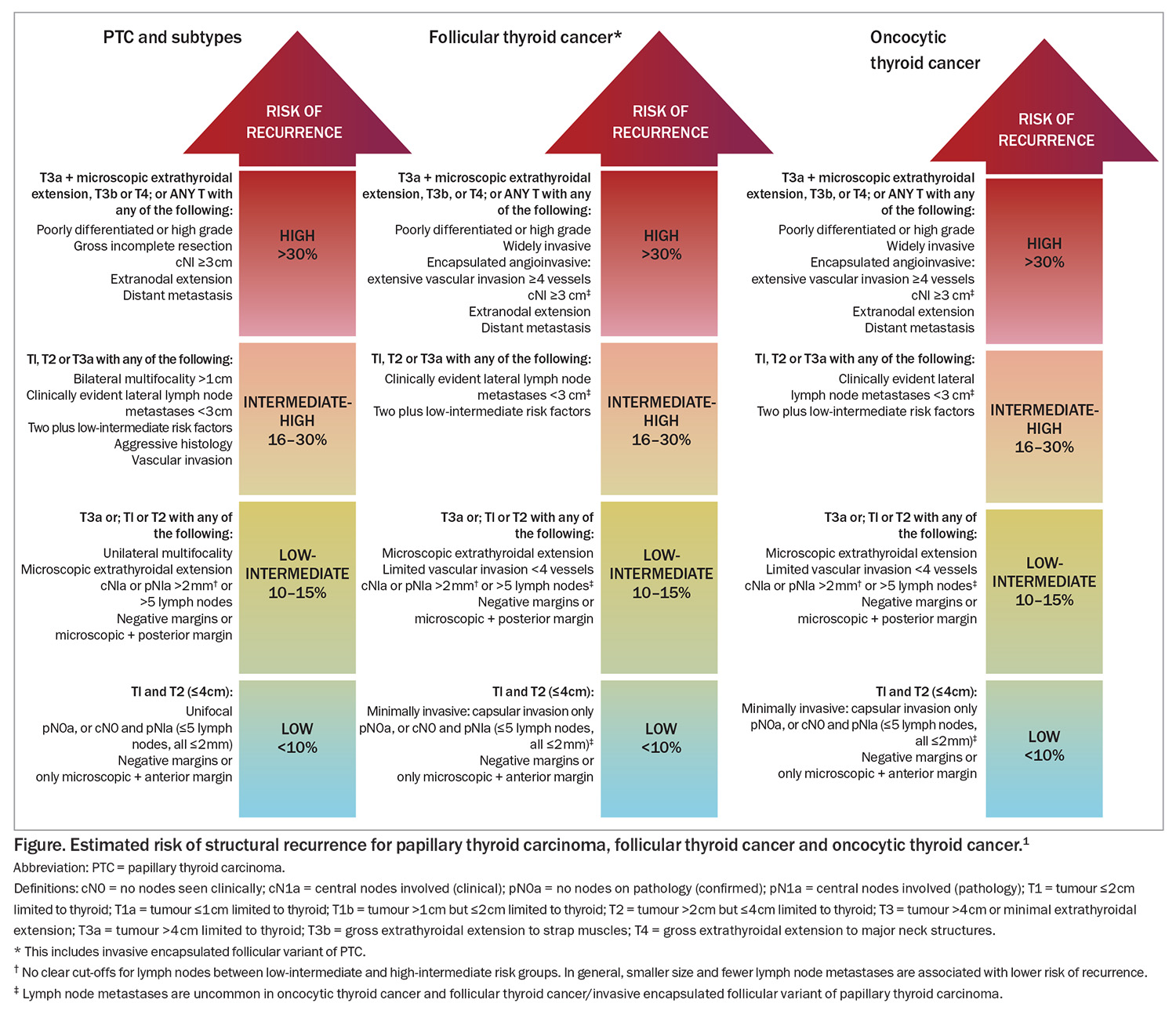
The 2025 ATA risk stratification system (Figure) is used postoperatively to assess the risk of recurrence and guide the need for adjuvant therapy and subsequent surveillance. The system incorporates histopathological features of the tumour, cervical lymph node involvement, tumour staging, basal Tg and TgAb levels, and postoperative imaging (in the setting of metastasis).
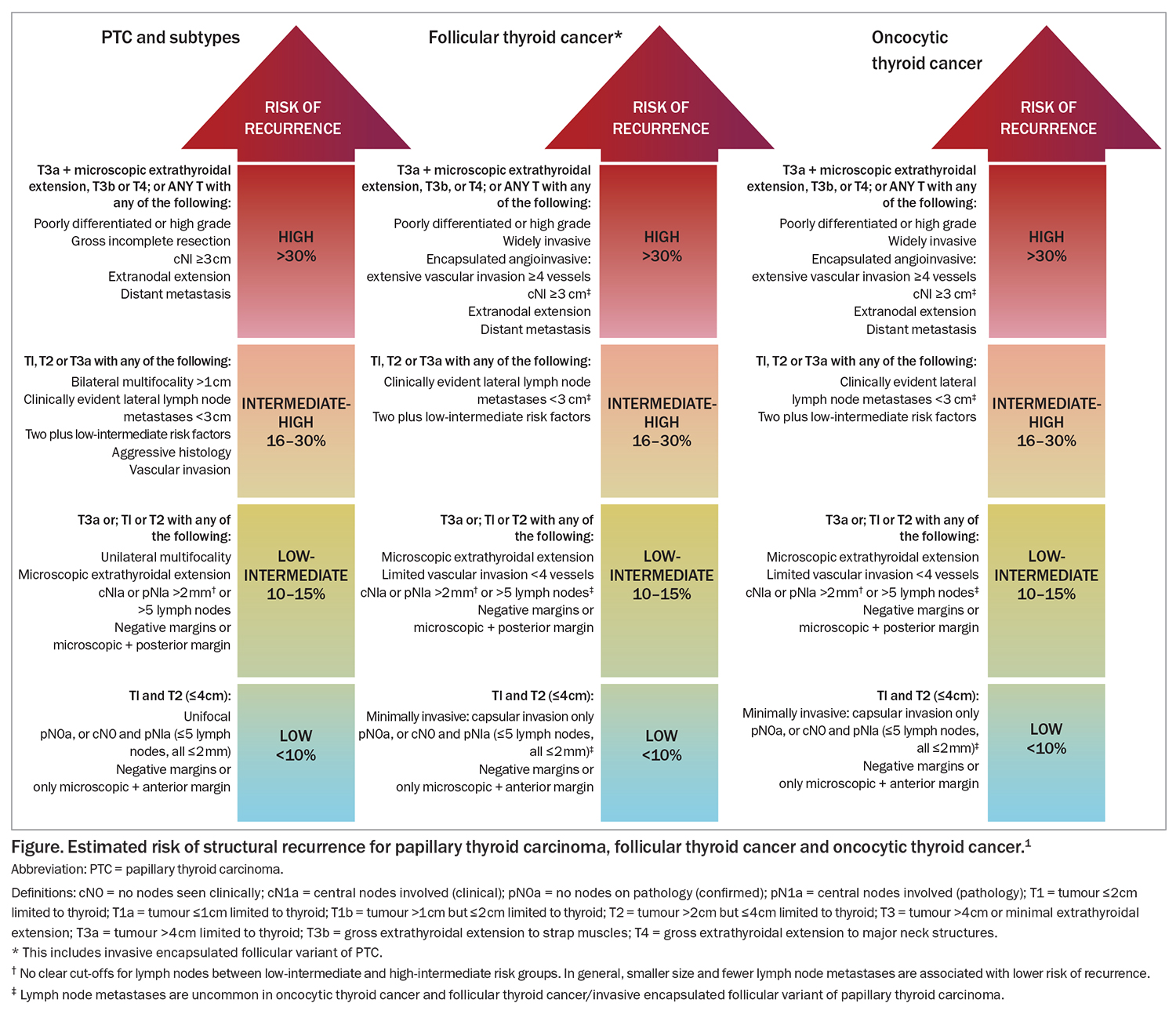
The updated 2025 system uses a four-tier classification (low, low-intermediate, intermediate-high, high). Important changes in the 2025 update include the separation of histopathological subtypes into three separate categories:
- papillary thyroid cancer and its subtypes
- follicular thyroid cancer, including invasive encapsulated follicular variant of papillary thyroid cancer
- oncocytic thyroid cancer (formerly known as Hürthle cell carcinoma).
New features included the separation of microscopic extrathyroidal extension into low risk for anterior margins and upgrade to low-intermediate for posterior margins. The location of involved cervical lymph nodes is also considered, with central compartment nodes (N1a) classified as low-intermediate risk and lateral compartment disease (N1b) as intermediate-high risk. Bilateral multifocal disease with foci greater than 1 cm has been escalated to intermediate-high risk. The high-risk category has been expanded to include poorly differentiated thyroid cancer. BRAF and TERT mutations have been removed from the risk of recurrence categories.
Adjuvant therapies
Radioactive iodine (RAI) is recommended for patients who are likely to respond in the setting of persistent structural disease and for those at high risk of recurrence. It can be considered in patients at intermediate risk of recurrence, especially those with aggressive histology or nodal involvement, but is not recommended in those at low risk of recurrence.
The role for RAI in oncocytic thyroid cancer is uncertain without adequate outcome data. In large, aggressive tumours where the patient has undergone hemithyroidectomy, consideration can be given to completion thyroidectomy with or without RAI to enable staging and improve thyroglobulin sensitivity. A fluorodeoxyglucose (FDG) positron emission tomography (PET)/CT can be particularly helpful for oncocytic thyroid cancer.
The recommended dose of RAI has generally decreased over time, with ongoing studies comparing 1 GBq and 4 GBq.12 Higher-risk patients and those with distant metastases may still receive an initial dose of 6 GBq, unless they are older than 70 years of age or have reduced renal function.
Adequate preparation for RAI requires a low-iodine diet for two weeks before treatment.13 To enhance RAI uptake, thyrotropin alfa (synthetic, recombinant human TSH) is administered on the two days before treatment, with continuation of thyroxine therapy throughout.
Pregnancy should be avoided for six months after treatment (previously six to 12 months).1 Patients should be advised that menstrual irregularities may occur for several months post treatment. Ovarian function is not thought to be impacted beyond 12 months, although menopause may occur up to one year earlier.14 In women who are breastfeeding, RAI should be deferred until a clear breast technetium uptake scan is achieved.
The role of external beam radiotherapy in the setting of a macroscopic incomplete surgical margin or aggressive histopathology with a high likelihood of locoregional spread requires individualisation. Many of these patients will ultimately require systemic therapy, and prior external beam radiotherapy may theoretically increase the risk of fistula formation with multikinase inhibitors. Such patients should be referred to a multidisciplinary team at a high-volume thyroid cancer unit.
Neoadjuvant oral systemic therapy (e.g. lenvatinib) may be considered for up to three months in unresectable disease, as tumour response may reduce surgical morbidity and improve the likelihood of complete resection.
Assessing response to therapy
The initial risk assessment guides immediate management, while the ATA response category is determined at each follow up (Table 1). This restaging combines an updated Tg level (with TgAb) and the most recent imaging, usually an ultrasound of the thyroid bed and cervical lymph nodes.
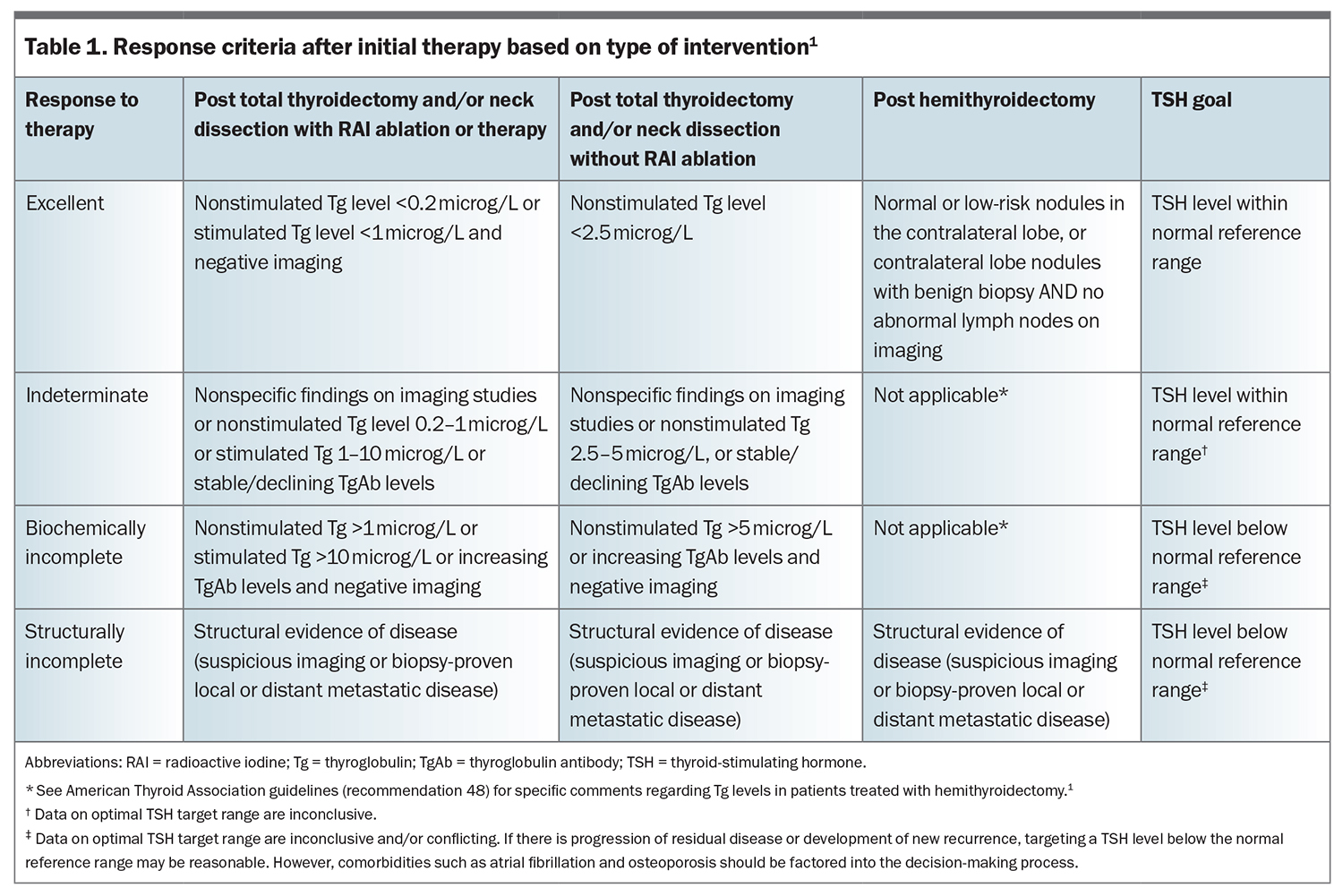
The 2025 response criteria have been modified to include patients undergoing hemithyroidectomy, in whom persistent residual thyroid tissue confounds Tg monitoring, and those undergoing total thyroidectomy without adjuvant RAI.1,9
Long-term management
Ongoing follow up is guided by the initial ATA risk stratification (Figure) and the subsequent ATA response category (Table 1). Outcomes within the first two years are generally predictive of long-term prognosis, with most recurrences occurring within five years.
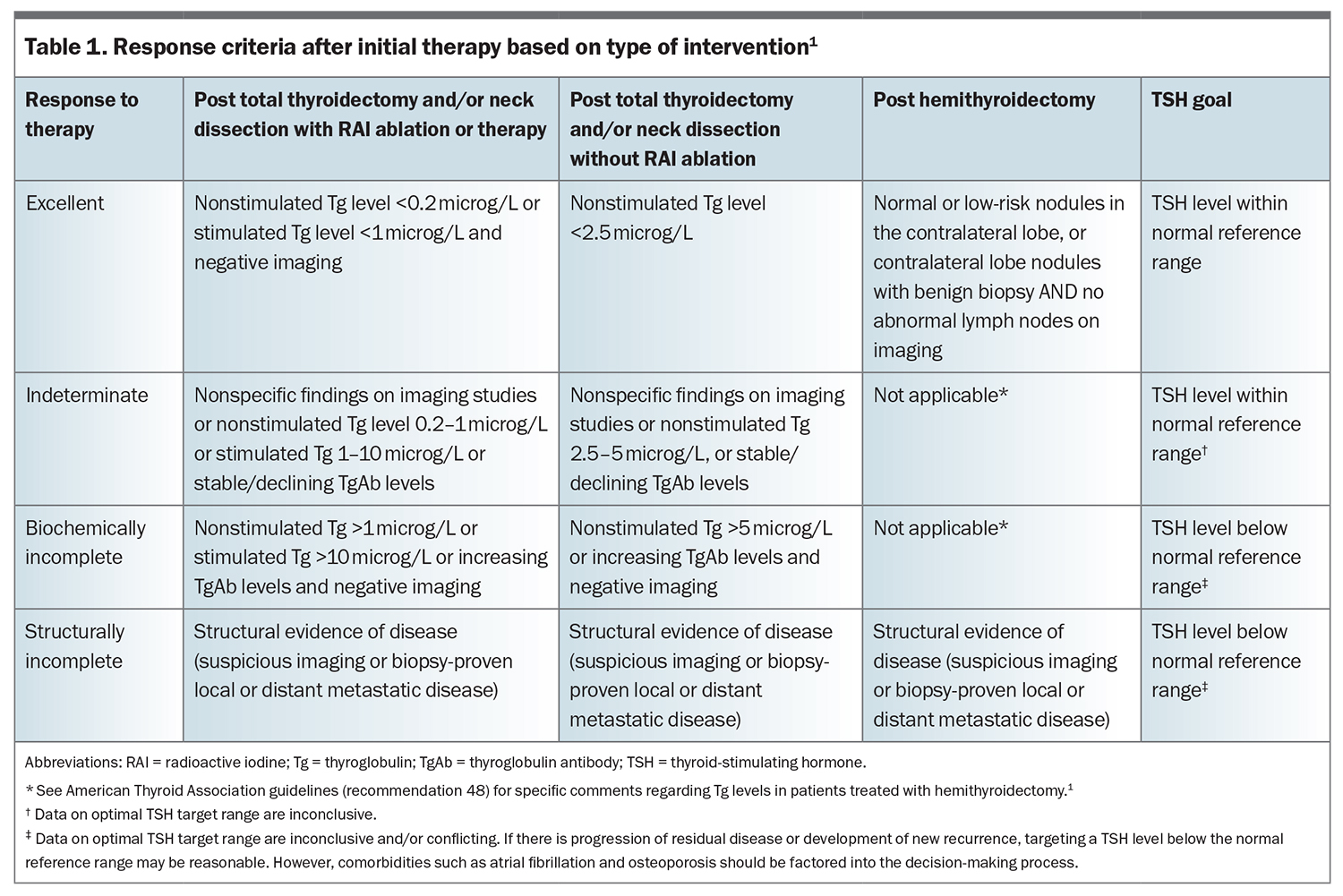
The role of TSH suppression has been relaxed and is now recommended only for patients with biochemical or structural disease. Routine suppression for up to five years in patients with initially a high risk of recurrence is no longer explicitly recommended.1
During follow up, clinicians should recognise the increased likelihood of false-positive ultrasound findings in low- and intermediate-risk patients, highlighting the importance of high-quality imaging.15
ATA response categories
Excellent response
No clinical, biochemical or radiological evidence of disease is present in patients with an excellent response to therapy. The risk of recurrence ranges from less than 2% in low-risk patients to 3 to 15% in high-risk patients.¹ Monitoring consists of measurement of Tg levels, with paired TgAb, every one to two years and ultrasound every one to three years, with decreasing frequency over time. The TSH level is maintained within the normal range.
De-escalation of surveillance is appropriate. Ultrasound may be discontinued after five to eight years if stability is maintained, provided Tg monitoring continues.¹ After 10 to 15 years of sustained response, patients are considered to be in complete remission, and biochemical monitoring may also be discontinued.
Indeterminate response
For an indeterminate response to therapy, findings are nonspecific and include low-level detectable Tg level (see Table 1), stable or falling TgAb level or nonspecific radiological findings. The risk of recurrence is 5 to 20%, although most patients do not develop structural disease.¹ Clear communication is important to reduce cancer-related anxiety while maintaining follow up.
Patients are generally followed up with Tg measurements, with paired TgAb, at six months and then at increasing intervals, with ultrasound at six- to 12-month intervals for up to five years and then periodically. The TSH level is maintained within the normal range.
Biochemical incomplete response
A biochemical incomplete response is characterised by an elevated Tg level in the absence of structural disease on imaging. Tg ranges vary according to the extent of surgery and use of RAI (Table 1). The risk of recurrence ranges from 20 to 53%.¹ Many patients remain biochemically incomplete or revert to an excellent response.16
Monitoring includes measurement of Tg every six months for the first two years, then according to the absolute Tg level and doubling time. Ultrasound is generally performed annually for the first five years and then periodically, guided by Tg trends. A rising Tg level should prompt restaging.
A rising Tg level should prompt restaging with a neck ultrasound and then CT of the neck and chest (with contrast). An FDG PET/CT may show dedifferentiating disease when the Tg level is greater than 5 microg/L but is more sensitive when the level is greater than 10 microg/L. TSH targets are typically 0.1 to 0.5 mIU/L, balanced against cardiovascular and skeletal risk.¹
Structural incomplete response
Structural disease may be local (cervical) or distant, and management depends on disease burden, location and progression.
Local cervical disease
Disease is often indolent and may remain stable for years. Management is guided by lesion size and proximity to critical structures. Intervention is generally considered if there is progression or FDG PET positivity (maximum standardised uptake value greater than 5 to 10). Surgical reintervention or ablative techniques should be discussed in a multidisciplinary setting.
Distant metastases
Well-differentiated thyroid cancer only rarely becomes metastatic, most commonly involving the lungs and bone, with progression to other organs in more advanced disease.¹⁷
For disease that remains iodine-avid, the prognosis is favourable and further RAI therapy can be considered, although the overall disease trajectory should be taken into account.5 Pulmonary metastases may follow an indolent course for many years before progression occurs, either through the development of escaping lesions within the lungs or the appearance of extrapulmonary disease. Ongoing surveillance with serial cross-sectional imaging is recommended, initially every six to 12 months and then less frequently if disease remains stable.
Locoregional therapies for oligoprogressive disease, including ablation (thermal or ethanol), surgery or radiotherapy, can be considered during this observation period. Bisphosphonate therapy is beneficial for skeletal metastases.18 Brain metastases may have an indolent evolution and are best managed with stereotactic radiosurgery, neurosurgery or radiotherapy, depending on the number and location of lesions.19
Radioactive iodine-refractory disease
About half of patients with metastatic DTC develop RAI-refractory disease, which is associated with a poorer prognosis and an overall survival of around 10%.20 FDG-avid disease is unlikely to respond to further RAI, even at high doses, and retreatment with RAI should be avoided.
There remains controversy regarding the definition of RAI-refractory disease and what constitutes a meaningful response. In practice, most patients receive an initial ablative dose of RAI and are then reassessed to determine the likelihood of benefit before a second ablative dose is considered. Immunohistochemistry or molecular testing at this stage may help guide decision-making, with RAS-driven tumours more likely to respond than BRAF V600E-driven tumours. The presence of co-mutations involving the TERT promoter or TP53 is associated with poorer prognosis and reduced likelihood of response to RAI (Table 2).
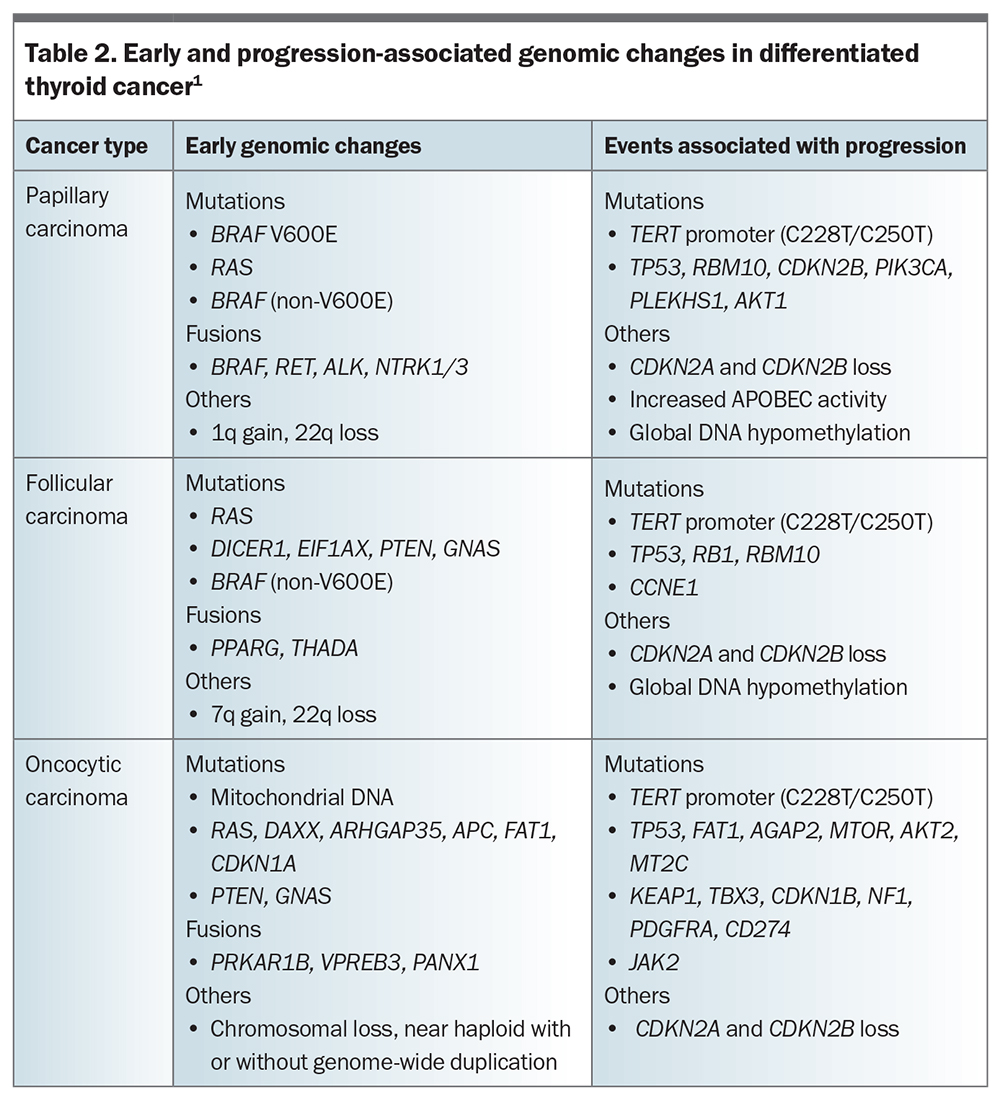
In patients with progressive RAI-refractory disease and a known gene driver, differentiation therapy aimed at restoring RAI uptake through inhibition of the mitogen-activated protein kinase pathway is currently under investigation.21,22 This approach may delay the need for systemic therapy. Emerging data suggest it may be more effective in patients with smaller tumour burden, lower FDG uptake and RAS-mutant disease, although the optimal patient population remains unclear.23 A Prospective, Multi-Centre Trial of TKI Redifferentiation Therapy in Patients With RAIR Thyroid Cancer (I-FIRST Study) is currently recruiting in Australia.
Systemic therapy
Systemic therapy is considered if localised therapy is not possible, if disease becomes symptomatic or if there is significant progression in multiple sites over the preceding 12 months. The decision about when to commence systemic therapy is complex and requires shared decision-making that incorporates patient preferences.
Targeted systemic therapies, after molecular profiling, are available for some gene mutations; however, in Australia these are generally accessed through clinical trials or are self-funded.24
In Australia, PBS-approved first-line therapy for DTC is lenvatinib, a multikinase inhibitor. In the SELECT study lenvatinib improved progression-free survival compared with placebo (18.3 months versus 3.6 months).25 Improved overall survival has been observed when treatment is initiated earlier in patients older than age 65 years and in those with lung metastases (generally >10 mm).25,26 The recommended starting dose is 24 mg, although lower doses can be considered in selected patients.
Cabozantinib, another multikinase inhibitor, is PBS approved and is the preferred second-line therapy for patients with progression on, or intolerance to, lenvatinib.
BRAF V600E is the most common gene mutation in papillary thyroid carcinoma. Targeted inhibition with dabrafenib, with or without the mitogen-activated protein kinase inhibitor trametinib, has been shown to improve both overall survival and progression-free survival and is available through clinical trial access in Australia.27 The LIBRETTO-001 trial evaluated the RET inhibitor selpercatinib in patients with RET-mutant disease previously treated with at least one systemic therapy, demonstrating a median progression-free survival of 20.1 months.28
The selective tropomyosin receptor kinase inhibitors larotrectinib and entrectinib have shown prolonged overall survival and progression-free survival, with a 24-month progression-free survival of 84% for larotrectinib and a median progression-free survival of 19.9 months for entrectinib.29,30 Case reports also describe the use of anaplastic lymphoma kinase inhibitors in anaplastic lymphoma kinase fusion-positive DTC.31
The optimal sequencing of multikinase inhibitors and genotype-informed therapy is an area of debate. Selective kinase inhibitors have less off-target activity and are generally better tolerated than multikinase inhibitors.
Immune checkpoint inhibitors are emerging as adjunctive therapy to lenvatinib.32 However, their optimal sequencing and role remain unclear.32
Survivorship and long-term care
Patients with DTC often live for many decades with their disease, and best practice involves management of postoperative complications (such as hypoparathyroidism) and RAI side effects (such as salivary gland dysfunction), along with consideration of financial toxicity and cancer-related anxiety. It is important to address cardiovascular risk and bone health in patients requiring TSH suppression.
Conclusion
The landscape of thyroid cancer has evolved significantly over the past decade, with a shift toward precision medicine involving selective use of TSH suppression, limitation of surgery and RAI, and expanded systemic therapy options. Most patients with thyroid cancer have excellent overall survival. Recognition of this has led to less intensive management and follow up of patients. Progress with targeted therapies is promising. Shared decision-making emphasising patient-centred care and survivorship is key for optimal care. ET
COMPETING INTERESTS: Dr Story has received speaker fees from GlaxoSmithKline and Eisai and is the Treasurer of the Endocrine Society of Australia.
References
1. Ringel MD, Sosa JA, Baloch Z, Bischoff L, et al. 2025 American Thyroid Association management guidelines for adult patients with differentiated thyroid cancer. Thyroid 2025; 35: 841-985.
2. Ali SZ, Baloch ZW, Cochand-Priollet B, Schmitt FC, Vielh P, VanderLaan PA. The 2023 Bethesda system for reporting thyroid cytopathology. Thyroid 2023; 33: 1039-1144.
3. White E, Abbott B, Schembri G, Glover A, Clifton-Bligh R, Gild ML. Development of a novel clinical support tool for active surveillance of low-risk papillary thyroid cancer. Front Endocrinol 2023; 14: 1160249.
4. Tuttle RM, Zhang L, Shaha A. A clinical framework to facilitate selection of patients with differentiated thyroid cancer for active surveillance or less aggressive initial surgical management. Expert Rev Endocrinol Metab 2018; 13: 77-85.
5. Haugen BR, Alexander EK, Bible KC, et al. 2015 American Thyroid Association management guidelines for adult patients with thyroid nodules and differentiated thyroid cancer: the American Thyroid Association guidelines task force on thyroid nodules and differentiated thyroid cancer. Thyroid 2016; 26: 1-133.
6. Su SY, Grodski S, Serpell JW. Hypothyroidism following hemithyroidectomy: a retrospective review. Ann Surg 2009; 250: 991-994.
7. Kluijfhout WP, Pasternak JD, Drake FT, et al. Application of the new American Thyroid Association guidelines leads to a substantial rate of completion total thyroidectomy to enable adjuvant radioactive iodine. Surgery 2017; 161: 127-133.
8. Patel A, Shostrom V, Treude K, Lydiatt W, Smith R, Goldner W. Serum thyroglobulin: preoperative levels and factors affecting postoperative optimal timing following total thyroidectomy. Int J Endocrinol 2019: 2019: 1384651.
9. Chou R, Dana T, Brent GA, Goldner W, et al. Serum thyroglobulin measurement following surgery without radioactive iodine for differentiated thyroid cancer: a systematic review. Thyroid 2022; 32: 613-639.
10. Momesso DP, Vaisman F, Yang SP, et al. Dynamic risk stratification in patients with differentiated thyroid cancer treated without radioactive iodine. J Clin Endocrinol Metab 2016; 101: 2692-700.
11. Shammas A, Degirmenci B, Mountz JM, et al. 18F-FDG PET/CT in patients with suspected recurrent or metastatic well-differentiated thyroid cancer. J Nucl Med 2007; 48: 221-226.
12. Castagna MG, Cevenini G, Theodoropoulou A, et al. Post-surgical thyroid ablation with low or high radioiodine activities results in similar outcomes in intermediate risk differentiated thyroid cancer patients. Eur J Endocrinol 2013; 169: 23-29.
13. Park JT, Hennessey JV. Two-week low iodine diet is necessary for adequate outpatient preparation for radioiodine rhTSH scanning in patients taking levothyroxine. Thyroid 2004; 14: 57-63.
14. Sawka AM, Lakra DC, Lea J, et al. A systematic review examining the effects of therapeutic radioactive iodine on ovarian function and future pregnancy in female thyroid cancer survivors. Clin Endocrinol (Oxf) 2008; 69: 479-490.
15. Peiling Yang S, Bach AM, Tuttle RM, Fish SA. Frequent screening with serial neck ultrasound is more likely to identify false-positive abnormalities than clinically significant disease in the surveillance of intermediate risk papillary thyroid cancer patients without suspicious findings on follow-up ultrasound evaluation. J Clin Endocrinol Metab 2015; 100: 1561-1567.
16. Steinschneider M, Pitaro J, Koren S, Mizrakli Y, Benbassat C, Muallem Kalmovich L. Differentiated thyroid cancer with biochemical incomplete response: clinico-pathological characteristics and long-term disease outcomes. Cancers (Basel) 2021; 13: 5422.
17. Fugazzola L, Elisei R, Fuhrer D, et al. 2019 European Thyroid Association guidelines for the treatment and follow-up of advanced radioiodine-refractory thyroid cancer. Eur Thyroid J 2019; 8: 227-245.
18. Muresan MM, Olivier P, Leclère J, et al. Bone metastases from differentiated thyroid carcinoma. Endocr Relat Cancer 2008; 15: 37-49.
19. Henriques de Figueiredo B, Godbert Y, Soubeyran I, et al. Brain metastases from thyroid carcinoma: a retrospective study of 21 patients. Thyroid 2014; 24: 270-276.
20. Aashiq M, Silverman DA, Na’ara S, Takahashi H, Amit M. Radioiodine-refractory thyroid cancer: molecular basis of redifferentiation therapies, management, and novel therapies. Cancers (Basel) 2019; 11: 1382.
21. Ho AL, Grewal RK, Leboeuf R, et al. Selumetinib-enhanced radioiodine uptake in advanced thyroid cancer. N Engl J Med 2013; 368: 623-632.
22. Jaber T, Waguespack SG, Cabanillas ME, et al. Targeted therapy in advanced thyroid cancer to resensitize tumors to radioactive iodine. J Clin Endocrinol Metab 2018; 103: 3698-3705.
23. Weber M, Kersting D, Riemann B, et al. Enhancing radioiodine incorporation into radioiodine-refractory thyroid cancer with MAPK inhibition (ERRITI): a single-center prospective two-arm study. Clin Cancer Res 2022; 28: 4194-4202.
24. Turner N, Hamidi S, Ouni R, et al. Emerging therapeutic options for follicular-derived thyroid cancer in the era of immunotherapy. Front Immunol 2024; 15: 1369780.
25. Brose MS, Worden FP, Newbold KL, Guo M, Hurria A. Effect of age on the efficacy and safety of lenvatinib in radioiodine-refractory differentiated thyroid cancer in the phase III SELECT trial. J Clin Oncol 2017; 35: 2692-2699.
26. Tahara M, Kiyota N, Hoff AO, et al. Impact of lung metastases on overall survival in the phase 3 SELECT study of lenvatinib in patients with radioiodine-refractory differentiated thyroid cancer. Eur J Cancer 2021; 147: 51-57.
27. Busaidy NL, Konda B, Wei L, et al. Dabrafenib versus dabrafenib + trametinib in BRAF-mutated radioactive iodine refractory differentiated thyroid cancer: results of a randomized, phase 2, open-label multicenter trial. Thyroid 2022; 32: 1184-1192.
28. Wirth LJ, Sherman E, Robinson B, et al. Efficacy of selpercatinib in RET-altered thyroid cancers. N Engl J Med 2020; 383: 825-835.
29. Demetri GD, De Braud F, Drilon A, et al. Updated integrated analysis of the efficacy and safety of entrectinib in patients with NTRK fusion-positive solid tumors. Clin Cancer Res 2022; 28: 1302-1312.
30. Waguespack SG, Drilon A, Lin JJ, et al. Efficacy and safety of larotrectinib in patients with TRK fusion-positive thyroid carcinoma. Eur J Endocrinol 2022; 186: 631-643.
31. Aydemirli MD, van Eendenburg JDH, van Wezel T, et al. Targeting EML4-ALK gene fusion variant 3 in thyroid cancer. Endocr Relat Cancer 2021; 28: 377-389.
32. French JD, Haugen BR, Worden FP, et al. Combination targeted therapy with pembrolizumab and lenvatinib in progressive, radioiodine-refractory differentiated thyroid cancers. Clin Cancer Res 2024; 30: 3757-3767.
Single article purchases are temporarily unavailable due to site maintenance.
If you would like to purchase an article during this time, please email us at [email protected] with the article details and we'll assist you directly. We'll also let you know when online purchasing is available again.
Thank you for your patience and understanding.